
Viral concentration is typically higher in coastal and surface waters, and it tends to decrease as one moves offshore and deeper in the water. Yet, it’s in marine sediments that the highest viral concentrations are found, with peaks of up to 10 billion viral particles per gram of sediment: a number that exceeds the global human population, concentrated in a single teaspoon of seabed!
The abundance of viruses in the marine environment is closely linked to the density of marine microorganisms, particularly bacteria and microalgae, which are their main hosts. In fact, one of the key roles of marine viruses is to regulate microbial communities.
Marine viruses act as true guardians of balance by controlling the growth of bacteria and microalgae.
When a microbial species finds ideal conditions, it can increase rapidly, running the risk of outcompeting all the other species.
This is where viruses come into play. Their action is often highly specific: a particular virus infects only a narrow range of hosts. When a species overgrows, its specific viruses spread like wildfire, reducing its density. This mechanism, known in ecology as Kill the Winner, prevents the dominance of a single species, allowing other species to thrive, thereby promoting biodiversity and contributing to the stability of the entire ecosystem.
Photo via Canva
When a virus infects a cell, it hijacks its biosynthetic machinery to replicate, turning it into a sort of virus factory, until it causes the cell to rupture: a process known as viral lysis. Besides producing new viruses, rupturing the host cell releases cellular components into the water as dissolved organic matter.
This matter becomes readily available food for other microorganisms, which in turn will be eaten by larger organisms. Through this mechanism, known as the viral shunt, viruses recycle nutrients, fueling the base of the marine food web.
Through lysing their hosts, these tiny ocean inhabitants also play a key role in transporting carbon to the seabed, helping to mitigate climate change.
When the infected cell ruptures, large, sticky molecules known as TEPs (Transparent Exopolymer Particles) are also released. These gelatinous particles easily aggregate with other debris, mucus, and fecal pellets, forming what is known as “marine snow“: visible flakes of organic matter that slowly sink towards the deeper layers of the ocean. This process, called the viral shuttle, acts as an “elevator” that transports organic matter (and therefore carbon) to the ocean depths, helping to store it in the seabed and effectively removing it from the atmosphere. Studying the role of viruses in the carbon cycle is crucial for better understanding how oceans behave under the pressure of climate change.
Marine viruses can move genes among different organisms through a process known as “horizontal gene transfer”.
During the process of viral infection and replication, fragments of the host’s DNA can be accidentally packaged into new viral particles and then transferred to another host upon infection. This genetic exchange accelerates the pace of evolution, allowing microbial communities to adapt rapidly to environmental changes. This genetic reshuffling is particularly important in the deep ocean, where it enables microorganisms to survive in extreme and variable conditions.
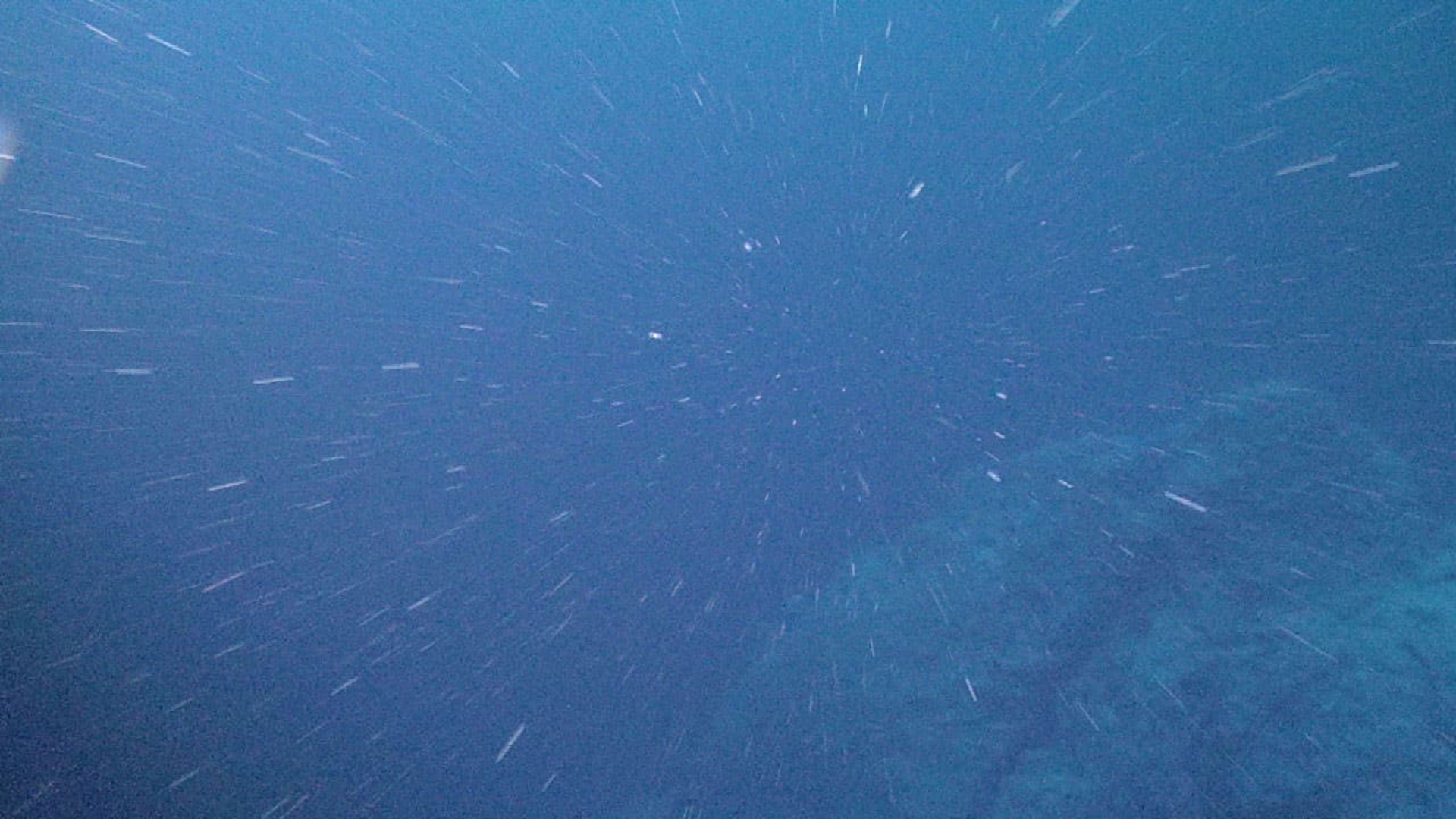
Photo via NOAA
Marine viruses represent an extraordinary resource for biotechnology, as they are considered the largest unexplored reservoir of genetic diversity on our planet. Most of the genetic properties of marine viruses are still unexplored, but recent discoveries have highlighted innovative features that could lead to significant advances in different fields, including medicine, materials science, and cosmetics.
A promising application is phage therapy, which uses bacteriophages (or phages), that are viruses that specifically infect bacteria, to fight off bacterial infections.
Marine bacteriophages stand out as some of the most promising and safe options for fighting infections, thanks to their remarkable specificity, strong lytic activity, and ability to adapt to extreme aquatic conditions. This approach is particularly relevant in aquaculture, a sector where the overuse of antibiotics is a growing concern.
Far from being mere pathogens, marine viruses play crucial roles in the marine environment by regulating microbial community composition and diversity, recycling nutrients, and influencing biogeochemical cycles. Despite being incredibly numerous, most of these viruses are harmless to humans and are, in fact, essential for the balance of marine ecosystems.
Phto via Canva
• Banicod, R. J. S., Javaid, A., Tabassum, N., Jo, D. M., Hassan, M. I., Kim, Y. M., & Khan, F. (2025). Marine Bacteriophages as Next-Generation Therapeutics: Insights into Antimicrobial Potential and Application. Viruses, 17(7), 971.
• Breitbart, M. (2012). Marine viruses: truth or dare. Annual review of marine science, 4, 425-448.
• Guidi, L., Chaffron, S., Bittner, L., Eveillard, D., Larhlimi, A., Roux, S., … & Gorsky, G. (2016). Plankton networks driving carbon export in the oligotrophic ocean. Nature, 532(7600), 465-470.
• Suttle, C. A. (2005). Viruses in the sea. Nature, 437(7057), 356-361.
• Suttle, C. A. (2007). Marine viruses—major players in the global ecosystem. Nature reviews microbiology, 5(10), 801-812.
• Sánchez-Paz, A., Muhlia-Almazan, A., Saborowski, R., García-Carreño, F., Sablok, G., & Mendoza-Cano, F. (2014). Marine viruses: the beneficial side of a threat. Applied biochemistry and biotechnology, 174(7), 2368-2379.
• Lara, E., Vaqué, D., Sà, E. L., Boras, J. A., Gomes, A., Borrull, E., … & Duarte, C. M. (2017). Unveiling the role and life strategies of viruses from the surface to the dark ocean. Science Advances, 3(9), e1602565.

Ocean Facts
Author: Ingrid Ravasi

Ocean Facts
Author: Sara Allahverdiyeva


Ocean Facts
Author: Sara Allahverdiyeva


Ocean Facts
Author: Martina Difonzo
