
Author: Ingrid Ravasi

Every marine ecosystem has its own unique soundscape, a complex blend of natural sounds (biophony and geophony) and man-made noises (anthropophony).
Biophony is the voice of marine life: the clicks produced by odontocetes (toothed whale) for navigation and hunting; the drumming sounds made by fish such as damselfish (Chromis chromis (Linnaeus, 1758)) and brown meagre (Sciaena umbra Linnaeus, 1758); or the characteristic snapping of pistol shrimps belonging to the families Alpheidae and Palaemonidae.
Geophony adds the sounds of the physical environment: the crash of waves, raindrops striking the sea surface, or the whisper of the wind.
Overlapped with this natural orchestra is anthropophony: the sounds generated by human activity.
The introduction of excessive noise into the marine environment by human activities represents a true form of environmental pollution. It threatens species that rely on acoustic signals for survival and alters ecosystems at multiple levels.
Maritime traffic is the most widespread contributor to underwater noise pollution globally. Commercial ships, ferries, cruise liners, and recreational boats ply the seas all year round, reshaping the underwater soundscape on a global scale.
Other major sources of anthropogenic noise include seismic surveys, seabed drilling, military and civilian sonar, dredging, echo sounders, and the construction of offshore and coastal infrastructure. These activities produce sounds of varying frequencies and intensities that propagate rapidly and efficiently underwater.
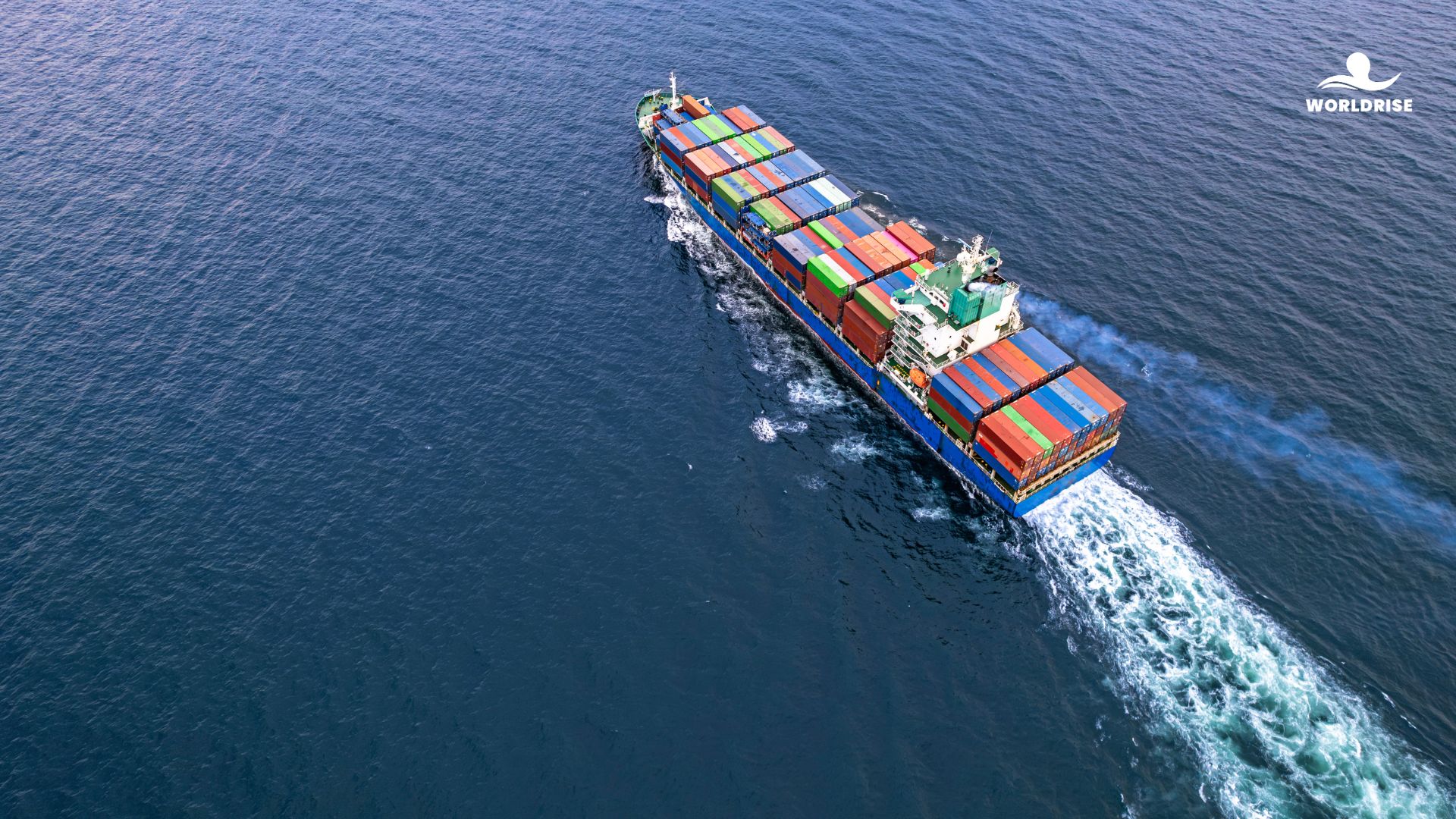
Photo via Canva
The impacts of noise pollution on marine fauna are often sub-lethal, yet far from harmless. Over time, they can compromise health, alter behavior, and reduce survival at both individual and population levels, ultimately affecting the functioning of marine ecosystems.
One of the most common effects is auditory masking. Imagine trying to talk to a friend in a crowded room: the background noise drowns out the words, and you struggle to understand each other. The same phenomenon happens underwater. Maritime noise pollution can interfere with the detection of acoustic signals animals use to communicate, find mates, navigate, detect prey, or avoid obstacles.
This issue is particularly critical for mysticetes (baleen whales), whose low-frequency calls overlap with commercial shipping noise. Many species attempt to compensate for noise by “speaking louder,” increasing the intensity or shifting the frequency of their own calls. However, these changes can be costly.
Noise pollution can also drive marine animals away from important feeding or breeding grounds, force them to alter their migratory routes, and change their swimming and diving patterns. Chronic exposure to low-level noise can trigger physiological stress responses, weaken the immune system, and reduce reproductive success.
Very loud man-made noises, such as those from air guns used in seismic surveys, can cause physical damage, and even death. Beyond fish and mammals, invertebrates like cephalopods and jellyfish have shown signs of acoustic trauma and damage to their statocysts (balance organs) following exposure to high-intensity sounds. Furthermore, shockwaves from air guns can drastically reduce zooplankton abundance up to 1 km from the source, with potential cascading effects throughout the food web.
High-intensity sounds, such as those from military sonar, have been linked to mass strandings of cetaceans, particularly beaked whales. The loud noise coming from military sonar disrupts normal diving behavior, causing animals to rise too quickly to the surface, leading to decompression sickness and skin damage from gas bubble lesions.
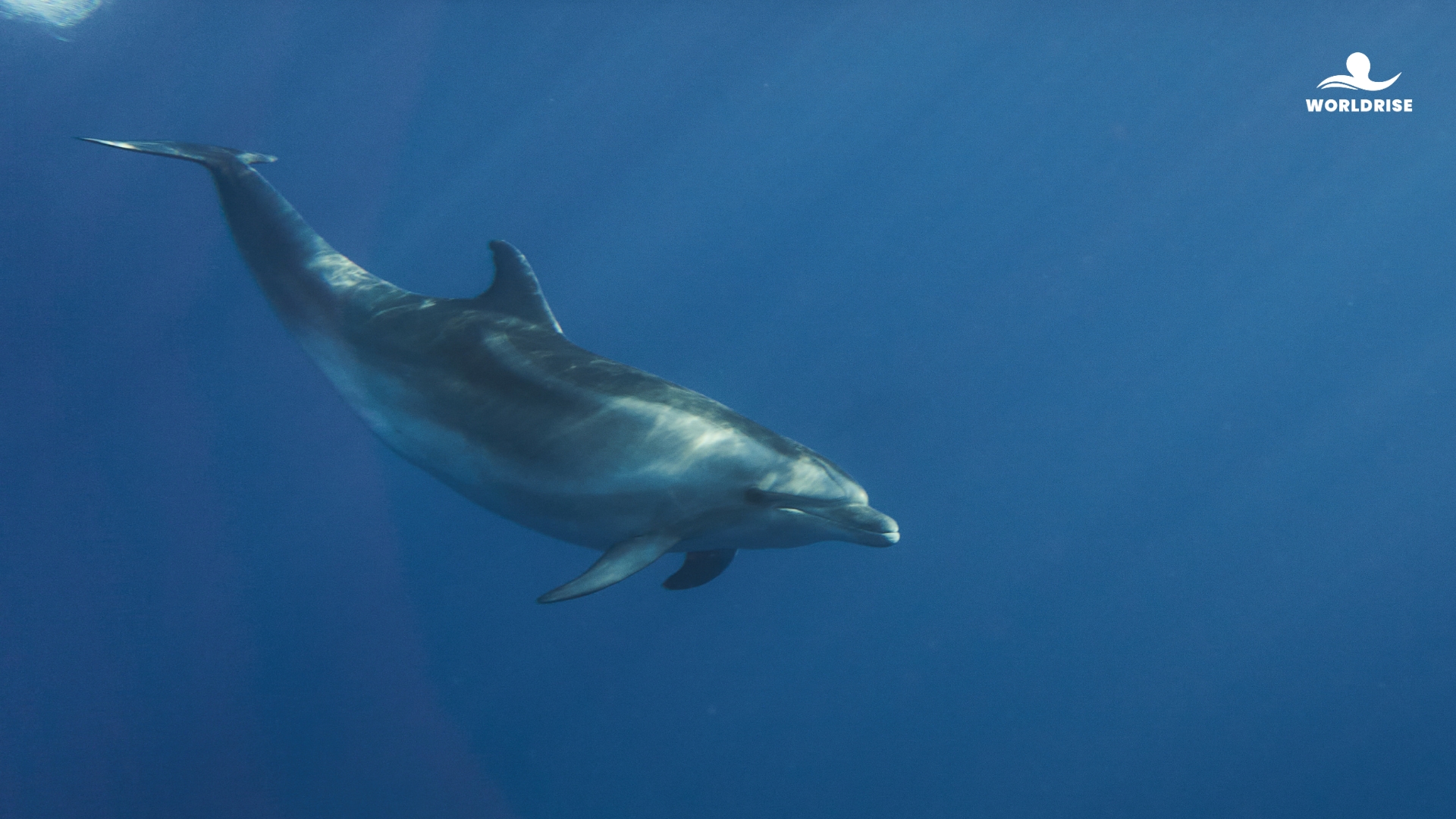
Photo via Canva
Despite making up less than 1% of the Earth’s ocean surface, the Mediterranean Sea is home to about 7% of global marine biodiversity and hosts around 20% of global maritime trade. This high traffic density, combined with the sea’s semi-enclosed nature, makes the Mediterranean particularly vulnerable to underwater noise pollution.
Major shipping routes overlap with ecologically critical areas. A notable example is the Pelagos Sanctuary in the northwestern Mediterranean, where cargo ships and ferries intersect with habitats used by species which are highly sensitive to anthropogenic noise, such as fin whales, beaked whales, and sperm whales.
The northern Adriatic is another critical area: shallow, heavily trafficked, and bordered by densely populated coastlines, it experiences high levels of background noise from maritime and port activities, significantly affecting marine life.
The Sicily Channel, crossed by commercial vessels, tankers, ferries, and fishing vessels, serves as a vital corridor for many cetacean species, including fin whales, bottlenose dolphins, striped dolphins, and beaked whales, making it highly vulnerable to acoustic pollution.
Unlike chemical pollutants that can persist for decades, noise stops as soon as its source is turned off. This offers a unique opportunity for prompt and effective action.
Measures such as slow steaming, designing quieter propellers, and rerouting commercial traffic away from sensitive habitats can mitigate the impacts of underwater noise pollution.
Additional solutions include the use of bubble curtains during offshore construction and more strategic marine spatial planning. Together, these actions can help restore the Ocean’s natural soundscape.
Marine Protected Areas (MPAs) are increasingly recognized as essential tools for safeguarding acoustic quality.
By regulating vessel traffic, restricting navigation in specific zones, enforcing speed limits, and limiting sonar and hydrojet use, MPAs can act as acoustic havens.
Since sound travels much farther and faster in water than in air, the noise generated in one location can affect marine life far away. The next challenge will be creating protected acoustic corridors connecting MPAs, ensuring safe and quieter routes for marine species.

Photo via Consorzio di Gestione di Torre Guaceto
Recognizing the importance of sound for marine life is the first step toward reshaping our relationship with the Ocean: protecting it also means listening and choosing to make less noise.
• André, M., Solé, M., Lenoir, M., Durfort, M., Quero, C., Mas, A., Lombarte, A., Van der Schaar, M., López-Bejar, M., Morell, M., Zaugg, S., & Houégnigan, L. (2011). Low frequency sounds induce acoustic trauma in cephalopods. Frontiers in the Ecology and the Environment, 9(9), 489–493.
• Atlas Copco Rental. (n.d.). Bubble curtain of Atlas Copco Rental protects sealife. https://www.atlascopco.com/it-it/rental/news/bubble-curtain-of-atlas-copco-rental-protects-sealife
• Bolgan, M., Picciulin, M., Codarin, A., Fiorin, R., Zucchetta, & M., Malavasi, S. (2016). Is the Venice Lagoon Noisy? First Passive Listening Monitoring of the Venice Lagoon: Possible Effects on the Typical Fish Community. In: Popper, A., Hawkins, A. (Eds.), The Effects of Noise on Aquatic Life II (pp. 83-90). Springer.
• Codarin, A., & Picciulin, M. (2015). Underwater noise assessment in the Gulf of Trieste (Northern Adriatic Sea, Italy) using an MSFD approach. Marine Pollution Bulletin, 101(2), 694–700.
• Duarte, C. M., Chapuis, L., Collin, S. P., Costa, D. P., Devassy, R. P., Eguiluz, V. M., Erbe, C., Gordon, T. A. C., Halpern, B. S., Harding, H. R., Havlik, M. N., Meekan, M., Merchant, N. D., Miksis-Olds, J. L., Parsons, M., Predragovic, M., Radford, A. N., Radford, C. A., Simpson, S. D., Slabbekoorn, H., … Juanes, F. (2021). The soundscape of the Anthropocene ocean. Science, 371(6529), Article eaba4658.
• Erbe, C., Marley, S., Schoeman, R., Smith, J., Trigg, L., & Embling, C. (2019). The Effects of Ship Noise on Marine Mammals – A Review. Frontiers in Marine Science, 6, Article 0606.
• Jahoda, M., Lafortuna, C.L., Biassoni, N., Almirante, C., Azzellino, A., Panigada, S., Zanardelli, M. And Di Sciara, G.N. (2003). Mediterranean fin whale’s (Balaenoptera physalus) response to small vessels and biopsy sampling assessed through passive tracking and timing of respiration. Marine Mammal Science, 19, 96-110.
• McCauley, R. D., Day, R. D., Swadling, K. M., Fitzgibbon, Q. P., Watson, R. A., & Semmens, J. M. (2017). Widely used marine seismic survey air gun operations negatively impact zooplankton. Nature Ecology & Evolution, 1(7), Article 0195.
• Lanfredi, C., Azzellino, A., Iacoponi, A., & Licitra, G. (2014). Valutazione del rischio di esposizione al rumore da traffico navale sui cetacei nel santuario Pelagos. Biologia Marina Mediterranea, 21(1), 377-378.
• Licitra, G., Borsani, F., Marsico, G., Pavan, G., & Riccobene, G. (2015). La bioacustica marina per lo studio dei cetacei nella implementazione della marine strategy in Italia. Rivista Italiana di Acustica, 39(3), 1-14.
Peng, C., Zhao, X., & Liu, G. (2015). Noise in the Sea and Its Impacts on Marine Organisms. International Journal of Environmental Research and Public Health, 12(10), 12304-12323.
• Pieretti, N., Lo Martire, M., Corinaldesi, C., Musco, L., Dell’Anno, A., & Danovaro, R. (2020). Anthropogenic noise and biological sounds in a heavily industrialized coastal area (Gulf of Naples, Mediterranean Sea). Marine Environmental Research, 159, 105002.
• Solé, M., Lenoir, M., Fortuño, J. M., Durfort, M., van der Schaar, M., & André, M. (2016). Evidence of Cnidarians sensitivity to sound after exposure to low frequency underwater sources. Scientific reports, 6, Article 37979.
• Williams, R., Erbe, C., Ashe, E., & Clark, C. W. (2015). Quiet(er) marine protected areas. Marine Pollution Bulletin, 100(1), 154-161.


Ocean Facts
Author: Sara Allahverdiyeva


Ocean Facts
Author: Sara Allahverdiyeva


Ocean Facts
Author: Martina Difonzo