
Photo via Unsplash
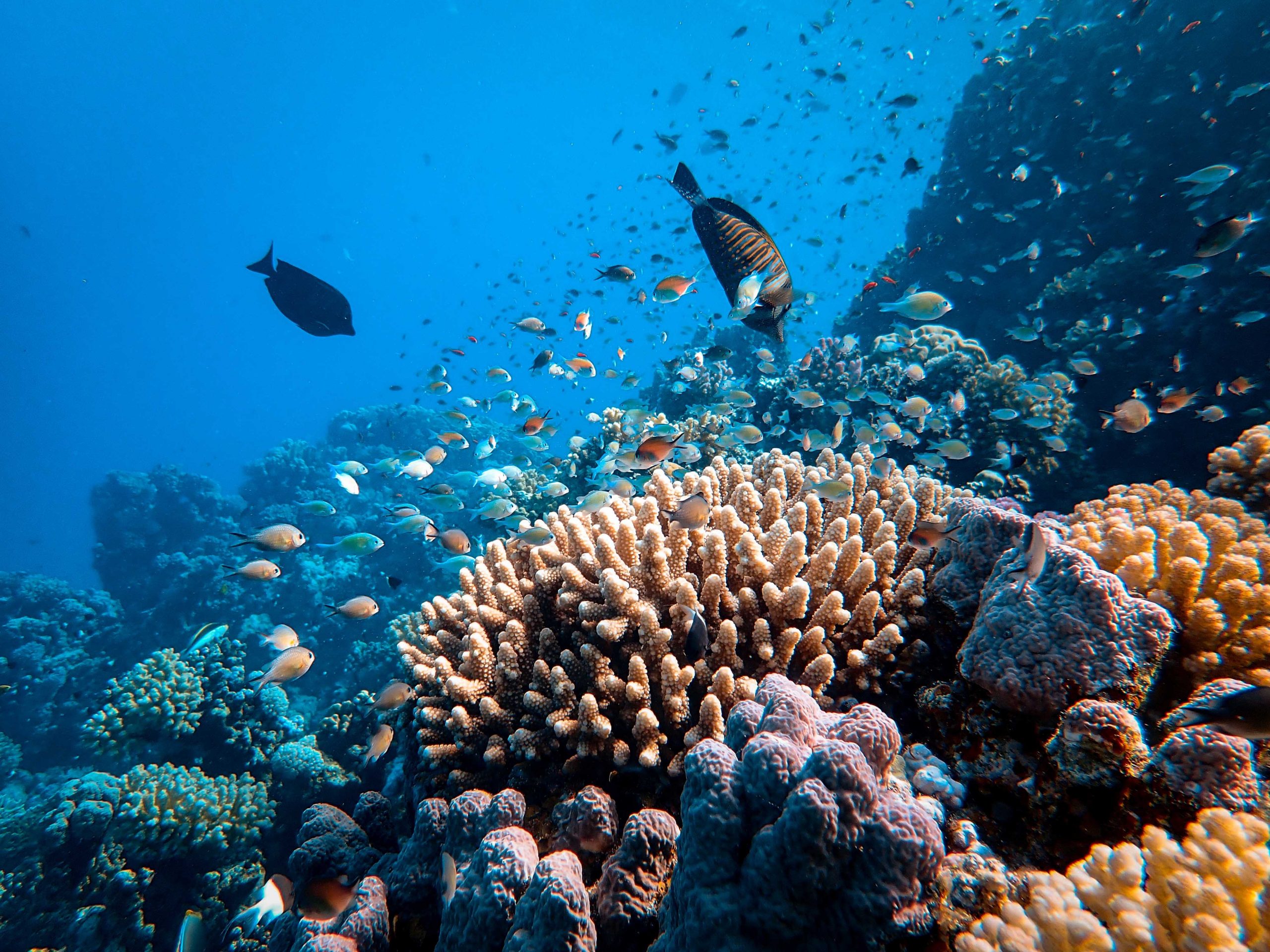
Despite probably being easy visualizing the picture of a coral in our own heads, it could be more complicated to define it correctly. Indeed, due to their hard structures or because they are attached to the seabed, they are often mistaken for rocks or plants. Corals are instead animals, marine invertebrates belonging to the Phylum of Cnidaria, class Anthozoa. From Greek άνθος (ánthos; “flower”) e ζώα (zóa; “animals”), Anthozoa means literally “flower animals”, a name given by the floral look that corals’ polyps assume once exposed to aquatic environment.
Although they are commonly perceived as single organisms, they are in reality the result of thousands of small, genetically identical individuals, called polyps, each one only a few millimeters large, typically clustered in colonies.
Corals are extraordinarily important organisms from an ecological point of view, since some of them, the so-called hermatypic corals (characterized by a hard calcareous skeleton), are the main builders of coral reefs: ecosystems able to support at least 25% of all the marine species of our Planet.

Photo by Lorenzo Ravelli
Coral reefs generally develop in clear, warm and shallow waters, up to a few tens of meters of depth. These significant limitations are imposed by presence in polyps’ tissues of small zooxanthellae, specificunicellular and photosynthetic algae that live in close symbiosis with them and that need light.
The coral symbiosis, in particular, is a mutualistic one: it is a relationship in which each organism actively and positively participates in mutual survival, leading to a win-win situation for all the individuals involved.
During the day, thanks to photosynthesis, zooxanthellae produce oxygen and nutrients for corals’ polyps which remain hidden within the calcareous skeleton, exploiting the association with algae. During the night, when photosynthesis is not possible, corals extend their polyps and since they are suspensivorous organisms they feed by catching organic particles inside water. In exchange, zooxanthellae receive shelter, nutrients (mostly corals’ waste material) and carbon dioxide for photosynthesis.
Moreover, the high concentration of pigments such as Chlorophyll, Carotenoids and Xanthophylls within the unicellular algae, gives corals their typical bright colors.
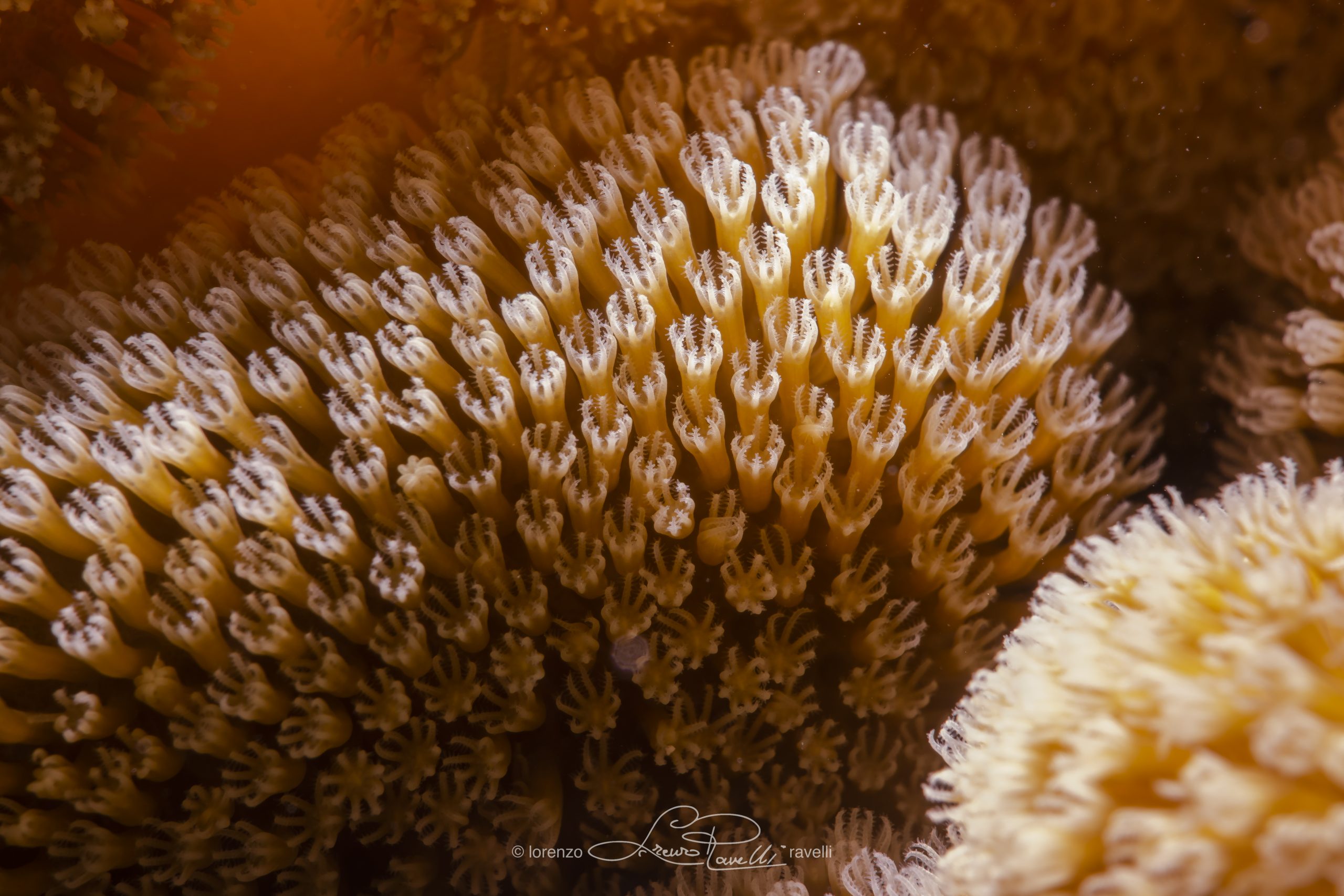
Photo by Lorenzo Ravelli
Even if the close symbiosis between polyps and zooxanthellae is undoubtedly a pleasure for eyes, it is much more important at the metabolic level, since it allows both to maintain good health. Widely spread, this specific interaction is among the most sensitive ones of the underwater world, it requires certain temperatures, normally between 25 and 29°C and any climatic change outside this range may be the principal cause of symbiosis’ rupture. In the last decades, climate change has increased water temperatures by 1-2°C than average, leading to one of the most serious phenomena for corals: coral bleaching.
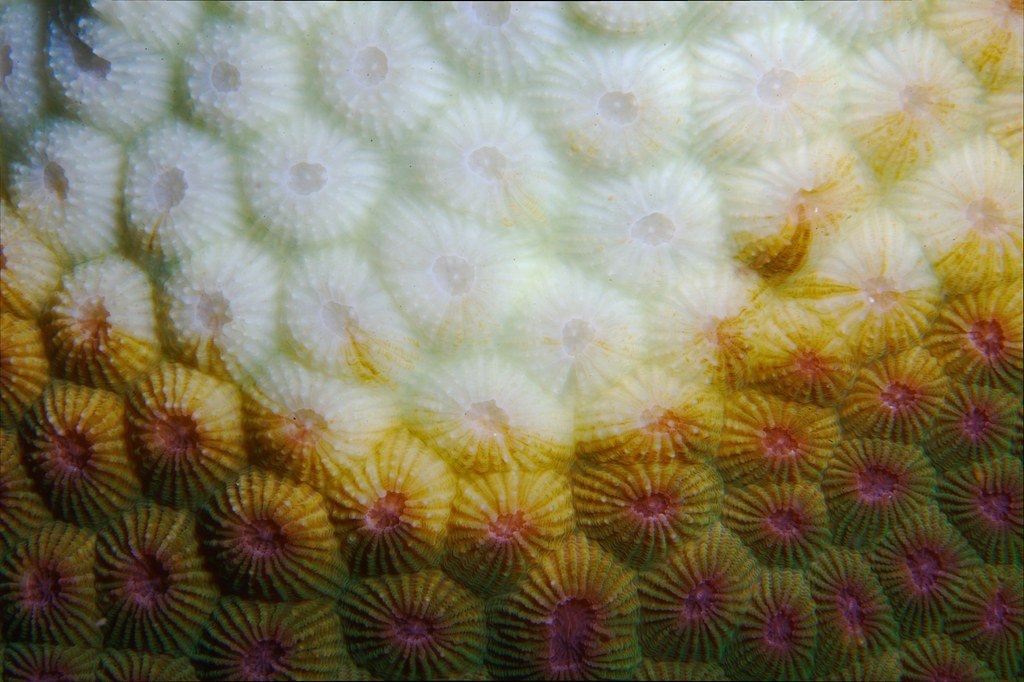
It is described as a sort of “fever” that breaks the symbiosis: zooxanthellae, not being able anymore to produce nutrients, are expelled by corals’ calcareous structure, which lose its typical color, remaining completely white. Moreover, without a sufficient supply of nutrients, coral remains in a state of suffering which makes it more vulnerable to possible predators and pathogens. Nevertheless, the return to the symbiotic conditions with photosynthetic algae is possible: indeed, a gradual re-cooling of waters up to the initial thermal condition would lead to re-establishing the interaction.
“Coral bleaching” by PacificKlaus is licenced under CC BY-NC 2.0 ©
At worst, when temperatures remain too high to allow “healing”, the white and empty corals’ calcareous skeletons become the object of the destructive action of organisms such as parrot fishes, finally remaining covered by green algae that clog them, leading to death.
This is obviously the most negative scenario, which can be overcome not only by decreasing more than drastically the amounts of pollutants in the atmosphere, which represent the main cause of climate change, but also intervening directly on the protection and recovery of coral reefs.
This is why one of the most innovative and promising projects in the scientific field seems to be the “Coral Restoration” one, which is based on the construction of “nursery” for coral growth, conceptually not too different from the typical nursery that we would associate thinking about children.
Although there are different types of nursery, this project is characterized by a common base: corals of various species are taken from the marine environment and are then fragmented into smaller pieces. Depending on whether the nursery is in laboratories or in situ, corals’ polyps are housed in different pools or on different supports (nets or trees) where they start to reproduce, increasing the coral’s dimensions. Finally, obtained individuals are transplanted into the coral reef in order to repopulate the damaged environment.
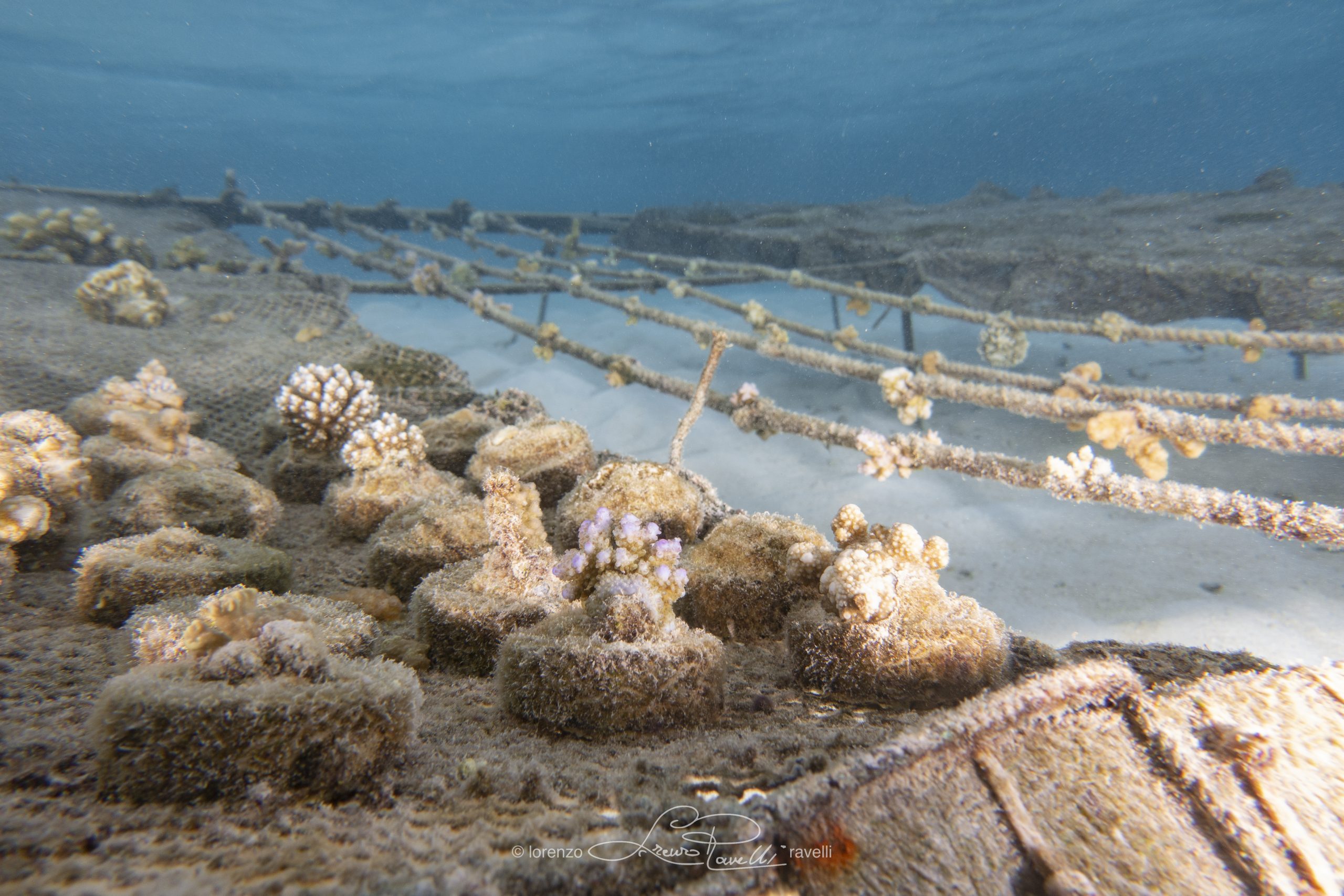
Photo by Lorenzo Ravelli
Clearly, “Coral Restoration” project does not exclude the need to change our way of life for the protection of the Planet, but it certainly gives us a picture of hope for the good of our seas. And just as the name suggests, why don’t we start by restoring ourselves?
• Baker, A. C. (2011). Zooxanthellae. Encyclopedia of Earth Sciences Series, Part 2, 1189-1192.
• Hoegh-Guldberg Ove (1999). Climate change, coral bleaching and the future of the world’s coral reefs. Marine and Freshwater Research 50, 839-866.
• Muller-Parker G., D’Elia C.F. and Cook C.B. (2015). Interactions Between Corals and Their Symbiotic Algae. Springer, Dordrecht.
• National Oceanic and Atmospheric Administration. www.NOAA.gov. “Restoring coral reef”
• Nicolini Filippo (2020). “Sbiancamento dei coralli: cause e conseguenze”. Biopills Pagnotta Alessandro (2017). “Cos’è lo sbiancamento o bleaching della barriera corallina?”. Coral’s Garden

Ocean Facts
Author: Ingrid Ravasi

Blue Growth
Author: Ingrid Ravasi


Ocean Facts
Author: Sara Allahverdiyeva
