GOAL
To raise awareness and actively engage students, citizens, and tourists in Genoa in the protection of the Pelagos Sanctuary, a treasure of biodiversity in our sea.
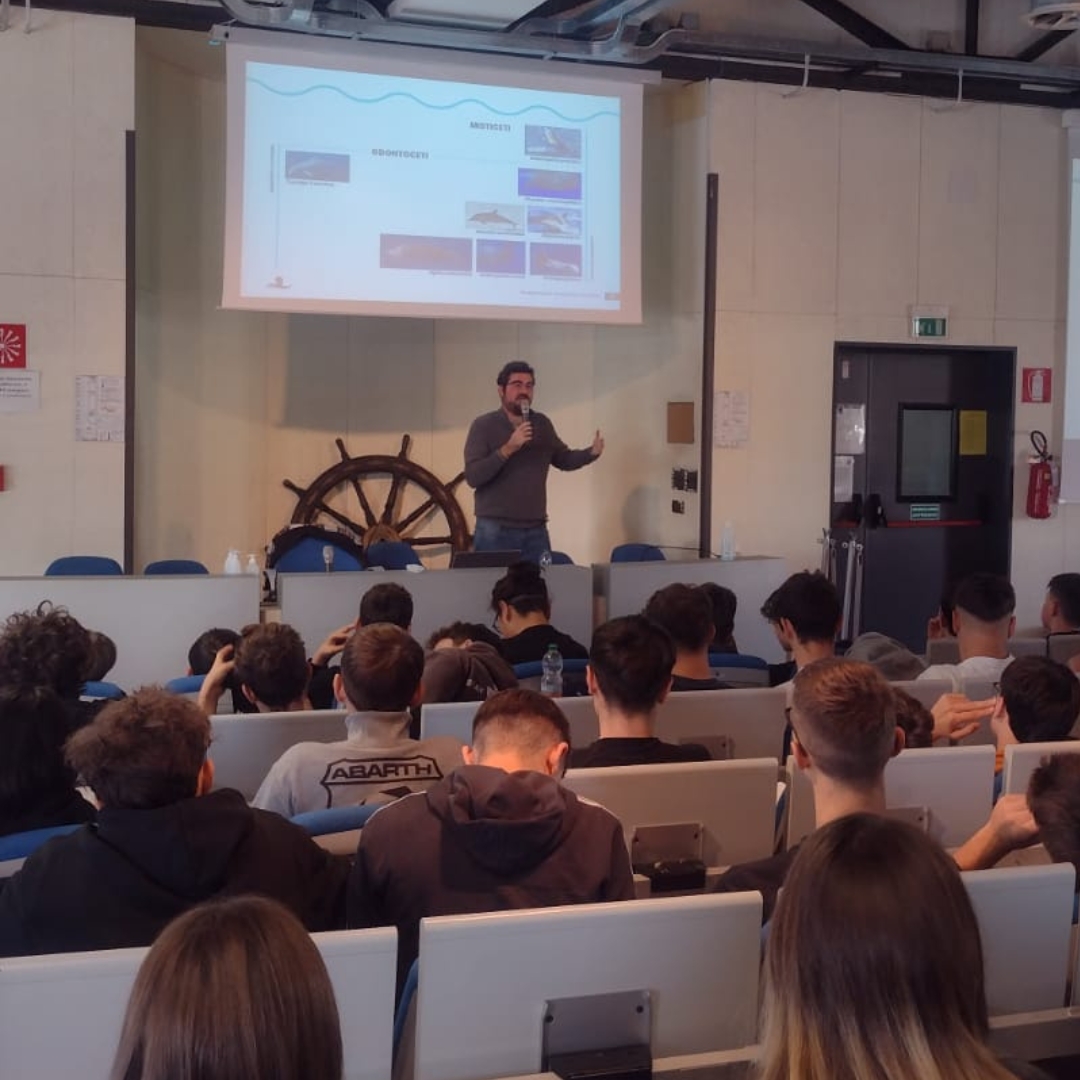
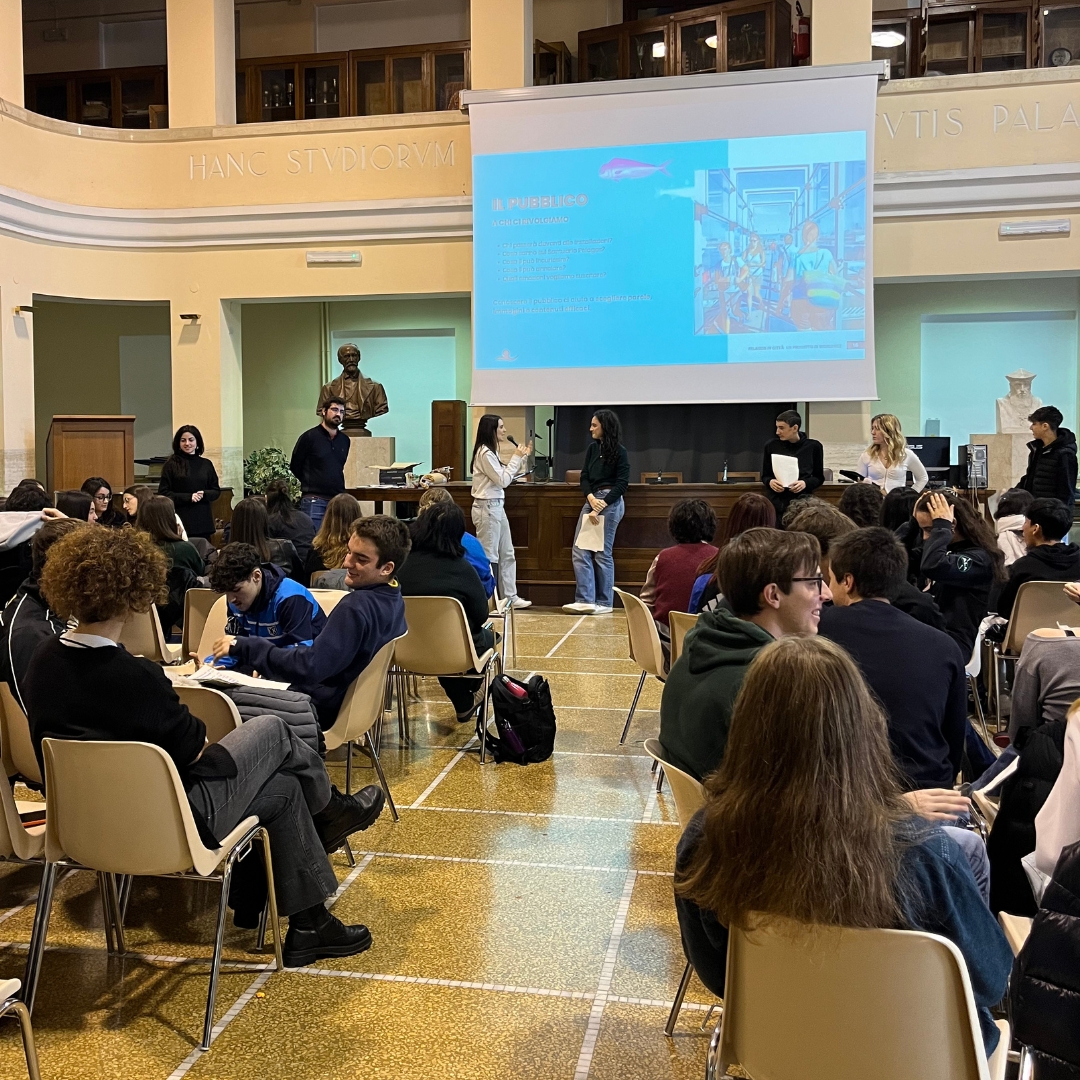
“Pelagos in the City” is an environmental education project that involved over 130 students from three high schools in Genoa.
Through interactive lessons, field trips, and creative workshops, the students explored the wonders and vulnerabilities of the Pelagos Sanctuary to become ambassadors for the sea.

The Pelagos Sanctuary is an international marine protected area established through an agreement between Italy, France, and the Principality of Monaco.
It covers nearly 90,000 km² of the Mediterranean Sea, with the goal of protecting marine mammals and their habitats.
A true treasure of biodiversity, threatened by human activities.
The students’ efforts resulted in an urban trail made up of 10 stops spread throughout Genoa’s Old Port and historic center.
Each stop tells a story about a piece of this extraordinary natural heritage: a marine wonder, a threat to face, or a solution to adopt, aiming to inspire citizens and tourists toward greater awareness and concrete action.
Click on each of the 10 stops to dive into the Pelagos Sanctuary.
INTRODUCTION
Pelagos in the city

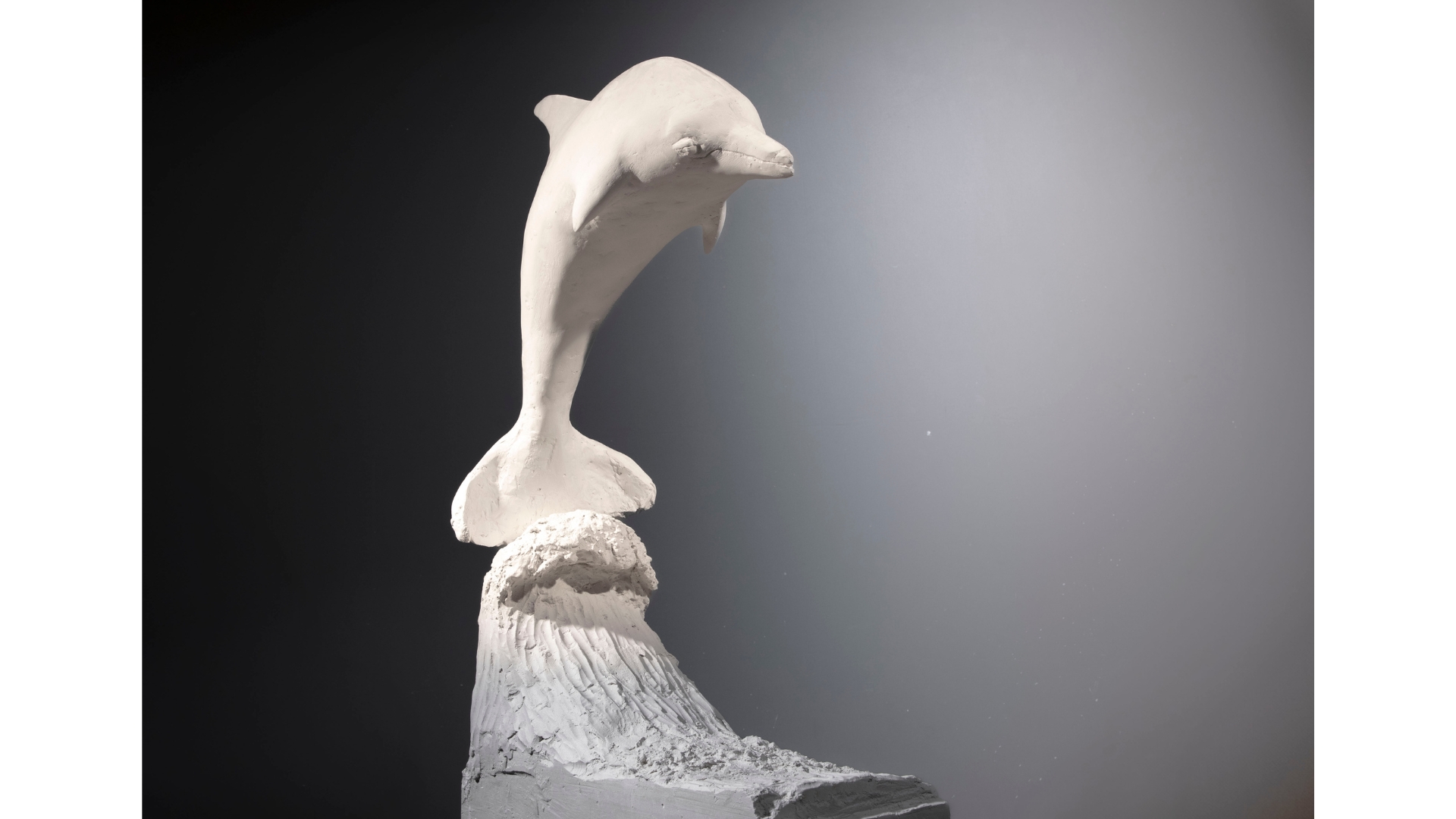
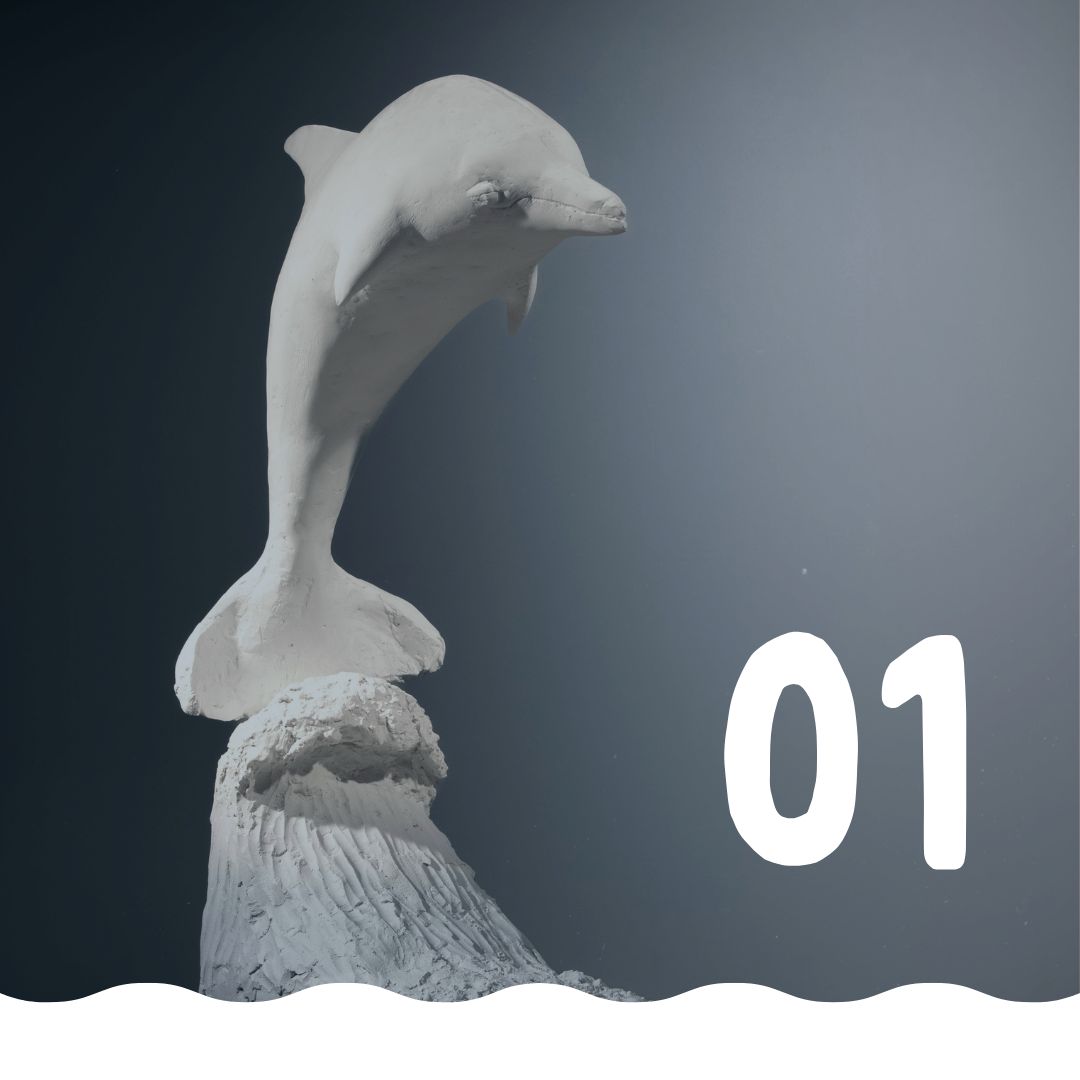
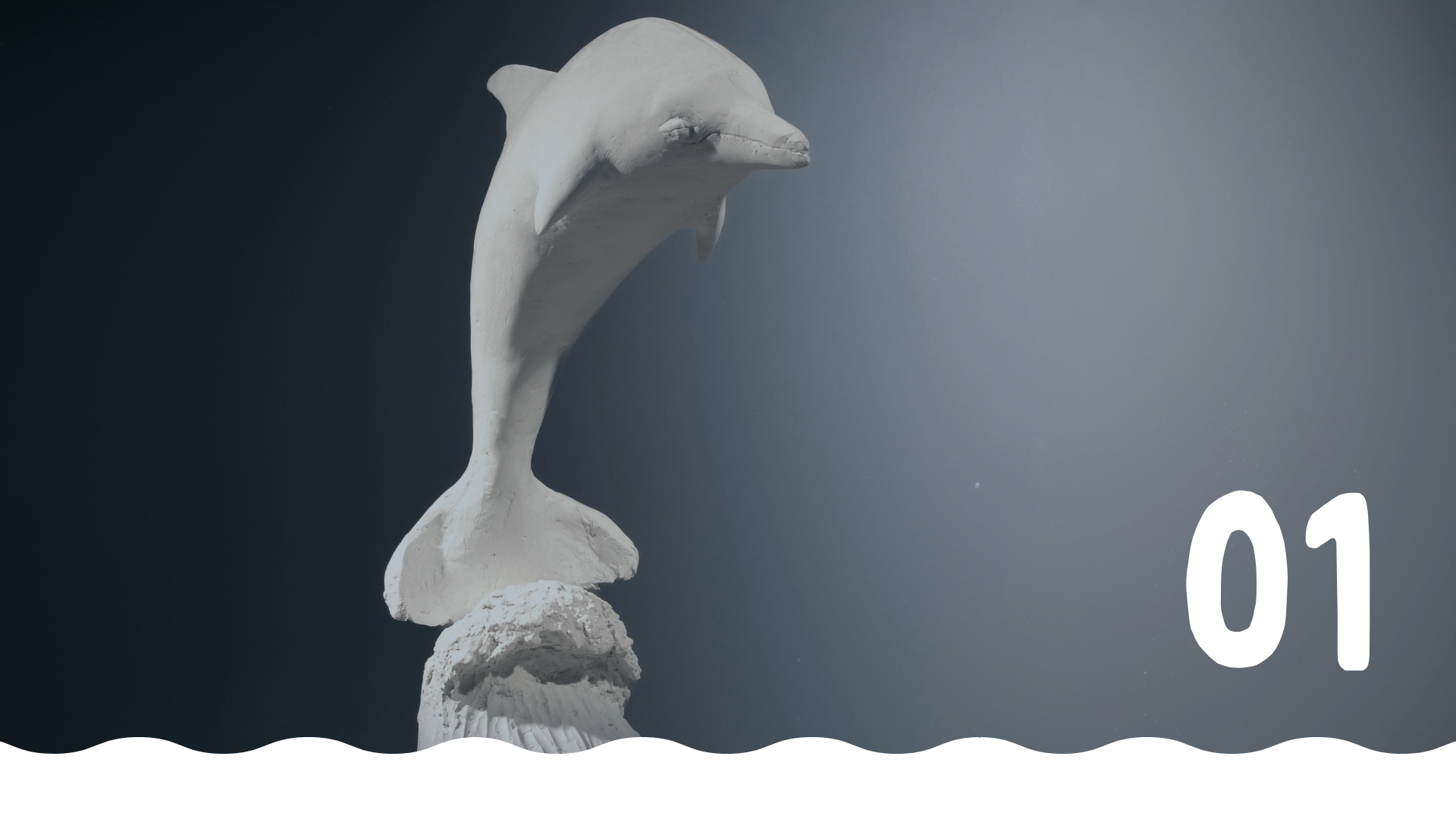
“We chose to depict a dolphin jumping out of the water, specifically the common dolphin. This animal lives within the Pelagos Sanctuary and is unfortunately at risk of extinction. The dolphin is one of the most beautiful and fascinating animals on our planet. It is known for its great intelligence and the strong bond it has always shared with humans.”
“Un rifiuto non è nulla in confronto alla vastità del mare”;
“I cetacei, che vivono esclusivamente nell’Oceano, sono pesci”;
“Nel santuario si prega soltanto”.
Pensavi ci fosse un’affermazione corretta? Risposta sbagliata!
Ora hai un motivo per conoscere il Santuario Pelagos: l’unica area marina internazionale dedicata alla protezione dei mammiferi marini e dei loro habitat nel Mar Mediterraneo. Si estende lungo la costa italiana, francese e monegasca, una posizione che offre una ricca disponibilità di alimenti necessari ai cetacei. Tuttavia, ciò non la rende immune dagli effetti dell’inquinamento: esso non ha confini!
Un rifiuto gettato in periferia è dannoso tanto quanto uno gettato sulla costa, poiché confluisce nei mari tramite i fiumi. Se ti è utile, ricordalo così: “Che tu sia turista o cittadino il motto sarà sempre: io non inquino!”.
Volete scoprire perché abbiamo smentito i luoghi comuni iniziali? Percorrete le successive 9 tappe di questo percorso per accrescere la vostra consapevolezza sul mare!

“A waste is nothing compared to the vastness of the sea”;
“Cetaceans, which live exclusively in the Ocean, are fish”;
“In the sanctuary we only pray”.
Did you think there was a correct statement? Wrong answer!
Now you have a reason to learn about the Pelagos Sanctuary: a marine protected area that aims to safeguard biodiversity, that is, the preservation of the diversity of species inhabiting natural ecosystems. It stretches along the Italian, French and Monegasque coasts, a location that offers a rich supply of food needed by cetaceans.
However, this does not make it immune to the effects of pollution: it has no boundaries!
A waste thrown in the suburbs is just as harmful as one thrown on the coast, since it flows into the seas via the rivers. If it helps, remember it like this, “Whether you are a tourist or a citizen, the motto will always be: I don’t pollute!”
Want to find out why we disproved the initial clichés? Walk through the next 9 steps of this path to increase your awareness about the sea!
« Un gâchis n’est rien comparé à l’immensité de la mer » ;
“Les cétacés, qui vivent exclusivement dans l’océan, sont des poissons” ;
“Dans le sanctuaire, on ne fait que prier”.
Vous pensiez qu’il y avait une affirmation correcte ? Mauvaise réponse !
Vous avez maintenant une raison de connaître le Sanctuaire Pelagos : une aire marine protégée qui vise à sauvegarder la biodiversité, c’est-à-dire la préservation de la diversité des espèces vivant dans les écosystèmes naturels.. Elle s’étend le long des côtes italiennes, françaises et monégasques, un endroit qui offre
une grande quantité de nourriture nécessaire aux cétacés. Mais elle n’est pas pour autant à l’abri des effets de la pollution : elle n’a pas de frontières !
Un déchet jeté en banlieue est tout aussi nocif qu’un déchet jeté sur le littoral, car il se déverse dans les mers via les rivières. Si cela peut vous aider, retenez ceci : « Que vous soyez touriste ou citoyen, la devise sera toujours : je ne pollue pas !
Vous voulez savoir pourquoi nous avons démenti les clichés initiaux ? Suivez les 9 étapes suivantes de ce parcours de sensibilisation à la mer !
BEACH TREASURES
Pelagos in the city

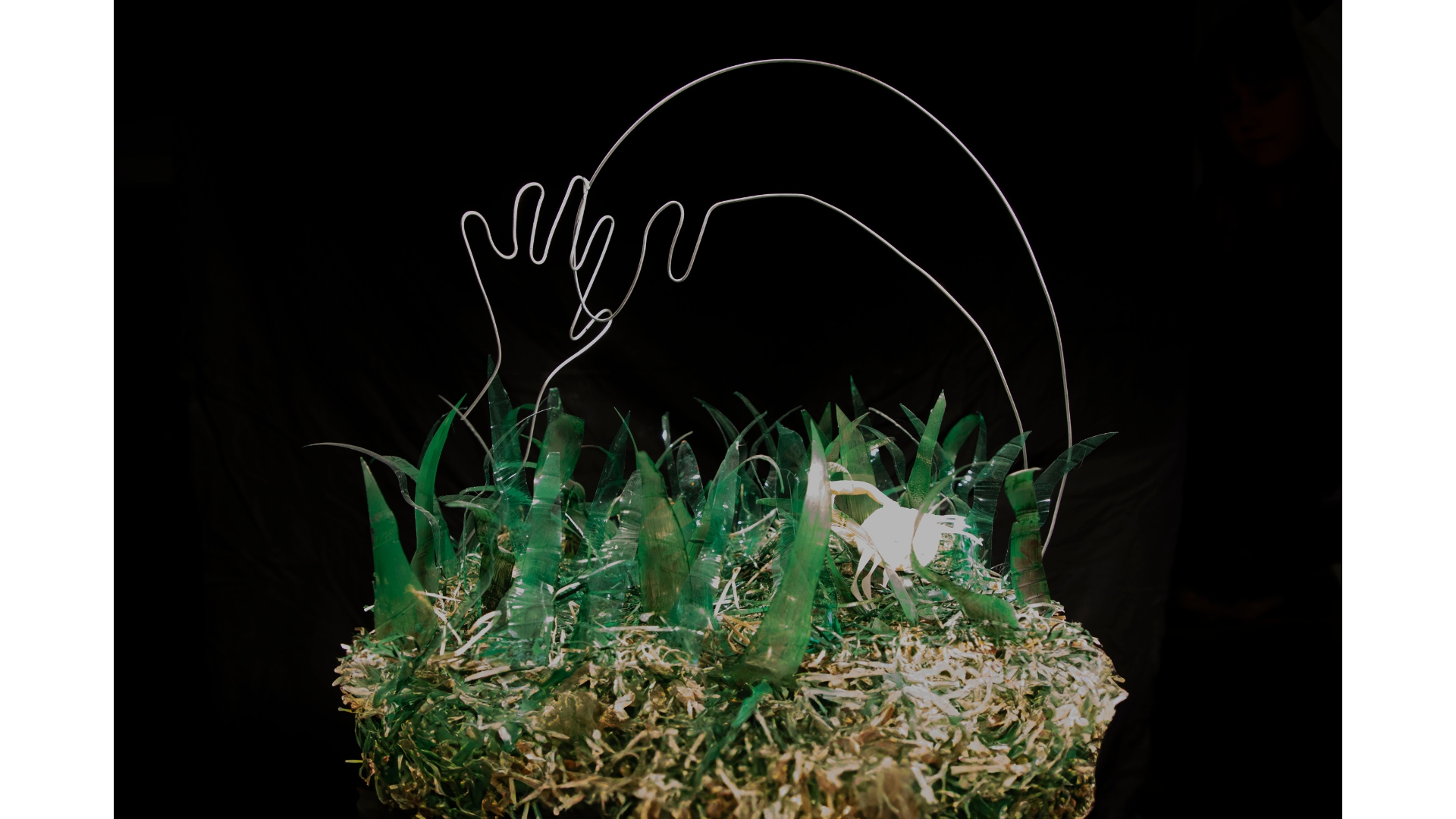
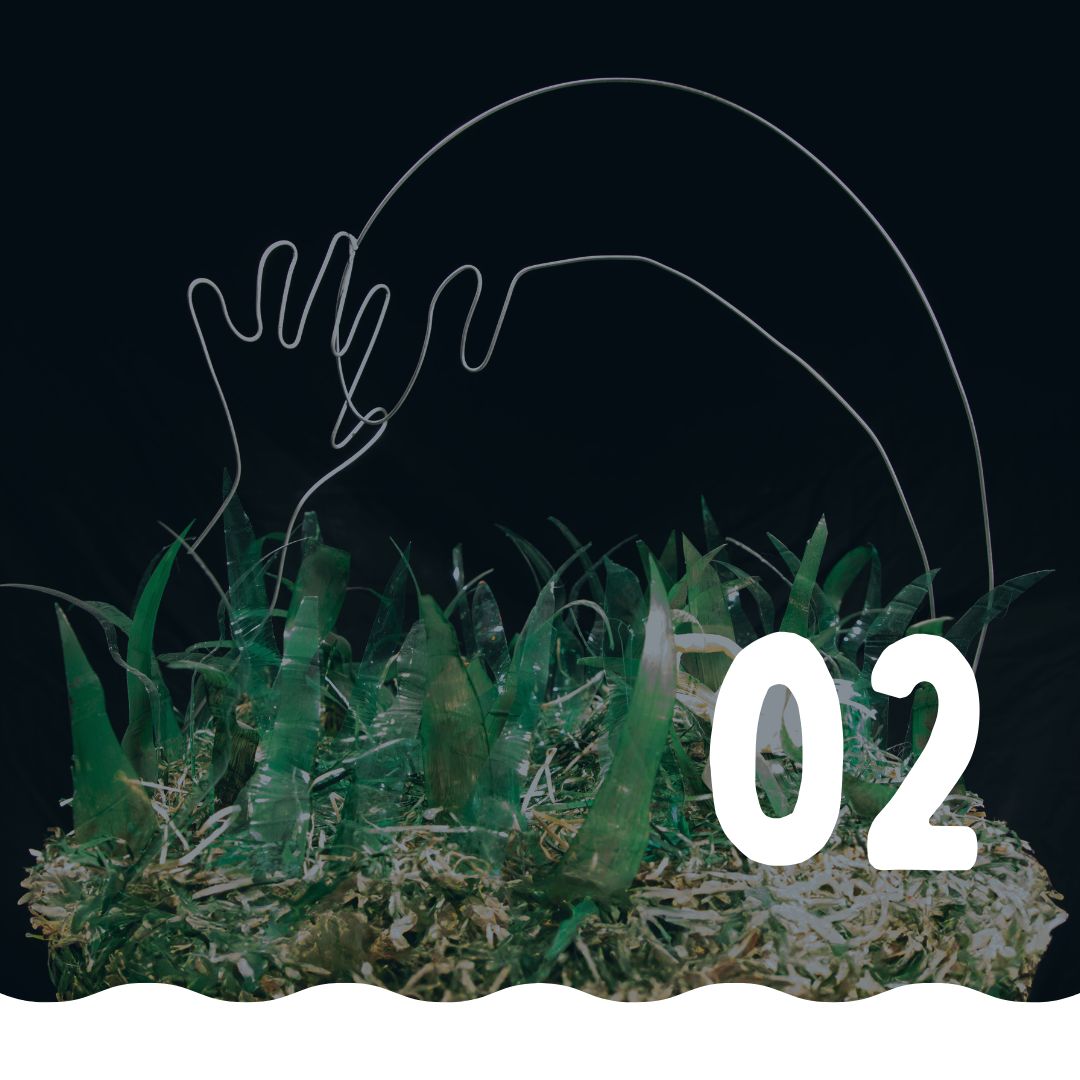
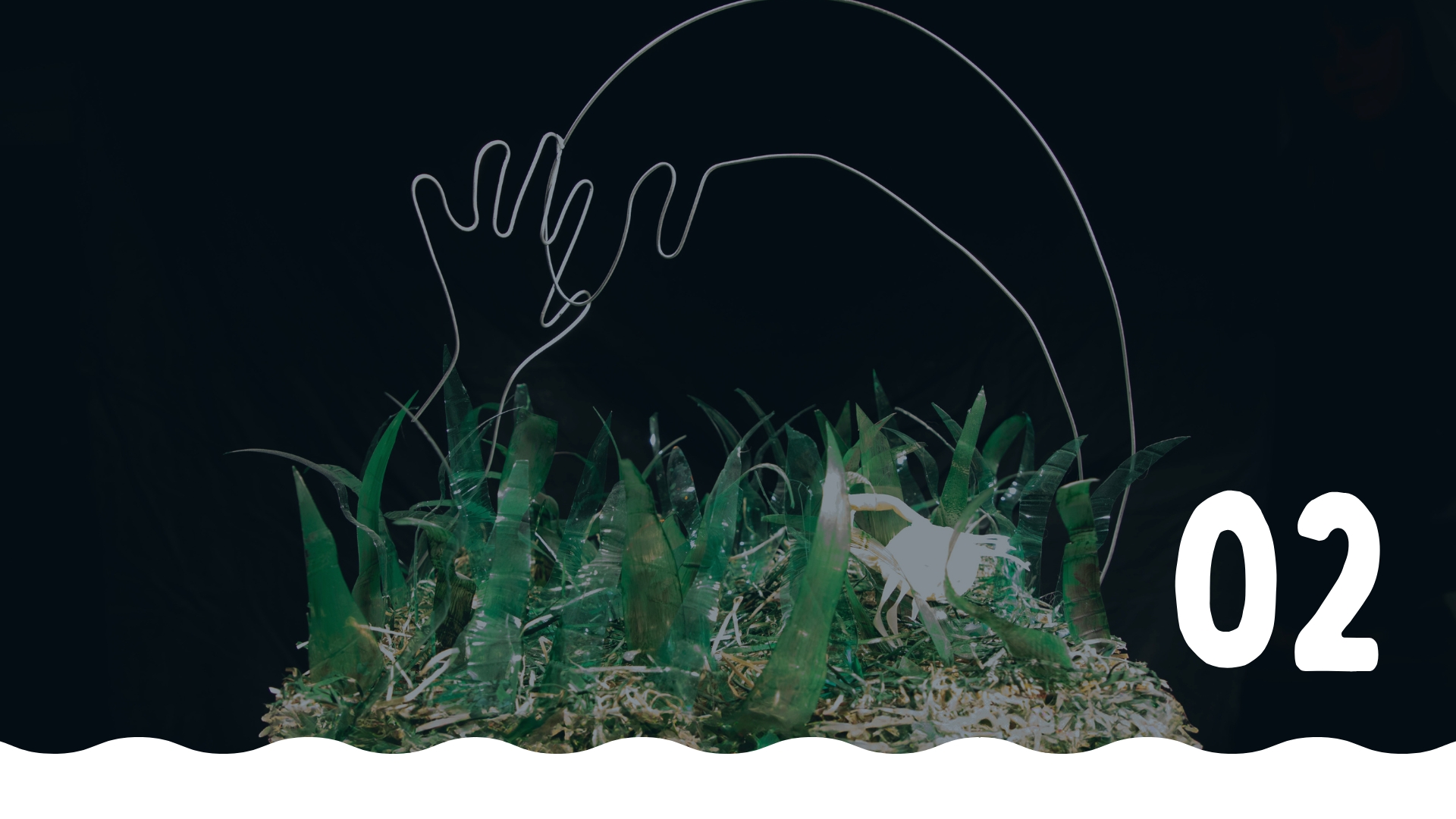
“We created the Posidonia using recycled plastic bottles. To recreate the seabed, we used a polystyrene base and artificial straw. With wire, we built a hand that ‘stops’ a wave, symbolizing the role of Posidonia in protecting the coasts and stabilizing the marine seabeds.”
Anche in mare ci sono le piante!
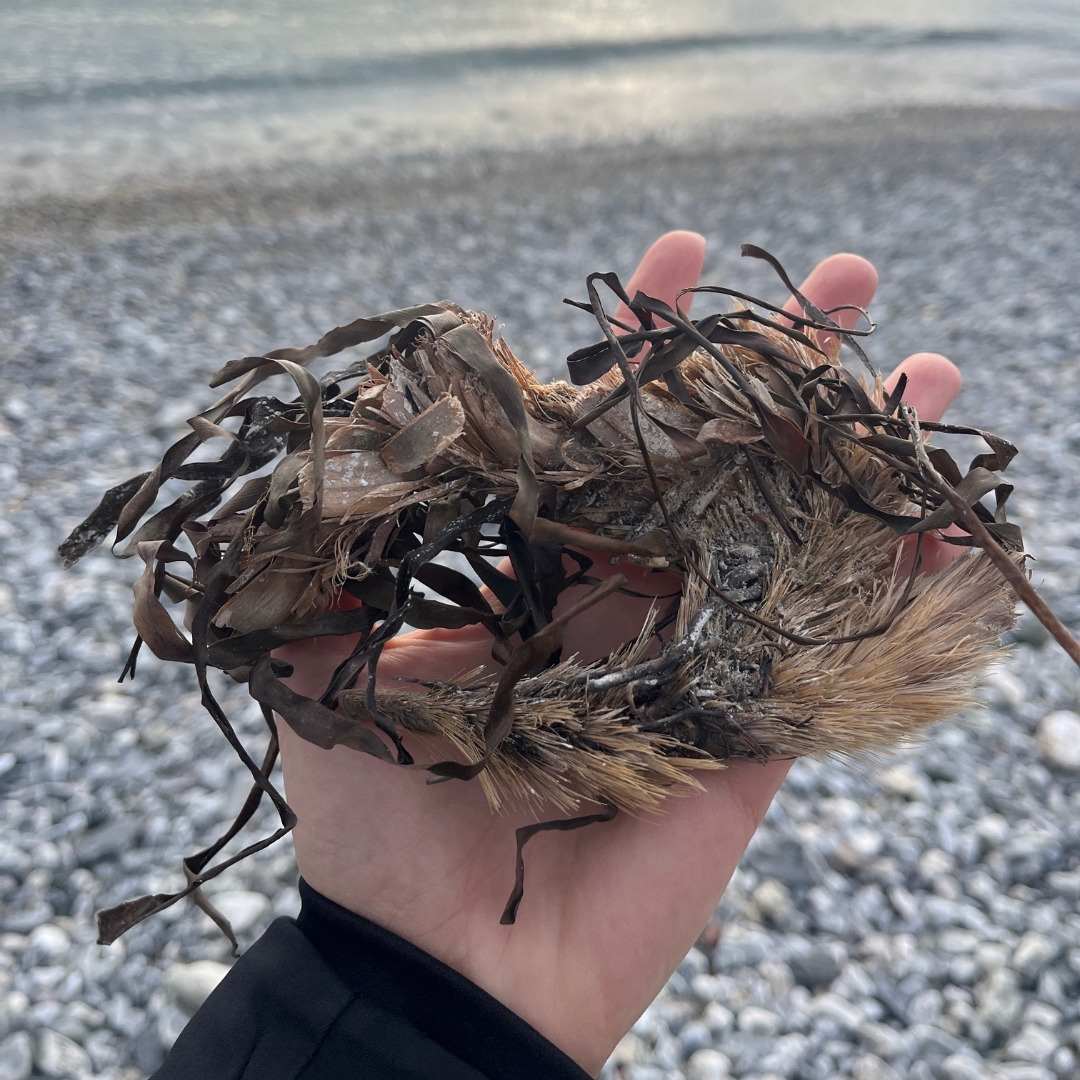
La Posidonia oceanica è una pianta marina appartenente alla famiglia delle Posidoniaceae, endemica del Mar Mediterraneo. Forma delle immense praterie sommerse ed è facile trovare tracce della sua presenza anche sulla spiaggia. Possiede una notevole importanza ecologica: la sua presenza è considerata un ottimo indicatore della qualità delle acque costiere.
Le funzioni essenziali che svolge la Posidonia sono molteplici, come la produzione di ossigeno, l’offerta di rifugio e habitat per numerose specie animali e vegetali, e la protezione delle spiagge dall’erosione, quando le foglie vecchie si accumulano formando la banquette.
Le praterie di Posidonia sono minacciate soprattutto dagli ancoraggi selvaggi, dalla sedimentazione e dalle modifiche della costa causate dall’uomo.
Tutti noi, in quanto cittadini responsabili, abbiamo il dovere di preservare questa specie e garantirne la sopravvivenza.
Even in the sea there are plants!
Posidonia oceanica is a marine plant belonging to the Posidoniaceae family, endemic to the Mediterranean Sea. It forms immense underwater prairies and has considerable ecological importance: its presence is considered an excellent indicator of coastal water quality.
The essential functions that Posidonia performs are many, such as producing oxygen, providing shelter and habitat for numerous animal and plant species, and protecting beaches from erosion when old leaves accumulate to form banquette.
Posidonia meadows are especially threatened by uncontrolled anchoring, sedimentation, and human-induced changes to the coastline.
All of us, as responsible citizens, have a duty to preserve this species and ensure its survival.
Même dans la mer, il y a des plantes !
Posidonia oceanica est une plante marine appartenant à la famille des Posidoniaceae, endémique de la mer Méditerranée. Elle forme d’immenses prairies sous-marines et a une importance écologique considérable : sa présence est considérée comme un excellent indicateur de la qualité des eaux côtières.
Les fonctions essentielles de la posidonie sont nombreuses : production d’oxygène, abri et habitat pour de nombreuses espèces animales et végétales, protection des plages contre l’érosion lorsque les vieilles feuilles s’accumulent pour former des banquettes.
Les herbiers de posidonie sont particulièrement menacés par les ancrages sauvages, la sédimentation et les modifications du littoral causées par l’homme.
En tant que citoyens responsables, nous avons tous le devoir de préserver cette espèce et d’assurer sa survie.
WONDERS
Pelagos in the city

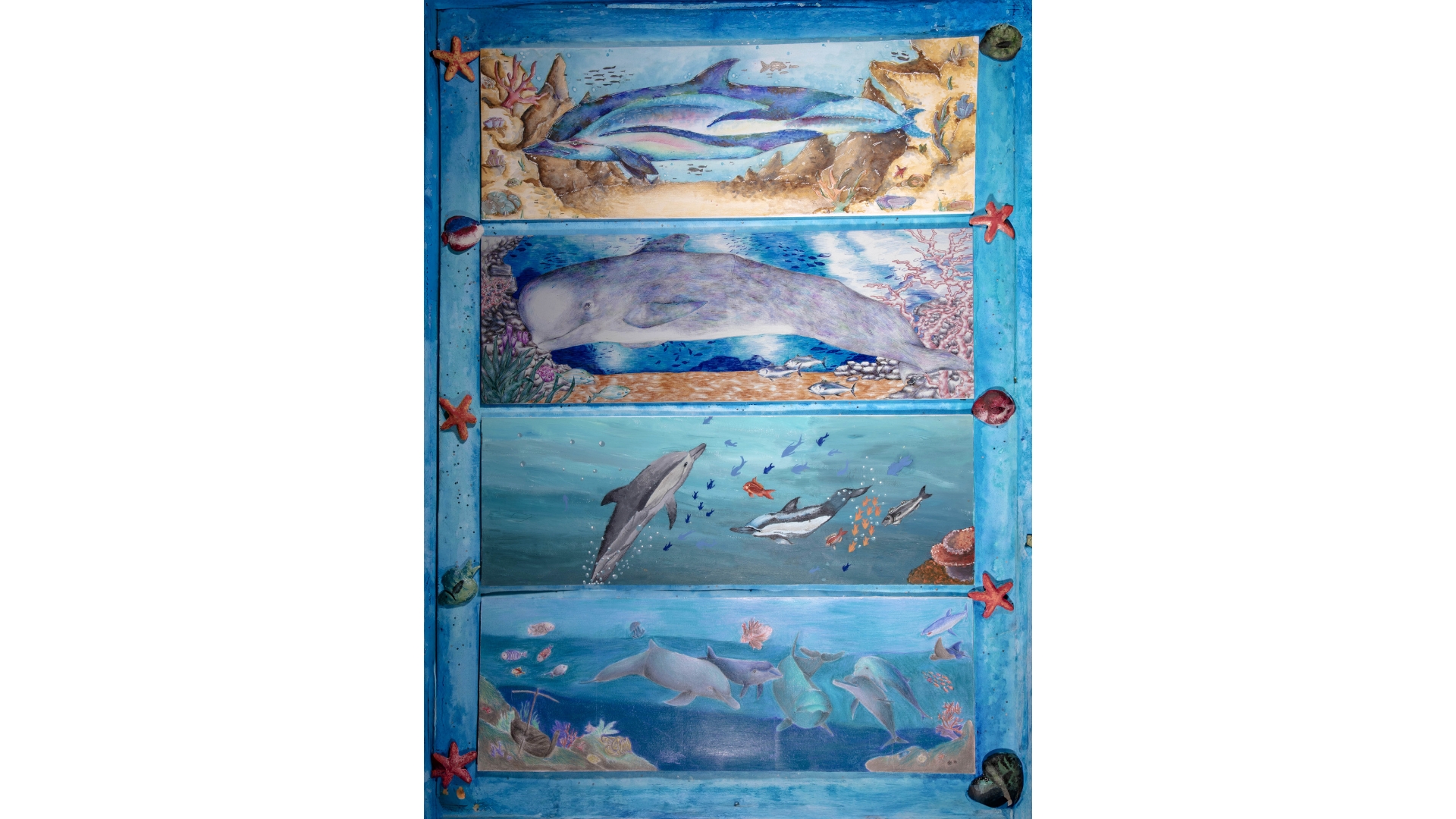
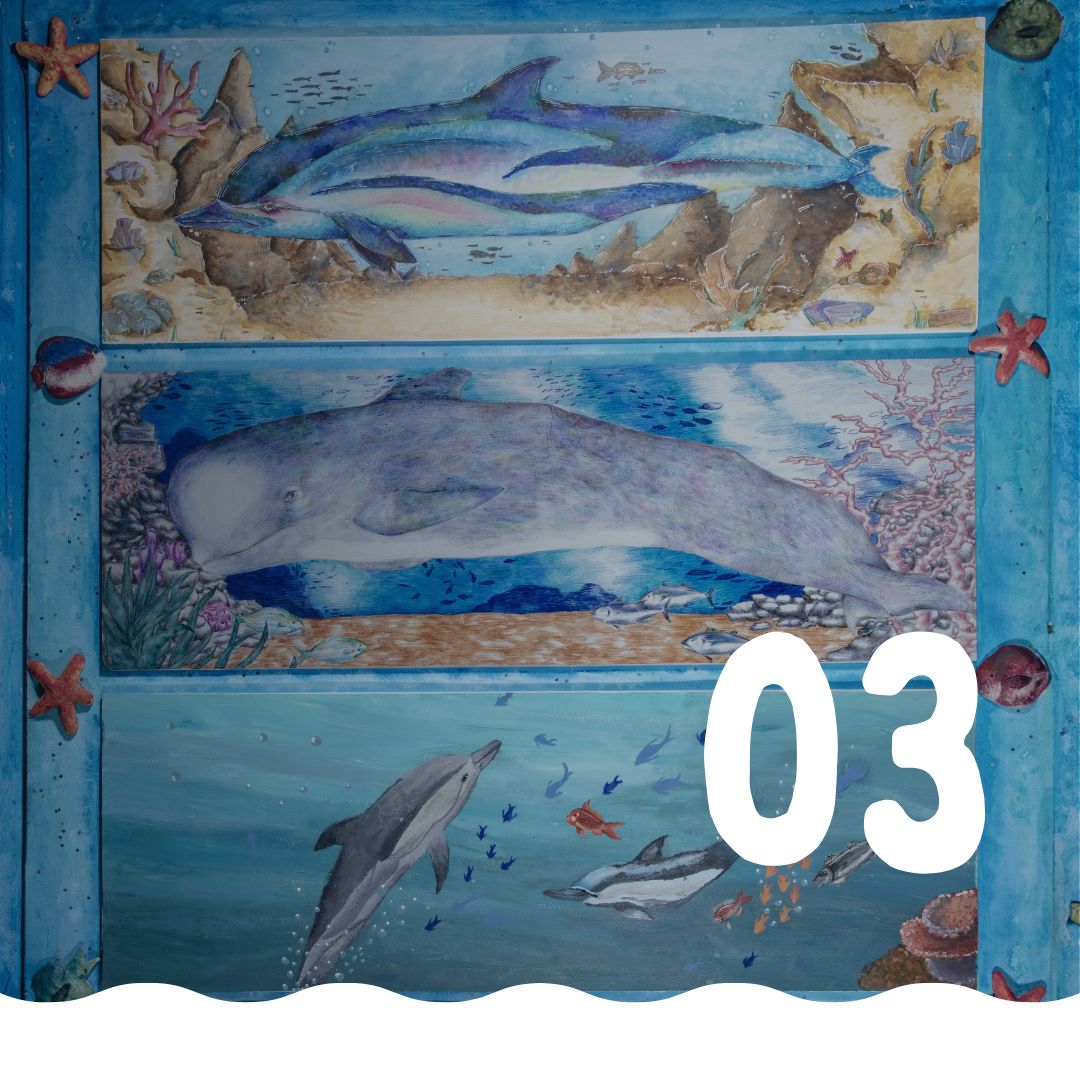
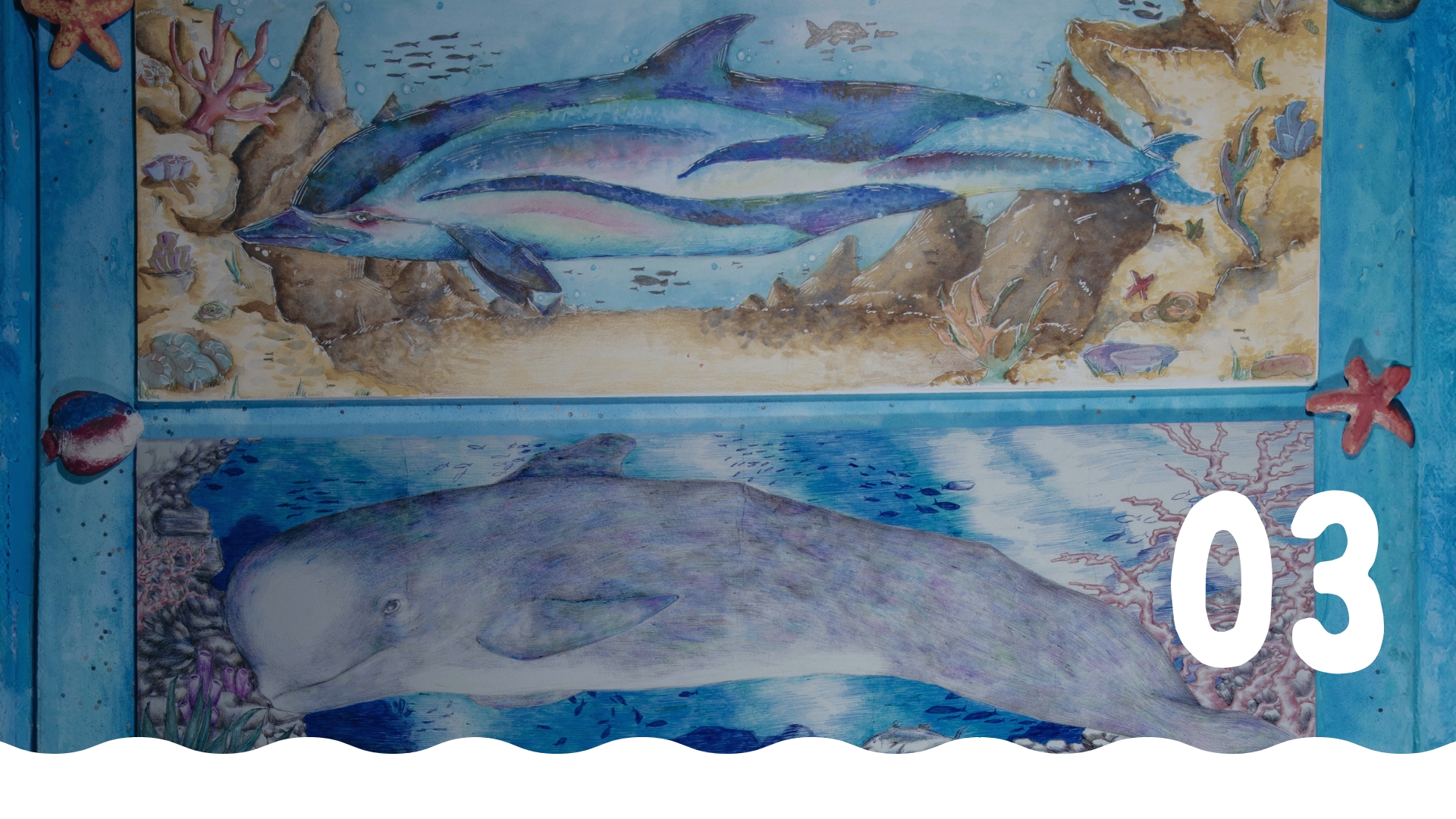
“We decided to create an illustration depicting four species of dolphins: the common dolphin, the striped dolphin, the pilot whale, and the bottlenose dolphin. These species were chosen to showcase the variety of cetaceans belonging to the Delphinidae family, from the most well-known – like the bottlenose dolphin – to those that might not be immediately recognized as dolphins by an untrained eye, such as the pilot whale.”
Lo sapevi che nel Santuario Pelagos vivono diverse specie di delfino?
Tra queste troviamo ad esempio la stenella (Stenella coeruleoalba), che è la più diffusa nel Mar Ligure e spesso si avvicina alle barche, ma attenzione a non disturbarla! Vive in gruppi chiamati “pod” in cui si intrufolano esemplari di delfino comune (Delphinus delphis). Il tursiope (Tursiops truncatus) è uno dei cetacei più studiati ed è costiero, per questo interagisce molto spesso con l’uomo. Infine il globicefalo (Globicephala melas), riconoscibile per la sua testa sferica e noto per gli spiaggiamenti collettivi, in cui interi gruppi si arenano sulle coste.
I delfini sono tra gli animali più intelligenti al mondo e vederli scomparire a causa dell’inquinamento sarebbe una perdita incalcolabile. Proteggiamoli ora, prima che il loro canto diventi solo un ricordo. Il futuro degli oceani dipende da noi.
Did you know that several species of dolphin live in the Pelagos Sanctuary?
These include, for example, the stenella (Stenella coeruleoalba), which is the most common in the Ligurian Sea and often approaches boats, but be careful not to disturb it! It lives in groups called “pods” into which specimens of the common dolphin (Delphinus delphis). The bottlenose dolphin (Tursiops truncatus) is one of the most studied cetaceans and is coastal, so it interacts very often with humans. Finally, the pilot whale (Globicephala melas), recognizable by its spherical head and known for collective beaching, in which entire groups strand on the coast.
Dolphins are among the most intelligent animals in the world, and to see them disappear due to pollution would be an incalculable loss. Let’s protect them now, before their song becomes just a memory. The future of the oceans depends on us.
Saviez-vous que plusieurs espèces de dauphins vivent dans le Sanctuaire Pelagos ?
Parmi elles, le stenella (Stenella coeruleoalba), le plus commun de la mer Ligure, s’approche souvent des bateaux, mais attention à ne pas le déranger ! Il vit en groupes appelés « pods » dans lesquels se faufilent les dauphins communs (Delphinus delphis). Le grand dauphin (Tursiops truncatus) est l’un des cétacés les plus étudiés. Il est côtier et interagit donc très souvent avec l’homme. Enfin, le globicéphale noir (Globicephala melas), reconnaissable à sa tête sphérique et connu pour ses échouages collectifs, où des groupes entiers s’échouent sur la côte.
Les dauphins sont parmi les animaux les plus intelligents du monde et les voir disparaître à cause de la pollution serait une perte incalculable. Protégeons-les maintenant, avant que leur chant ne soit plus qu’un souvenir. L’avenir des océans dépend de nous.
WONDERS
Pelagos in the city

The story I’m about to tell you
is a story of the sea,
Moby Dick, the white whale,
a myth that won’t break free,
listen close,
this is the rap that stays with thee!
Captain Ahab,
the dark mind,
hunting the whale,
his purest grind.
With a crew who didn’t understand his craze,
but he was ready to go all out for that fatal chase.
Moby Dick, the legendary whale,
with his white shining veil,
was his greatest tale,
the ocean vast,
infinite as his wrath:
Ahab wanted revenge,
nothing could distract,
fear turns round, the sea,
wild and intact,
Ahab won’t stop,
it’s his courage nonstop,
But Moby Dick won’t be caught,
there’s a battle to be fought.
Moby Dick, the legend in blue,
every wave’s a challenge, always new,
Ahab seeks, but the sea is stronger,
an endless fight against fate’s hunger.
Under a gray sky,
the sea rages high,
Ahab throws the harpoon,
but fate’s already spun,
Ahab won’t quit, he faces the horror,
but Moby Dick won’t be conquered,
it’s the ocean’s power that can’t be cornered.
Fear turns round, the sea is wild,
Ahab won’t stop, he’s brave and riled,
But Moby Dick won’t be caught, there’s a story to be told,
Moby Dick, the legend in blue,
every wave’s a challenge,
always something new,
Ahab chases, but the sea is stronger,
an endless battle with fate no longer.
No one knows how it will end,
Moby Dick in the heart of the sea,
Ahab’s story ends here,
and the whale swims free.
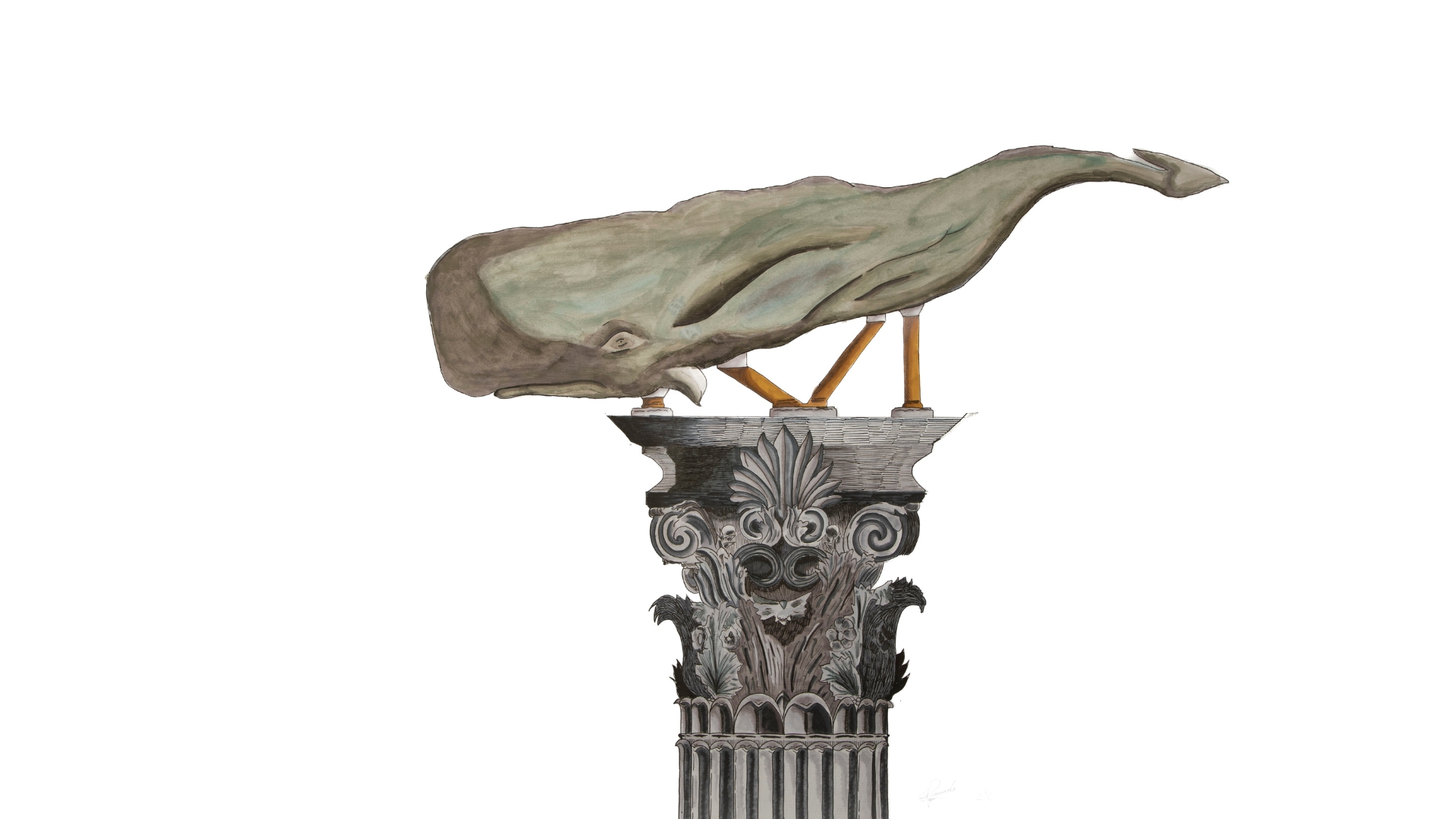
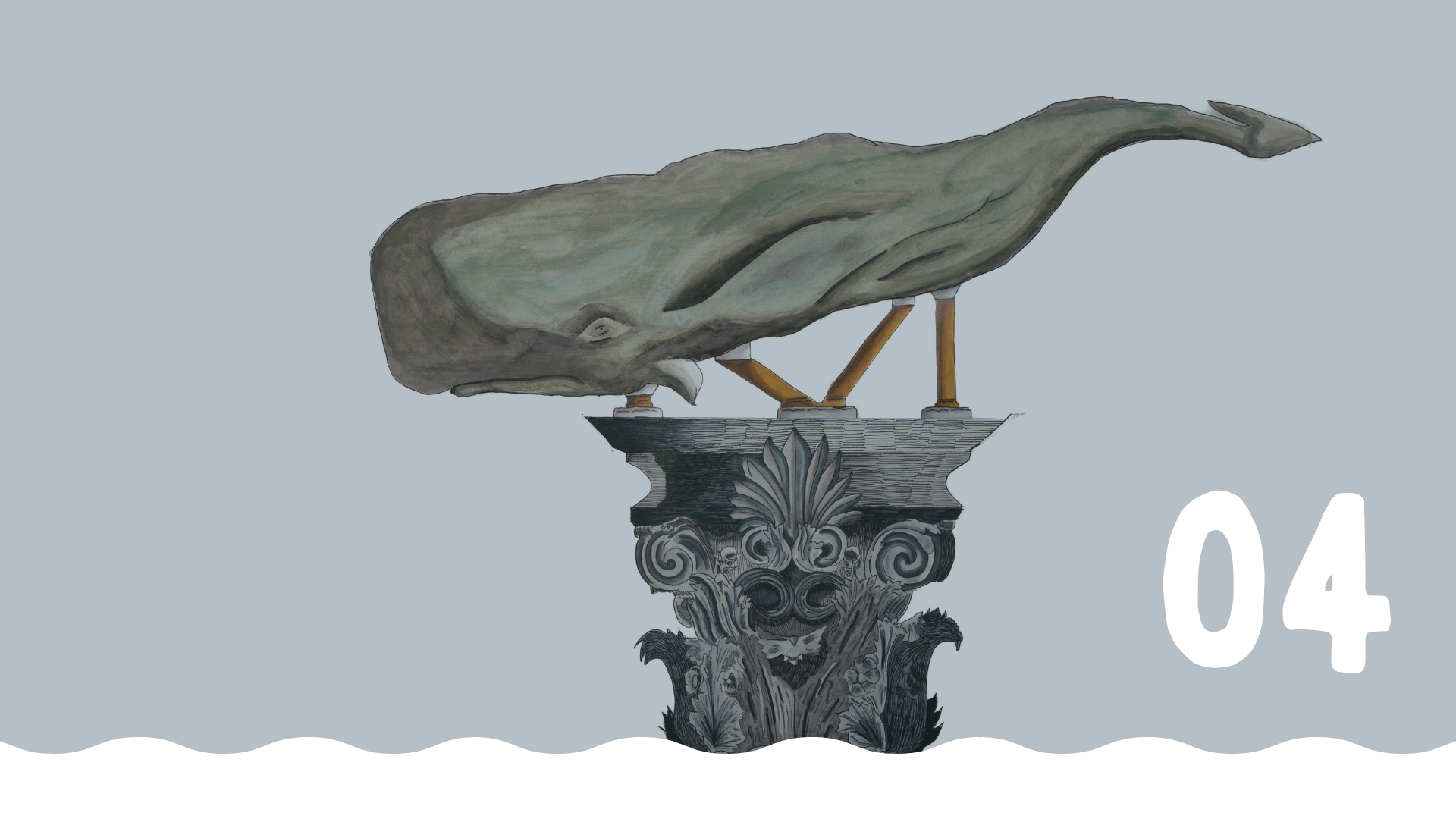
“We decided to depict a sperm whale resting on marble columns. The artwork aims to raise awareness about the importance of protecting these animals and encourages people to pay more attention to the life around us.”
La composizione che vedete qui a fianco rappresenta il capodoglio (Physeter macrocephalus), che probabilmente conoscerete dal famoso romanzo “Moby Dick”.
Questo mammifero ha il primato di essere il più grande predatore al mondo.
Fondamentale per l’attività di caccia è la sua testa, nella quale è presente un olio speciale, che il capodoglio trasforma da solido a liquido per raggiungere velocemente le profondità desiderate. Tra le prede principali c’è il calamaro gigante che, con i tentacoli, può provocare grossi graffi al cetaceo, i quali curiosamente sono elementi di attrazione per gli esemplari femminili.
Se sarete fortunati, potrete avvistare nel Santuario Pelagos questo antichissimo animale, di cui abbiamo testimonianza dall’epoca dei Romani.
The composition you see opposite represents the sperm whale (Physeter macrocephalus) you probably know from the famous novel “Moby Dick.” This mammal has the record of being the world’s largest predator.
Fundamental to its hunting activity is its head in which there is a special oil that the sperm whale transforms from a solid to a liquid to quickly reach the desired depths. Among the main prey is the giant squid whose tentacles can cause large scratches on the cetacean, which curiously enough are elements of attraction for female specimens.
If you are lucky, you may be able to spot in the Pelagos Sanctuary this very ancient animal, of which we have evidence from Roman times.
La composition que vous voyez ici représente le cachalot (Physeter macrocephalus) que vous connaissez probablement grâce au célèbre roman « Moby Dick ». Ce mammifère détient le record du plus grand prédateur au monde.
Sa tête est essentielle à son activité de chasse. Elle contient une huile spéciale que le cachalot transforme de solide en liquide afin d’atteindre rapidement les profondeurs souhaitées. Parmi ses principales proies, on trouve le calmar géant qui, avec ses tentacules, peut causer de grandes égratignures au cétacé, ce qui, curieusement, attire les spécimens féminins.
Si vous avez de la chance, vous pourrez apercevoir cet ancien animal dans le Sanctuaire Pelagos, dont nous avons des preuves depuis l’époque romaine.
WONDERS
Pelagos in the city

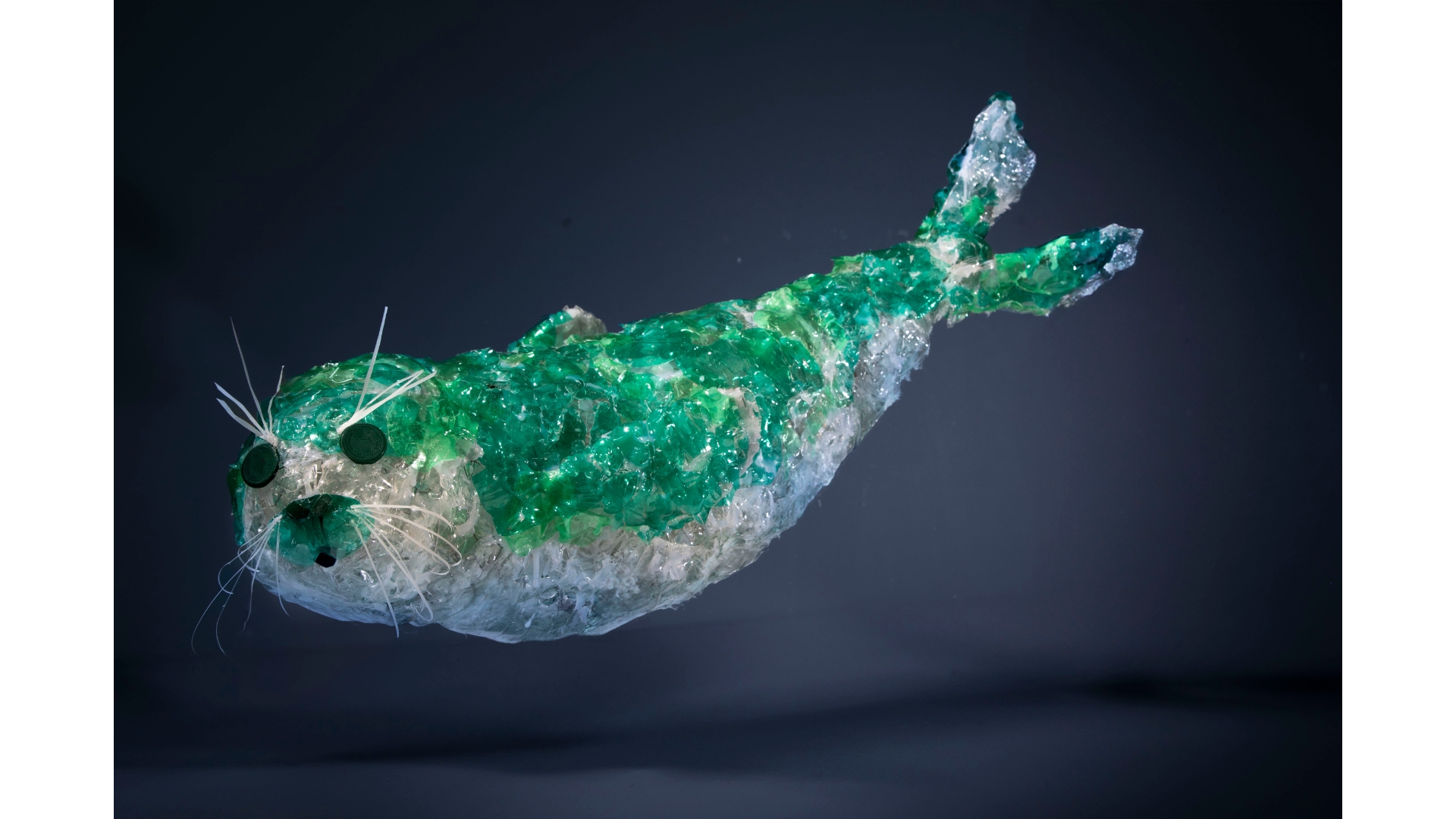
“The artwork represents a Mediterranean monk seal in motion, looking straight at the viewer. Its innocent and profound gaze conveys a message of hope for the repopulation of the species. The recycled materials used to create it highlight the importance of recycling as a way to support its conservation.”
Avete mai sentito parlare di “Grotte del Bue Marino”?
Il nome “bue marino” era utilizzato per indicare la foca monaca (Monachus monachus), un tempo ampiamente diffusa nel Mediterraneo, ma che oggi si trova principalmente nel Mar Egeo e Mediterraneo Orientale.
Abile nuotatrice, alterna periodi in mare aperto a soste sul litorale. Negli anni ‘20 del ‘900, a causa delle attività umane, principalmente di caccia, si è estinta nella maggior parte del Mediterraneo, sopravvivendo solamente lungo le coste della Grecia.
Per fortuna, grazie a iniziative di protezione, la foca monaca ha ricominciato a popolare altre parti del Mediterraneo e nel 2010 è stata avvistata nelle acque di Portofino. Il Santuario Pelagos aiuta a proteggere questa specie, fondamentale per il nostro ecosistema marino.
Have you ever heard of “Sea Ox Caves?”
The name “sea ox” was used to refer to the monk seal (Monachus monachus), once widely distributed in the Mediterranean, but now found mainly in the Aegean and Eastern Mediterranean.
A skilled swimmer, it alternates between periods in the open sea and stops on the shoreline. In the 1920s, due to human activities, mainly hunting, it became extinct in most of the Mediterranean, surviving only along the coast of Greece.
Fortunately, thanks to protection initiatives, the monk seal has begun to populate other parts of the Mediterranean again, and in 2010 it was spotted in the waters of Portofino. The Pelagos Sanctuary helps protect this species, which is vital to our marine ecosystem.
Avez-vous déjà entendu parler des « grottes du bœuf de mer » ?
Le nom « bœuf de mer » a été utilisé pour désigner le phoque moine (Monachus monachus), autrefois très répandu en Méditerranée, mais que l’on trouve aujourd’hui principalement dans la mer Égée et en Méditerranée orientale.
Habile nageur, il alterne les périodes en pleine mer et les haltes sur le littoral. Dans les années 1920, en raison des activités humaines, principalement de la chasse, il s’est éteint dans la majeure partie de la Méditerranée, ne survivant que le long des côtes grecques.
Heureusement, grâce à des initiatives de protection, le phoque moine a recommencé à peupler d’autres parties de la Méditerranée et, en 2010, il a été repéré dans les eaux de Portofino. Le Sanctuaire Pelagos contribue à la protection de cette espèce fondamentale pour notre écosystème marin.
THREATS
Pelagos in the city

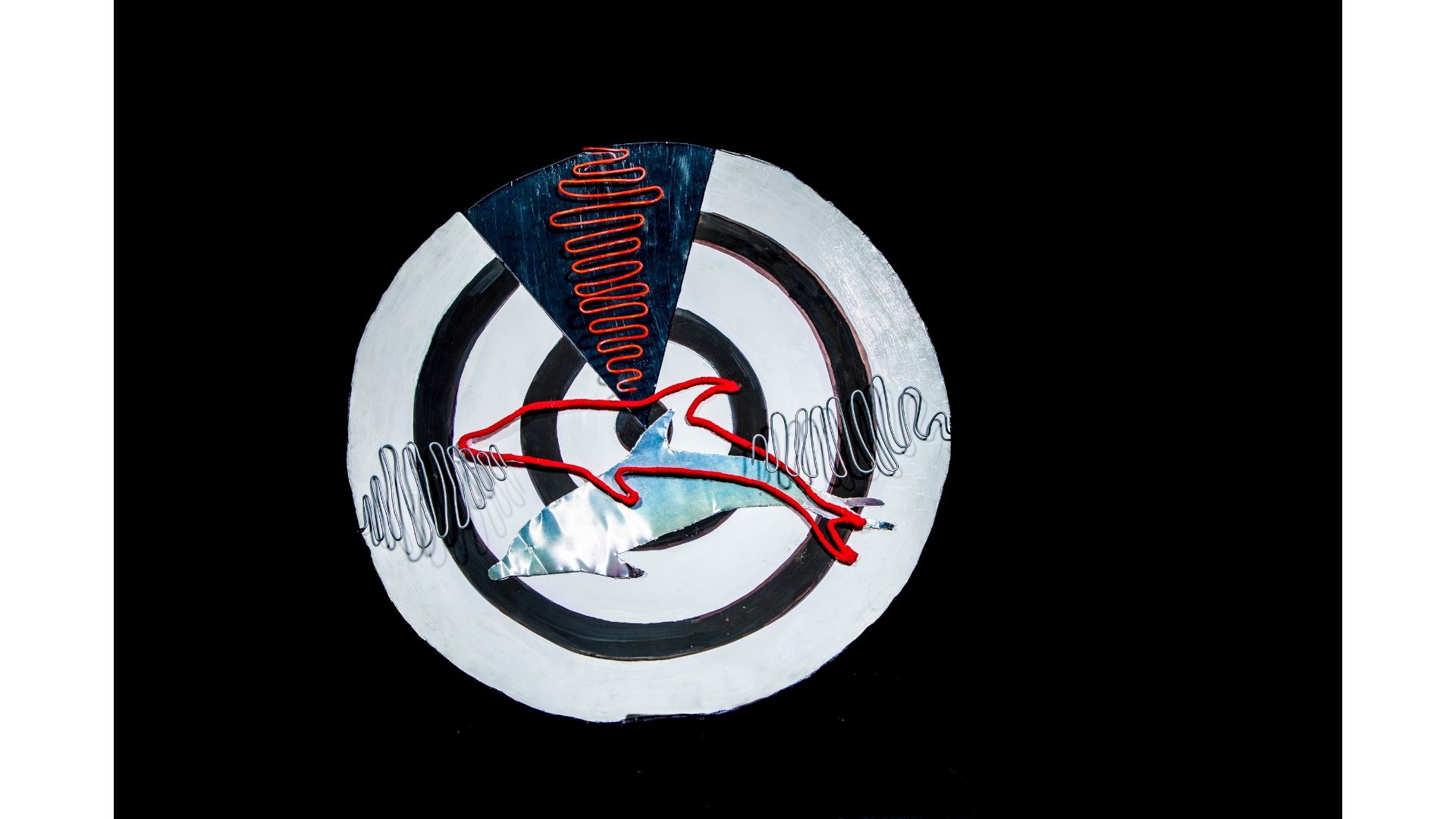
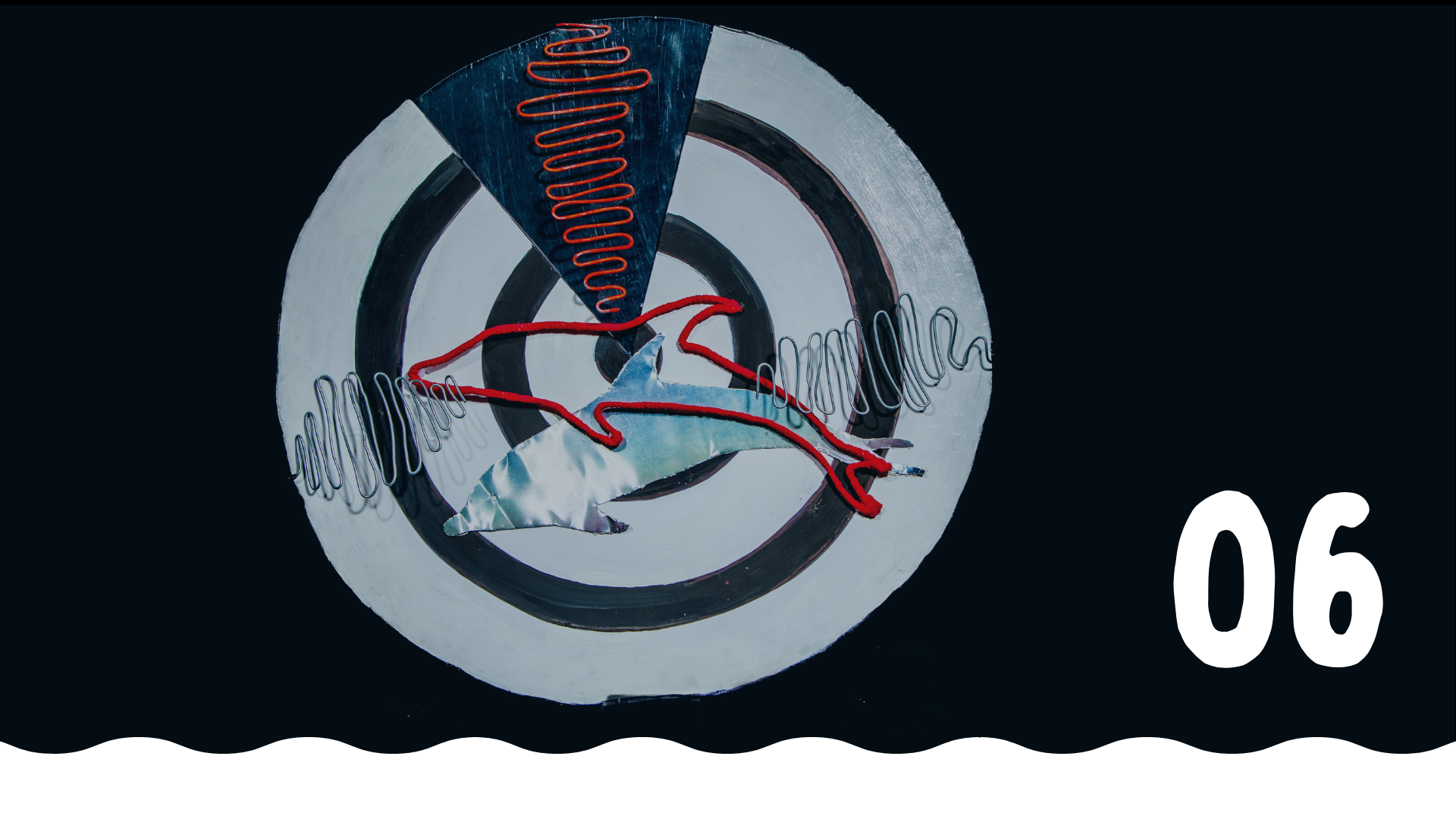
“The central element of the piece is the figure of a dolphin, whose silhouette is duplicated to represent the feeling of disorientation caused by noise pollution. This pollution is symbolized by sound waves made of wire. Finally, one of the two silhouettes rises, as if trying to regain its freedom.”
Vi piacerebbe non riuscire più ad orientarvi nella vostra casa? È quello che provano i cetacei: un senso di disorientamento a causa dell’inquinamento acustico, provocato dalla presenza dell’uomo in mare.
Come noi ci orientiamo con i sensi, i cetacei utilizzano l’ecolocalizzazione, che è basata sull’emissione di ultrasuoni con frequenze superiori a 200 kHz. Per avere un metro di paragone, l’orecchio umano ha una percezione massima di 20 kHz, ovvero dieci volte inferiore.
Ogni volta che la casa dei cetacei viene disturbata dall’essere umano, questi non riescono a soddisfare i bisogni primari e sono costretti ad abbandonare l’area, subendo molto spesso problemi all’udito.
Cosa potremmo fare noi nel nostro piccolo per ridurre questo grande problema? Se decidiamo di fare un’escursione in barca, assicuriamoci che venga rispettato il codice di buona condotta Pelagos/ACCOBAMS.
Would you like to not be able to orient yourself in your own house anymore? That’s what cetaceans experience: a sense of disorientation due to noise pollution, caused by the presence of humans at sea.
Just as we orient ourselves with our senses, cetaceans use echolocation, which is based on the emission of ultrasound with frequencies above 200 kHz. To have a yardstick, the human ear has a maximum perception of 20 kHz, which is ten times lower.
Whenever the cetaceans’ home is disturbed by humans, they are unable to meet their basic needs and are forced to leave the area, very often suffering hearing problems.
What could we do in our own small way to reduce this major problem? If we decide to take a boat trip, let’s be careful in choosing a tour that complies with the Pelagos/ACCOBAMS code of good conduct.
Aimeriez-vous ne plus pouvoir vous repérer dans votre maison ? C’est ce que vivent les cétacés : un sentiment de désorientation dû à la pollution sonore causée par la présence de l’homme en mer.
Tout comme nous nous orientons grâce à nos sens, les cétacés utilisent l’écholocation, qui est basée sur l’émission d’ultrasons à des fréquences supérieures à 200 kHz. Pour avoir un ordre d’idée, l’oreille humaine perçoit au maximum 20 kHz, soit dix fois moins.
Lorsque le foyer des cétacés est perturbé par l’homme, ils ne peuvent plus satisfaire leurs besoins fondamentaux et sont contraints de quitter la zone, souffrant très souvent de troubles auditifs.
Que pouvons-nous faire, à notre échelle, pour réduire ce problème majeur ? Si nous décidons de faire une excursion en bateau, soyons attentifs au choix de l’excursion, qui respecte le code de bonne conduite Pelagos/ACCOBAMS.
THREATS
Pelagos in the city

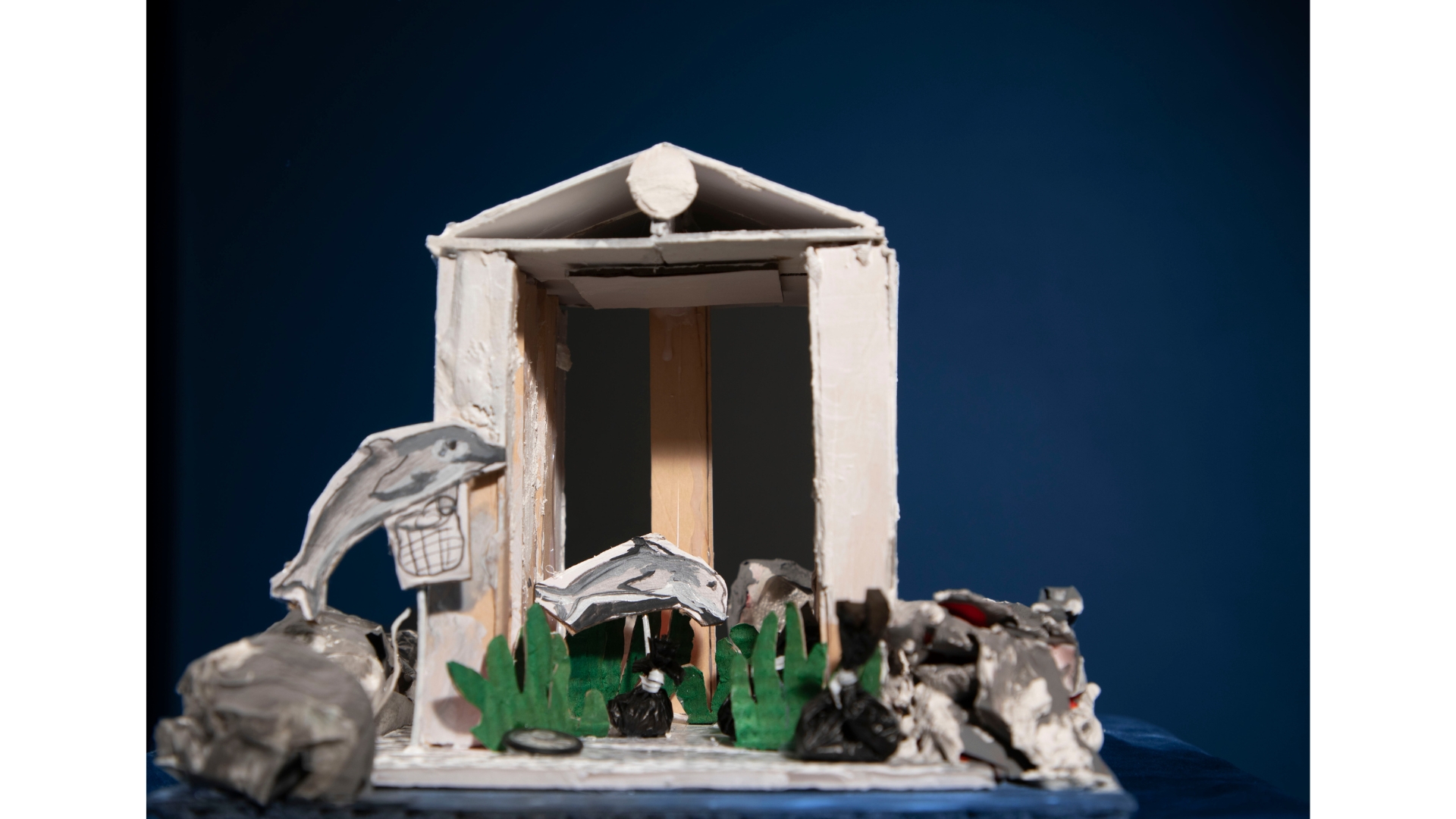
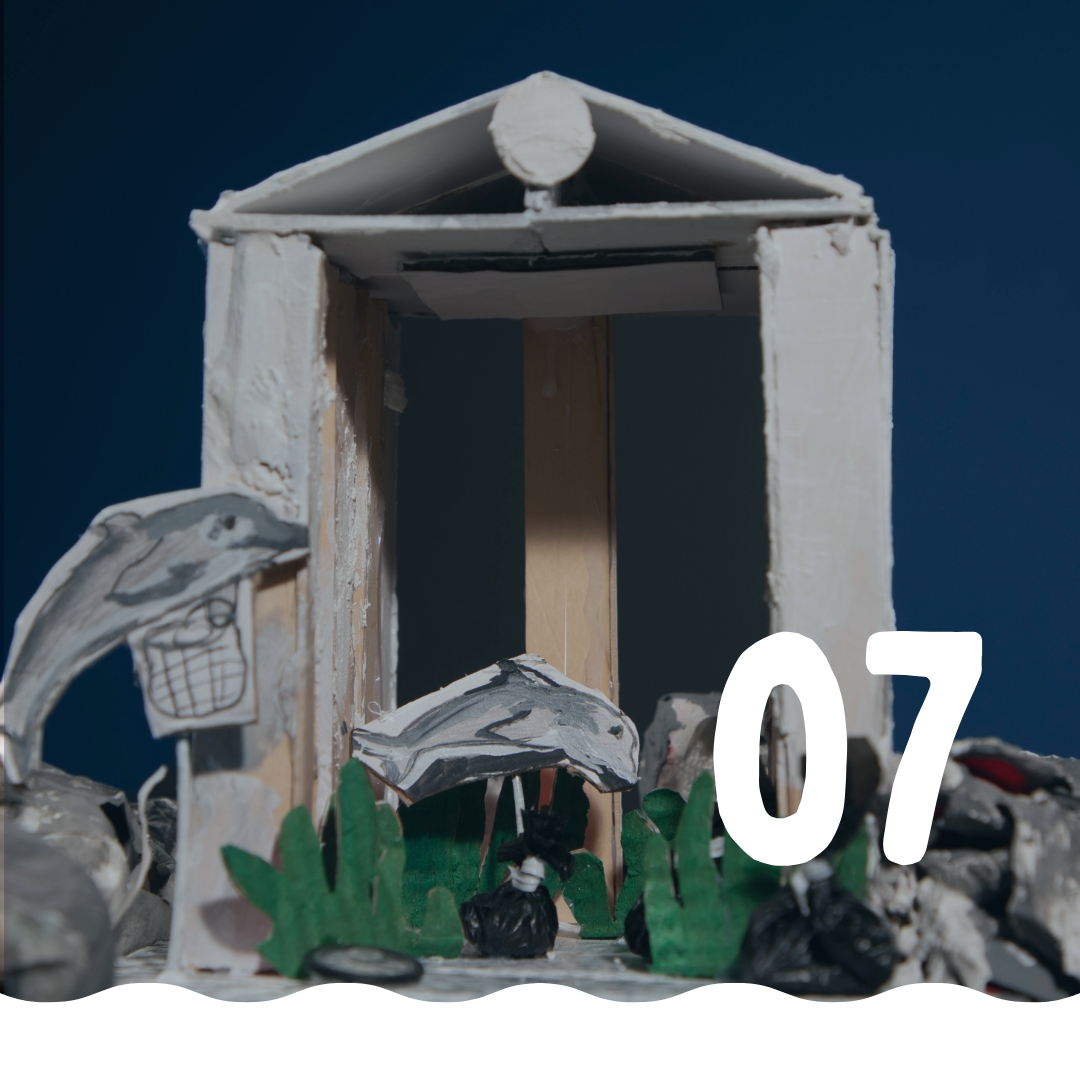
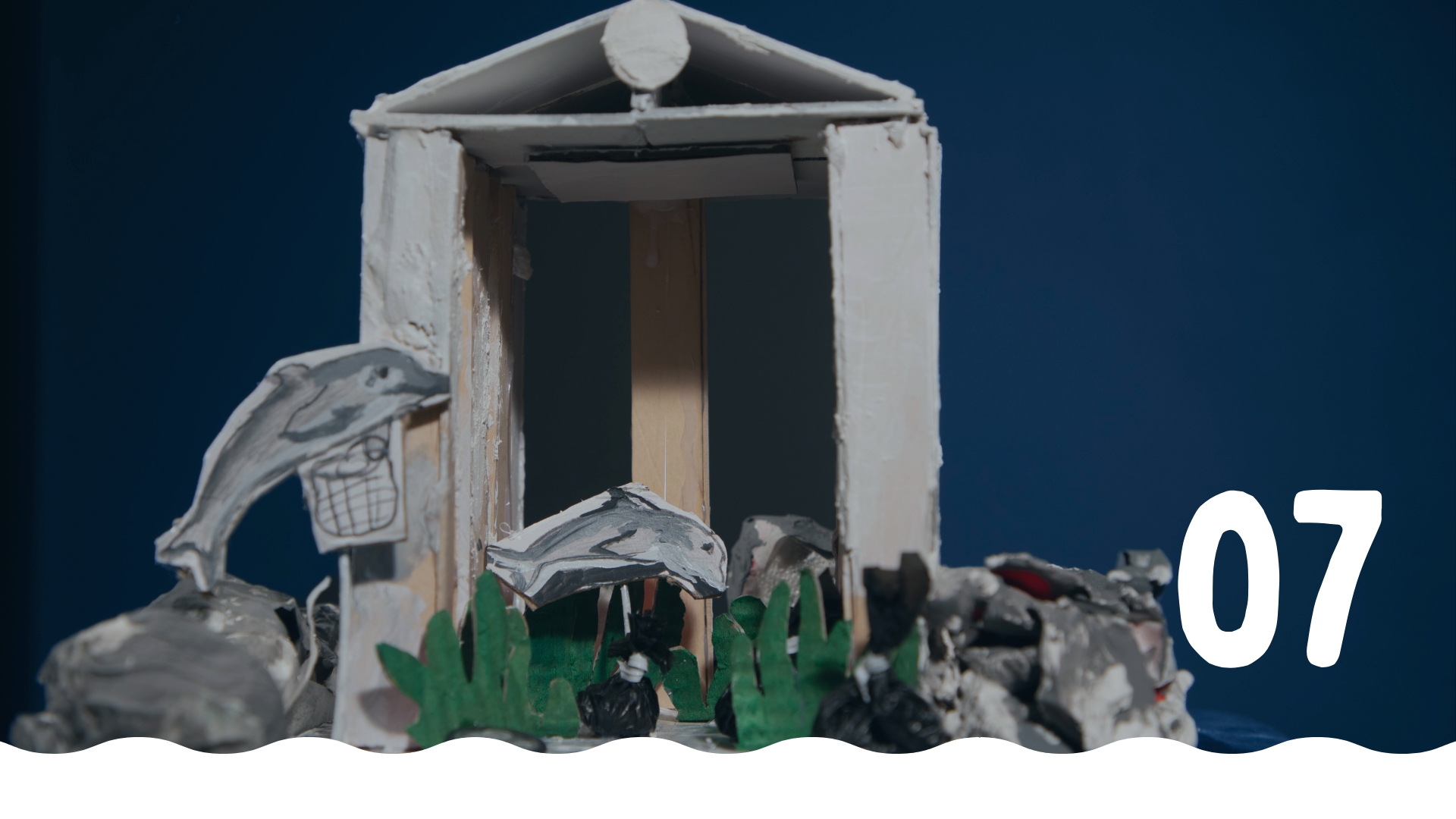
“The three-dimensional piece depicts a submerged temple surrounded by plastic, symbolizing the pollution affecting our seas. This issue stems from the overproduction of plastic and our daily habits, symbolically reflected in our ‘mirrors’.”
Se ti dicessi che la plastica che usi ogni giorno potrebbe rimanere sulla Terra per secoli?
Ogni anno, 8 milioni di tonnellate di plastica finiscono negli oceani: l’equivalente di un camion di rifiuti riversato in mare ogni minuto, causando danni irreversibili.
La plastica in mare viene ingerita da una moltitudine di specie marine, mettendone a rischio la sopravvivenza. Inoltre, impiega centinaia di anni a decomporsi, formando enormi ammassi galleggianti grandi quanto intere nazioni, come la famosa isola di plastica nell’Oceano Pacifico.
Non è un problema lontano da noi, perché uno dei principali agglomerati di plastica si trova proprio nel nostro Mar Mediterraneo, tra la Corsica e l’Isola d’Elba.
La plastica entra persino nel nostro cibo, attraverso il pesce che consumiamo.
Salviamo i mari, fermiamo la plastica!
What if I told you that the plastic you use every day could remain on Earth for centuries?
Every year, 8 million tons of plastic end up in the oceans—the equivalent of a truckload of trash poured into the sea every minute, causing irreversible damage.
Plastic in the sea is ingested by a multitude of marine species, putting their survival at risk. It also takes hundreds of years to decompose, forming huge floating masses as large as entire nations, such as the famous Plastic Island in the Pacific Ocean.
This is not a problem far from us, because one of the main plastic clusters is right in our Mediterranean Sea, between Corsica and Elba Island.
Plastic even enters our food, through the fish we consume.
Let’s save the seas, let’s stop plastic!
Et si je vous disais que le plastique que vous utilisez tous les jours pourrait rester sur Terre pendant des siècles ?
Chaque année, 8 millions de tonnes de plastique finissent dans les océans : l’équivalent d’un camion de déchets déversé dans la mer chaque minute, causant des dommages irréversibles.
Le plastique présent dans la mer est ingéré par une multitude d’espèces marines, mettant en péril leur survie. Il met également des centaines d’années à se décomposer, formant d’énormes masses flottantes de la taille de pays entiers, comme la fameuse île de plastique dans l’océan Pacifique.
Le problème n’est pas loin de nous, car l’une des principales agglomérations de plastique se trouve dans notre propre mer Méditerranée, entre la Corse et l’île d’Elbe.
Le plastique pénètre même dans notre alimentation, par l’intermédiaire des poissons que nous consommons.
Sauvez les mers, arrêtez le plastique !
SOLUTIONS
Pelagos in the city

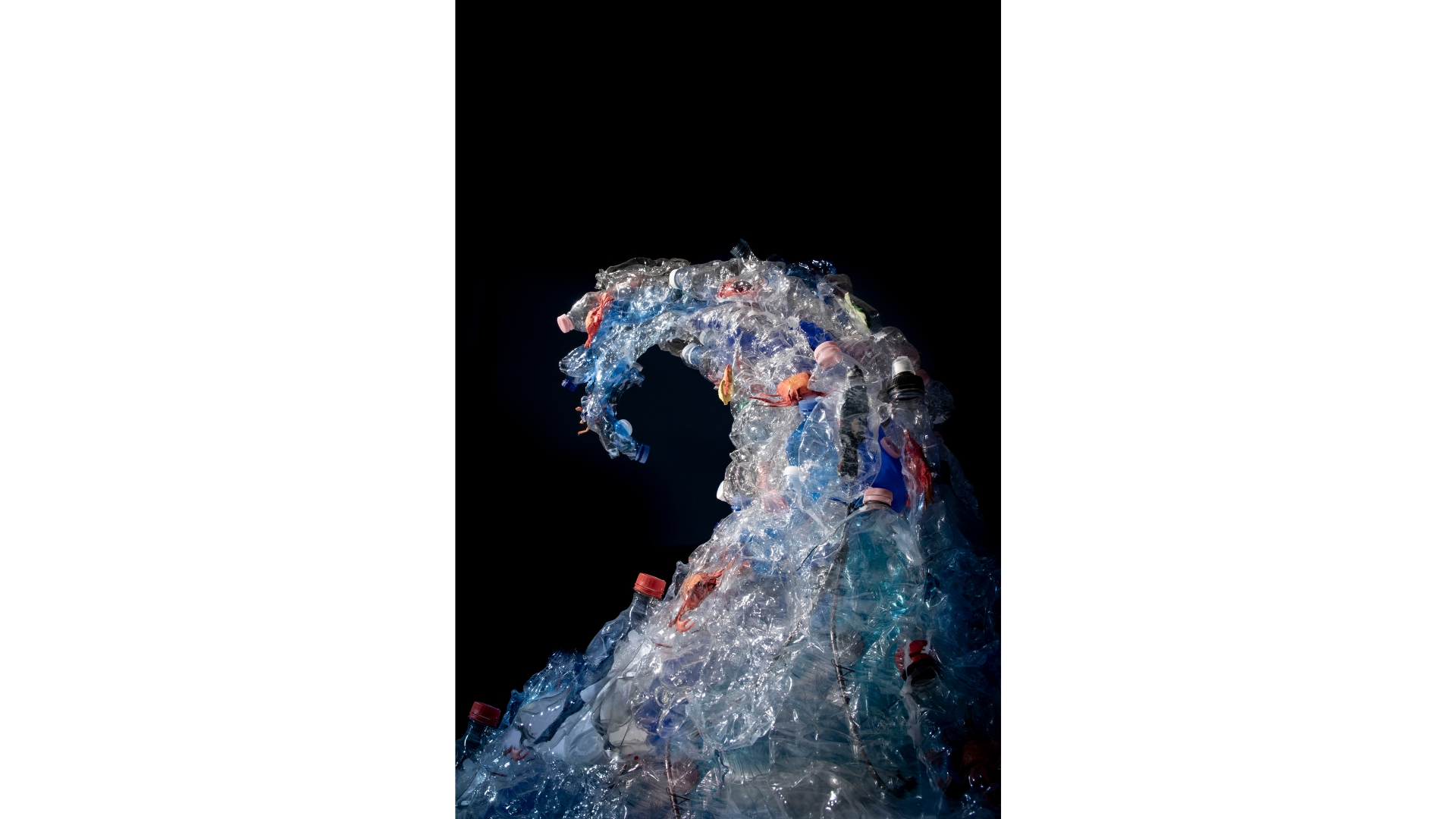
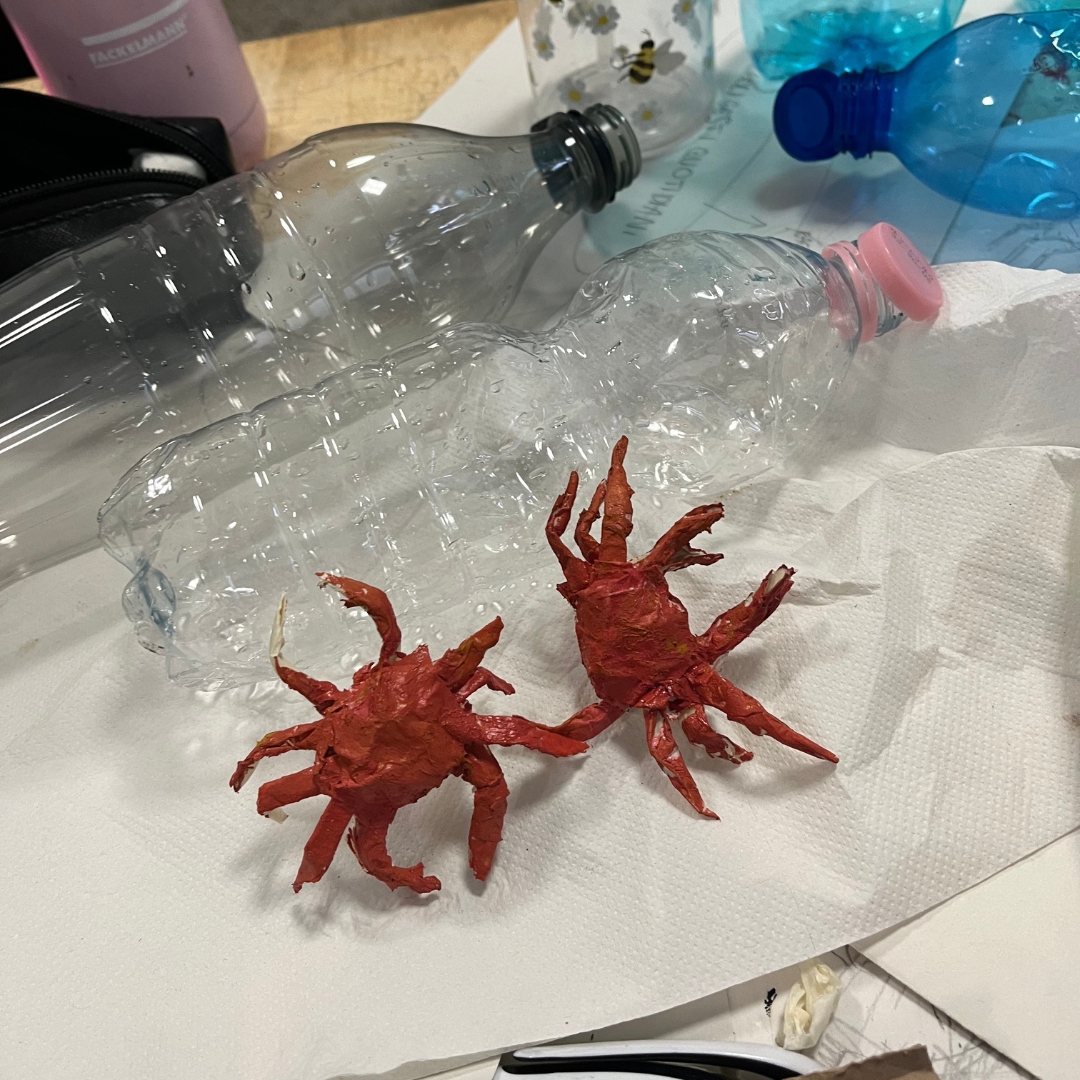
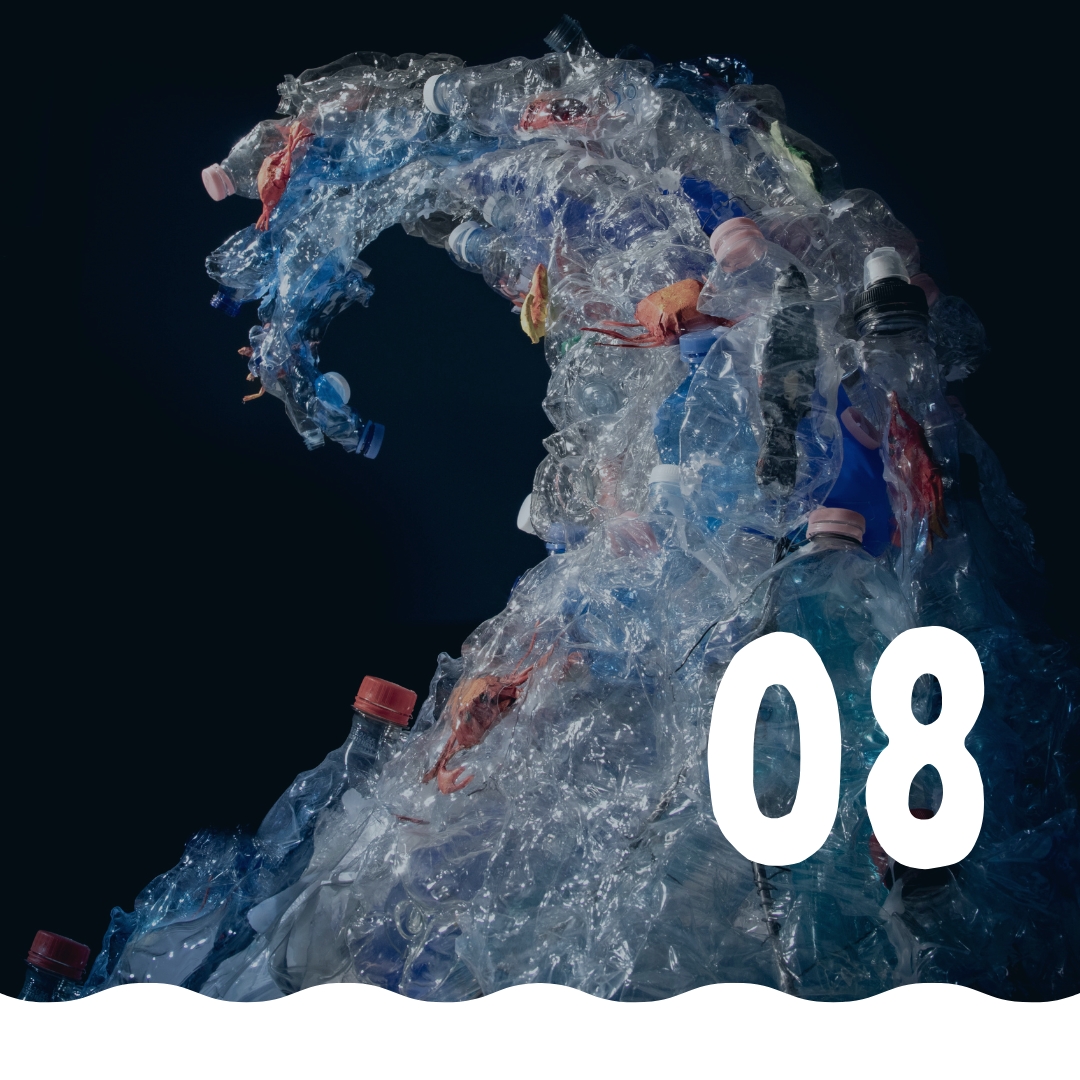
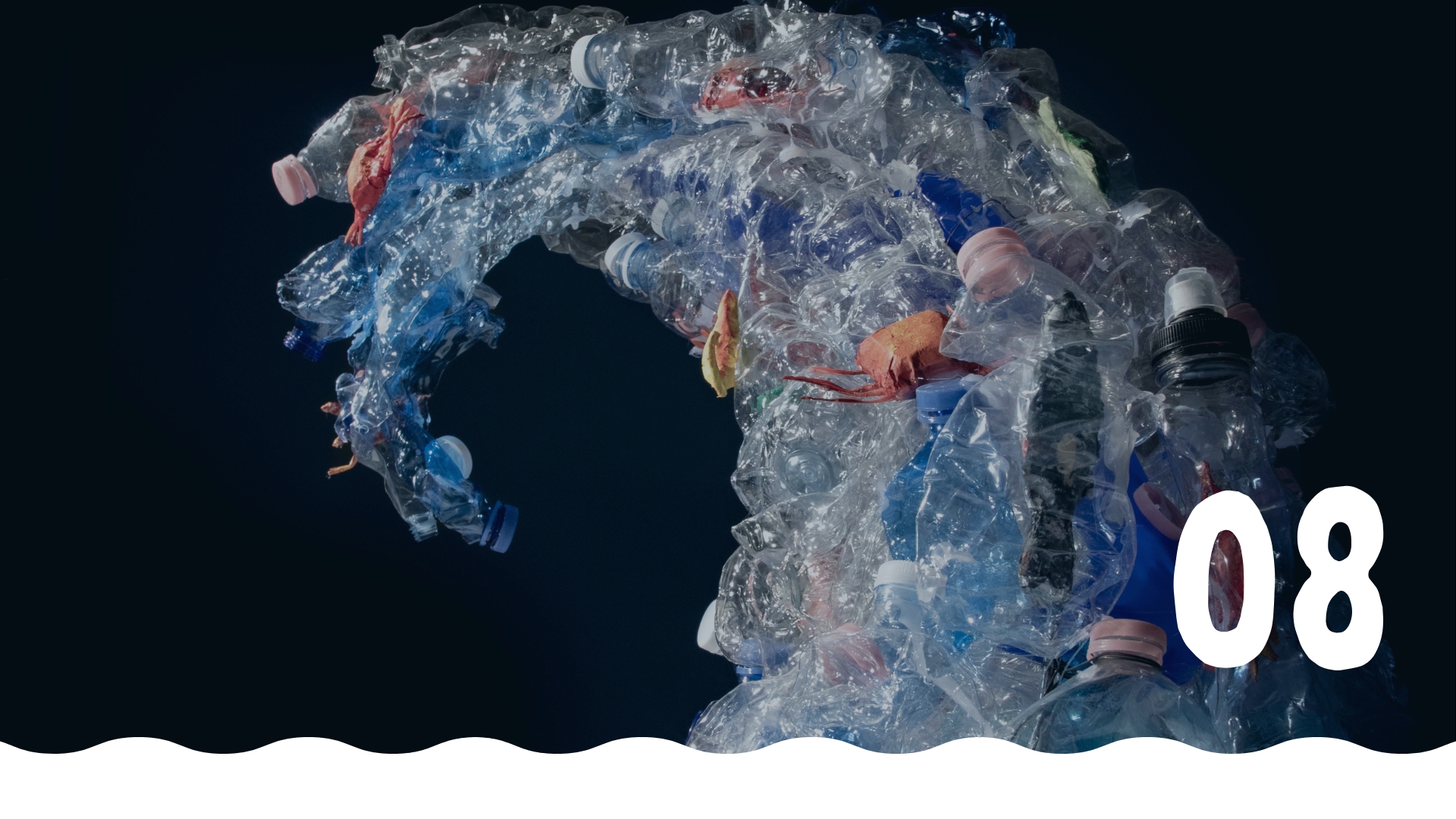
“The sculpture represents a large wave made of waste, within which marine animals, such as crabs, are trapped.
The wave evokes both the urgency of the problem and the possibility of creating change to make a difference.”
Sai cosa puoi fare per ridurre l’inquinamento marino? È più semplice di quanto pensi: bastano piccoli gesti per fare una gran differenza!
Ad esempio, portare sempre con te una borraccia e una borsa riutilizzabile, in sostituzione a bottiglie e sacchetti di plastica, è un’ottima idea per ridurre i rifiuti.
Per contrastare l’abbandono di spazzatura sulle spiagge, dove i mozziconi di sigarette sono tra i rifiuti più comuni, puoi partecipare a iniziative di pulizia e assicurarti di fare la raccolta differenziata nel modo corretto.
Parla con amici e familiari dell’importanza di queste abitudini: anche i gesti più semplici possono essere fondamentali.
Solo insieme possiamo proteggere il Santuario Pelagos!
Do you know what you can do to reduce marine pollution? It’s simpler than you think: just small gestures can make a big difference!
For example, carrying a reusable water bottle and bag with you at all times, instead of plastic bottles and bags, is a great idea to reduce waste.
To address littering on beaches, where cigarette butts are among the most common litter, you can participate in cleanup efforts and make sure you are sorting your trash the right way.
Talk to friends and family about the importance of these habits—even the simplest gestures can be crucial.
Only together can we protect the Pelagos Sanctuary!
Savez-vous ce que vous pouvez faire pour réduire la pollution marine ? C’est plus simple que vous ne le pensez : de petits gestes peuvent faire une grande différence !
Par exemple, transporter en permanence une bouteille d’eau et un sac réutilisables, au lieu de bouteilles et de sacs en plastique, est une excellente idée pour réduire les déchets.
Pour lutter contre les déchets sur les plages, où les mégots de cigarettes sont parmi les déchets les plus courants, vous pouvez participer à des initiatives de nettoyage et veiller à bien trier vos déchets.
Parlez à vos amis et à votre famille de l’importance de ces habitudes : même les gestes les plus simples peuvent être cruciaux.
Ce n’est qu’ensemble que nous pourrons protéger le Sanctuaire Pelagos !
SOLUTIONS
Pelagos in the city

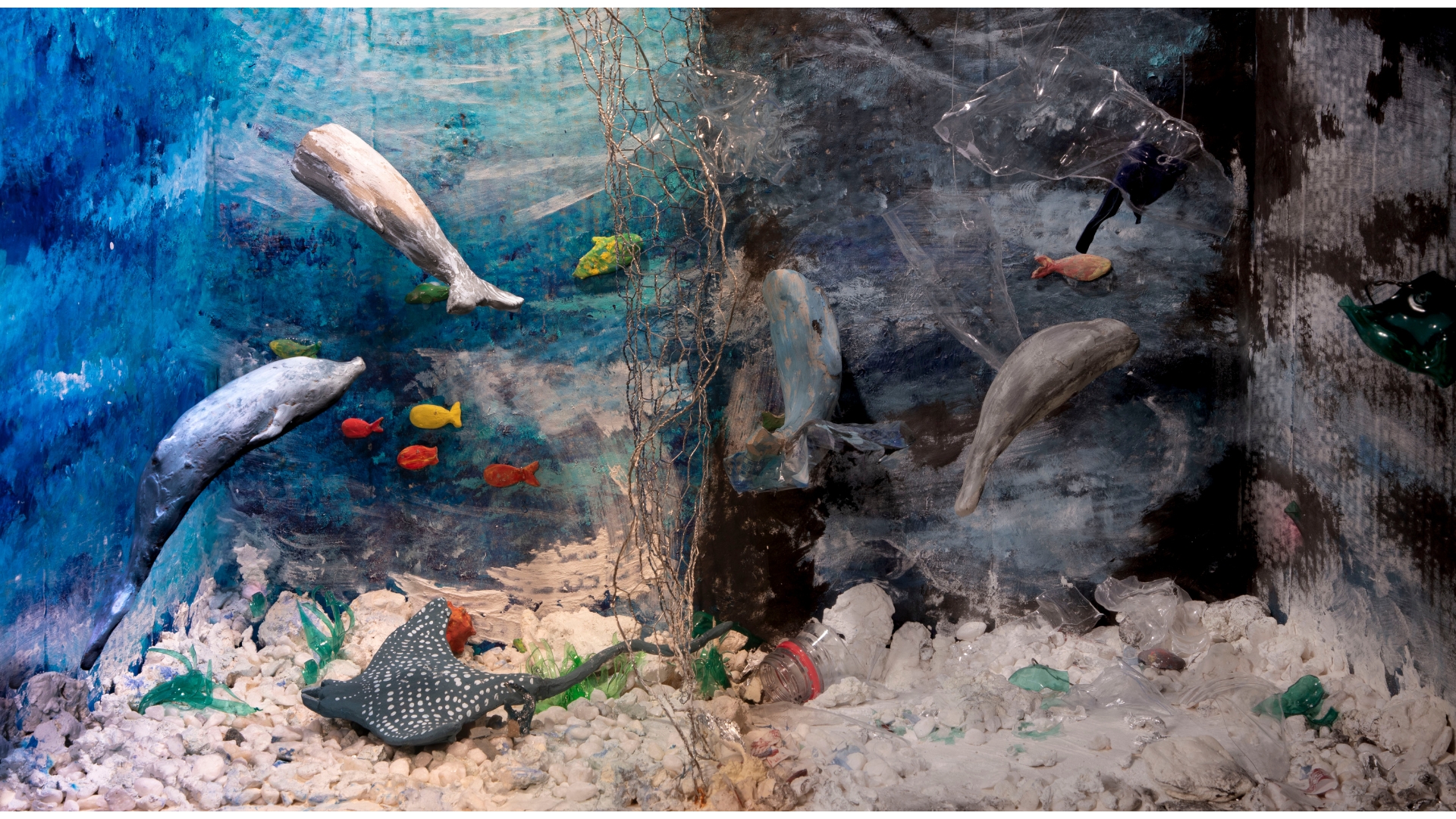
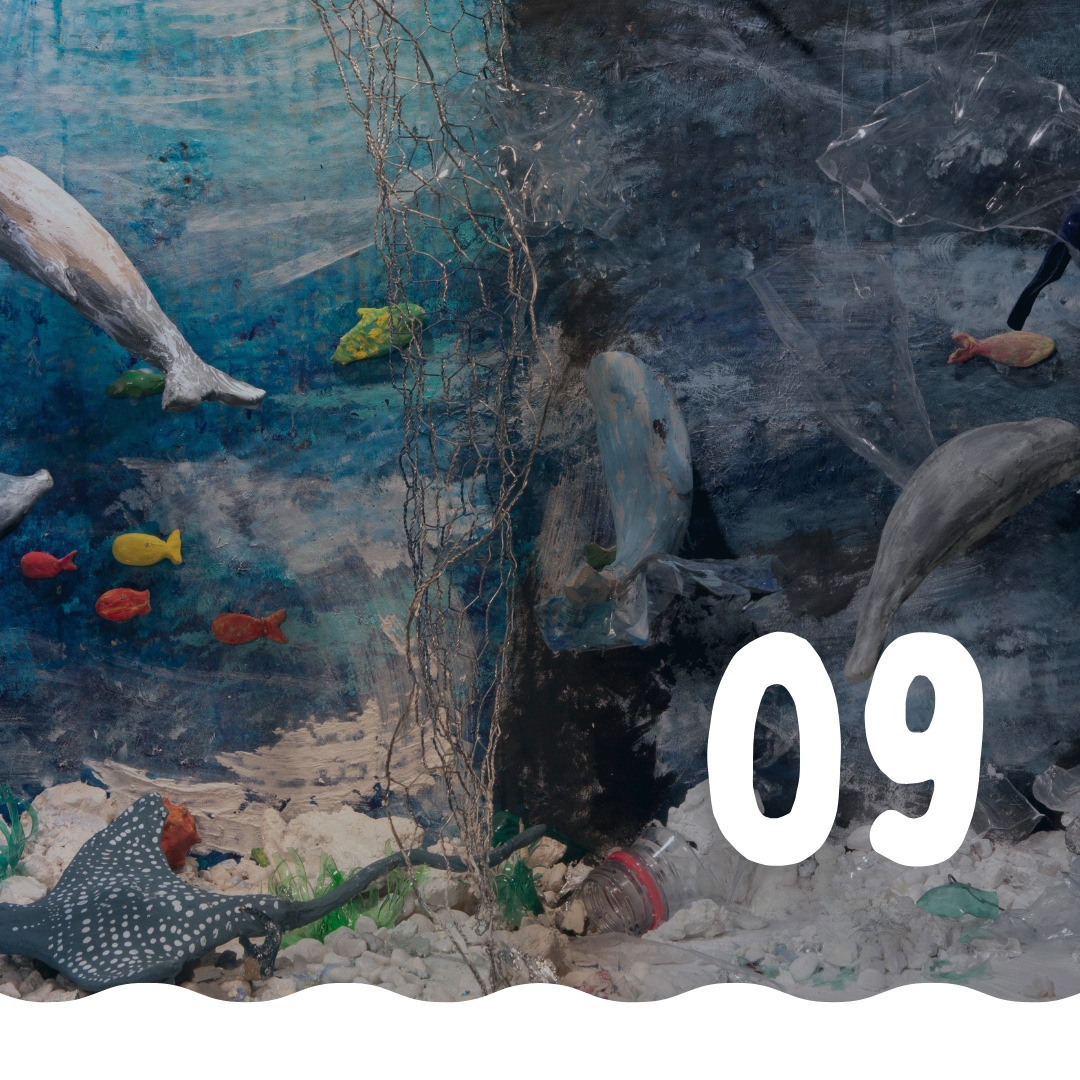
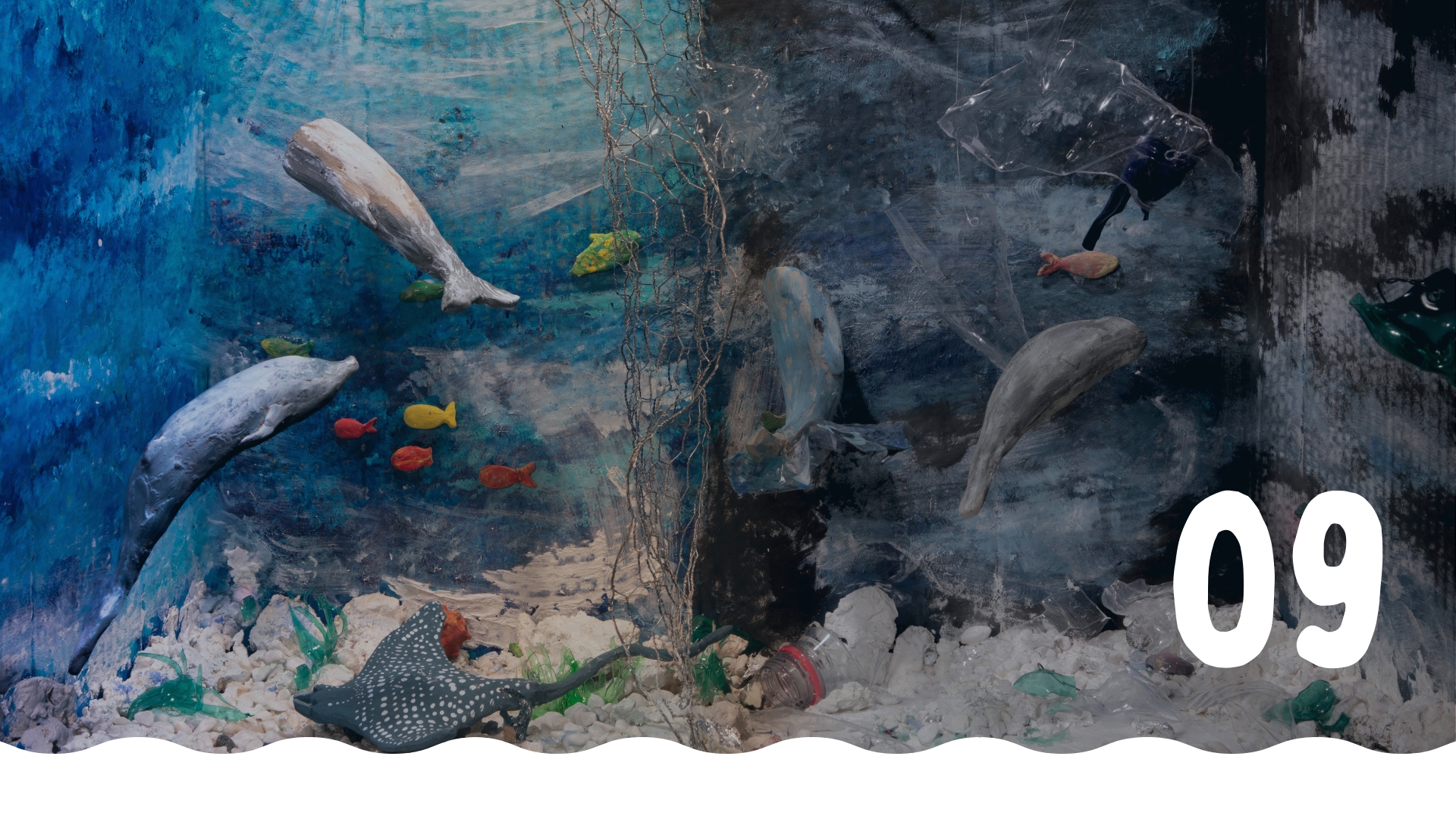
“Our project depicts the contrast between the inside and the outside of the Pelagos Sanctuary, highlighted through the use of light and dark colors that help distinguish the two parts of the work. This is a mixed-media piece, also created with discarded materials such as plastic and aluminum.
In this sort of stage split in half, we aim to represent two sides of the same coin – or rather, of the same habitat – to show how two nearby environments can reveal very different realities. With this work, we want to capture the viewer’s attention and invite reflection on the differences that often go unnoticed.”
Tra le azioni più efficaci per la salvaguardia dei nostri mari, l’istituzione delle Aree Marine Protette (AMP) riveste un ruolo fondamentale.
Le AMP sono il principale strumento per la conservazione della biodiversità e la gestione sostenibile delle risorse naturali.
L’obiettivo di tutela viene raggiunto attraverso la regolamentazione delle attività, che varia a seconda delle zone in cui è divisa l’AMP, cercando un equilibrio tra le attività umane e la conservazione della natura.
All’interno di un’AMP si distinguono zone a diverso livello di tutela: in generale si parla di zona di riserva integrale (A), dove la protezione è maggiore, e zone B e C in cui le attività, tra cui la pesca e il turismo, sono regolamentate.
Le Aree Marine Protette custodiscono il mare di domani: difenderle oggi è un dovere di tutti.
Among the most effective actions to safeguard our seas, the establishment of Marine Protected Areas (MPAs) plays a key role.
MPAs are the main tool for biodiversity conservation and sustainable management of natural resources.
The protection goal is achieved through the regulation of activities, which varies depending on the zones into which the MPA (Marine Protected Area) is divided, aiming to strike a balance between human activities and nature conservation.
Within an MPA, different zones offer varying levels of protection: generally, there is a fully protected reserve (Zone A), where protection is strongest, and Zones B and C, where activities such as fishing and tourism are regulated.
Marine Protected Areas guard the sea of tomorrow: defending them today is everyone’s duty.
Parmi les actions les plus efficaces pour sauvegarder nos mers, la création d’aires marines protégées (AMP) joue un rôle fondamental.
Les AMP sont le principal instrument de conservation de la biodiversité et de gestion durable des ressources naturelles.
L’objectif de protection est atteint grâce à la réglementation des activités, qui varie selon les zones dans lesquelles l’AMP (Aire Marine Protégée) est divisée, en cherchant un équilibre entre les activités humaines et la conservation de la nature.
À l’intérieur d’une AMP, on distingue des zones avec différents niveaux de protection : en général, on parle de zone de réserve intégrale (zone A), où la protection est maximale, et des zones B et C, où des activités comme la pêche et le tourisme sont réglementées.
Les aires marines protégées sont les gardiennes de la mer de demain : les défendre aujourd’hui est le devoir de chacun.
NETWORK FOR THE SEA
Pelagos in the city

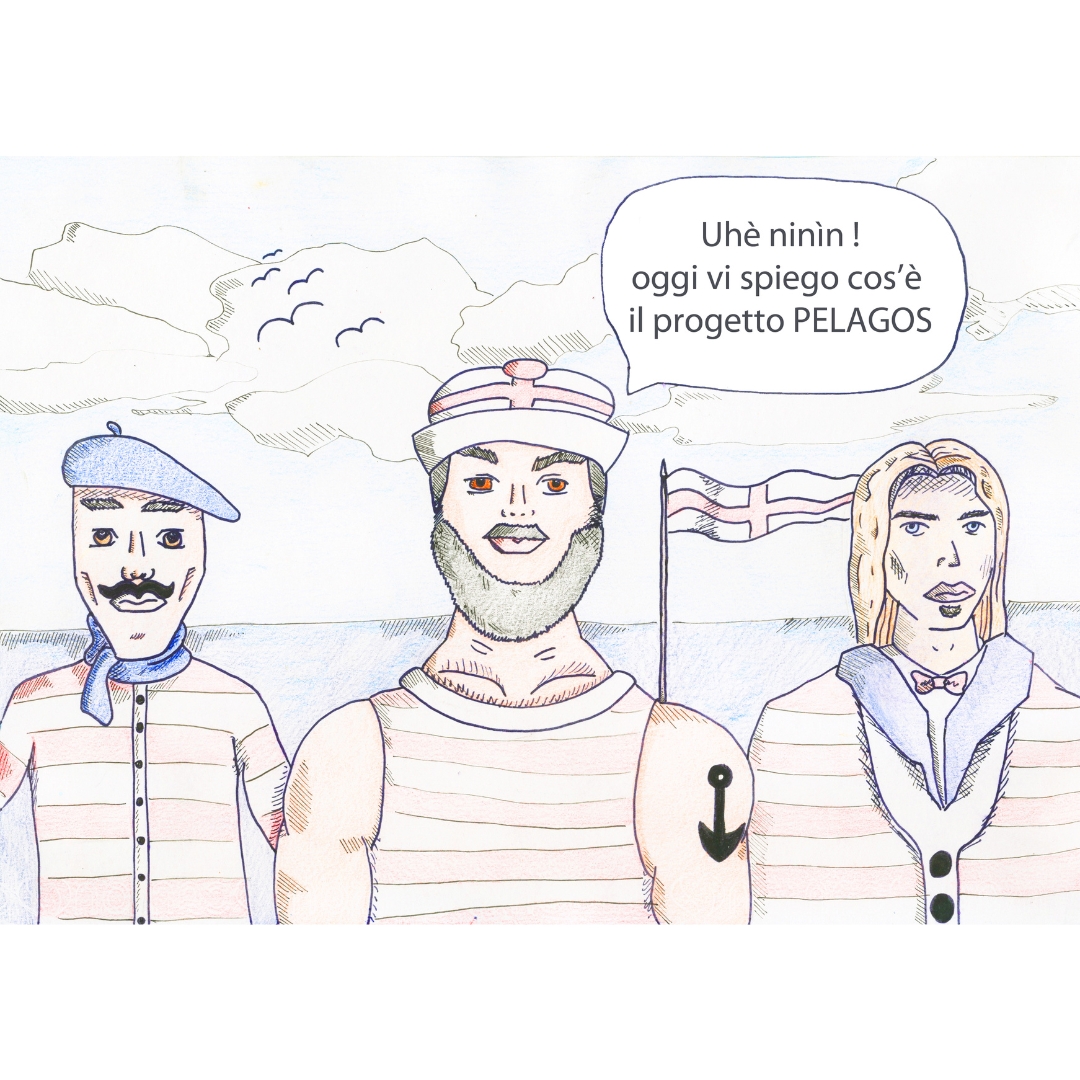
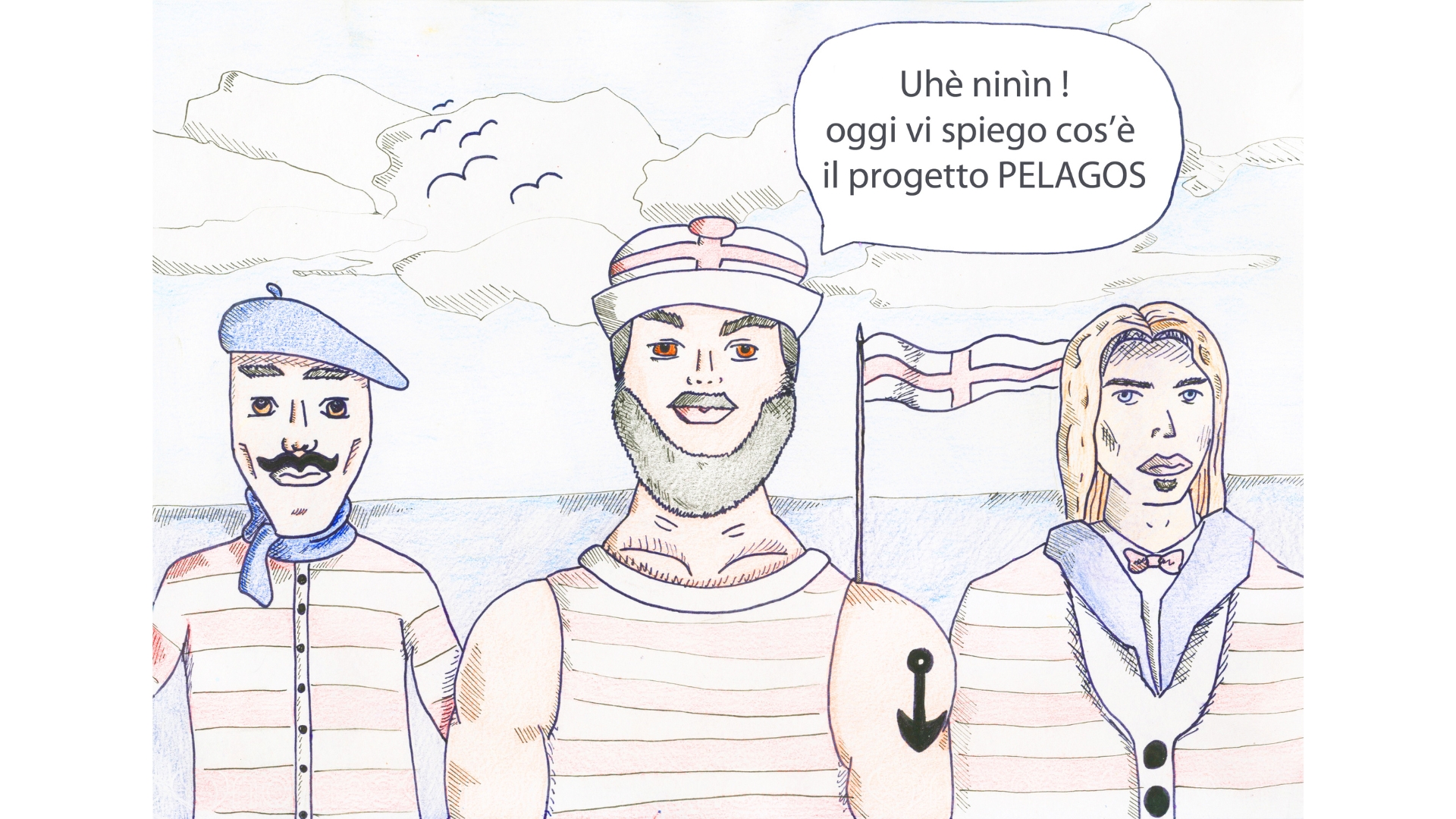
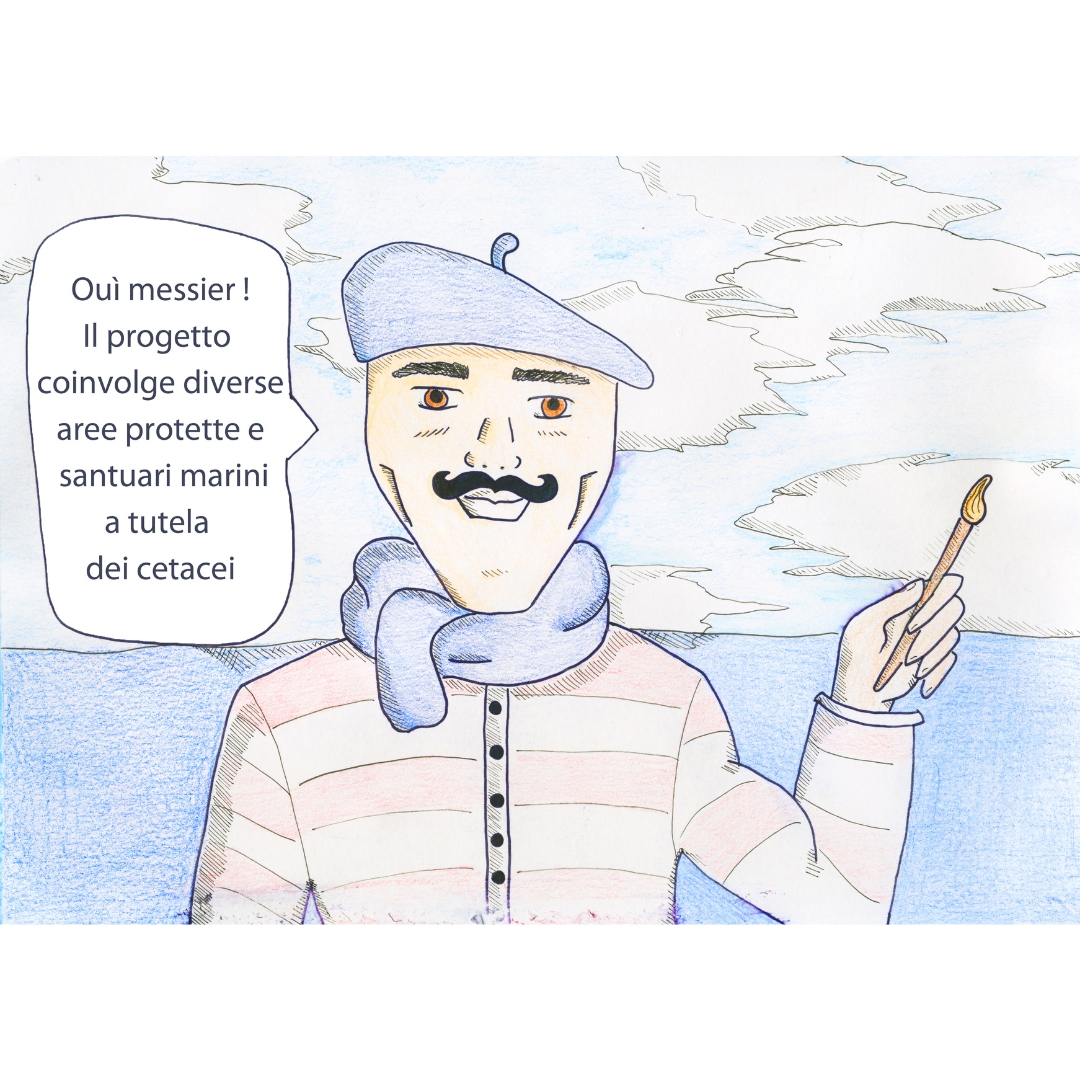
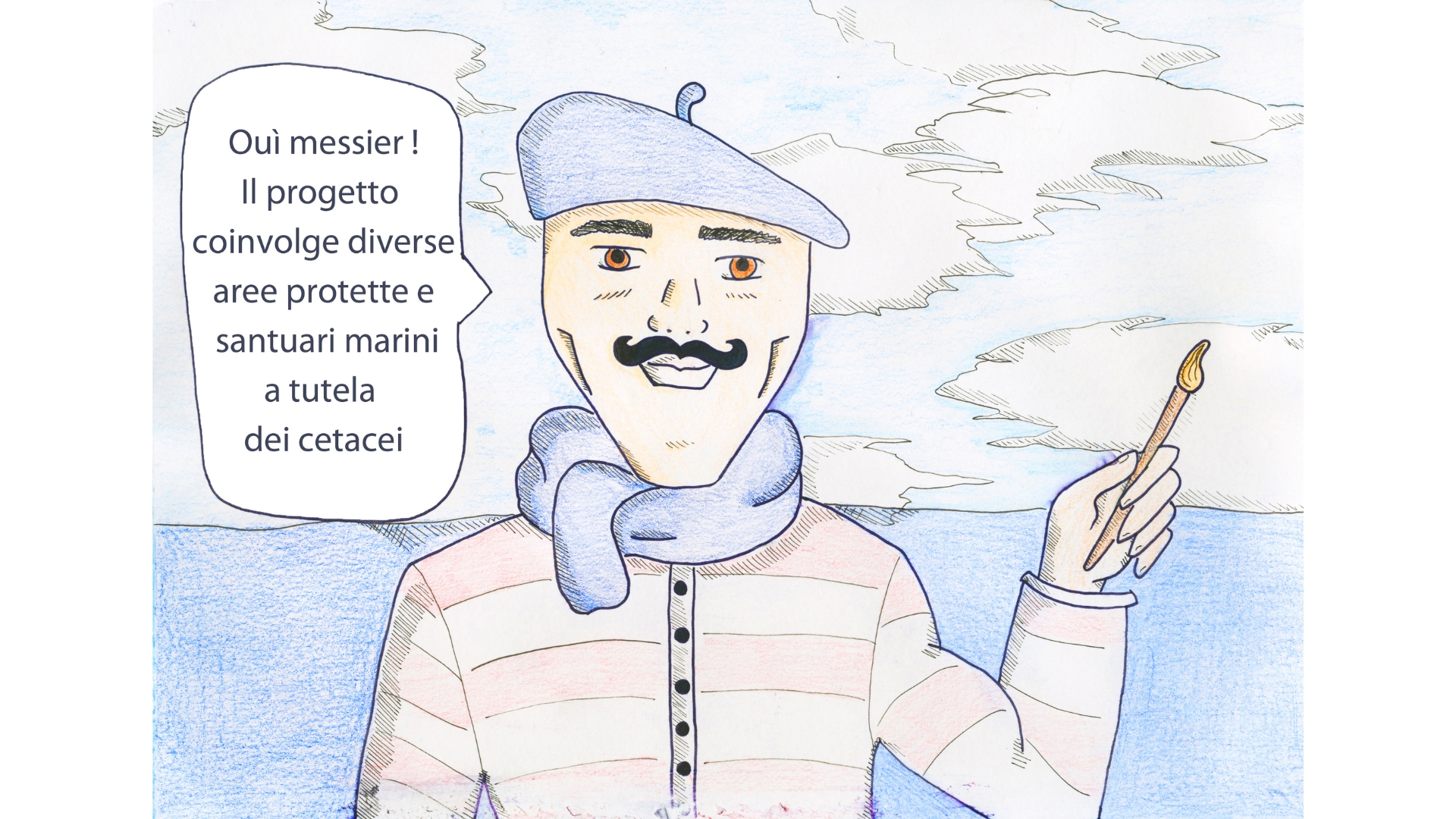
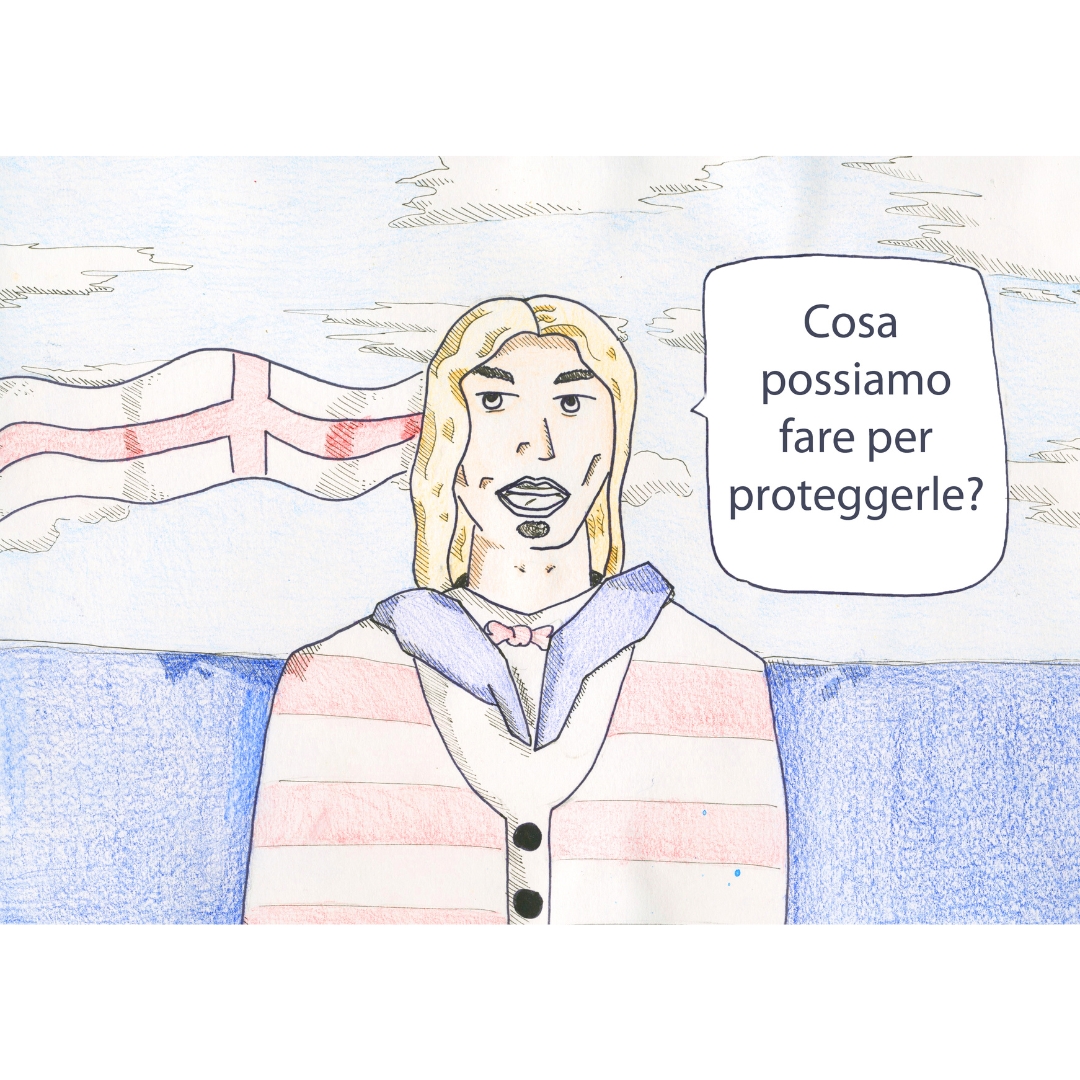
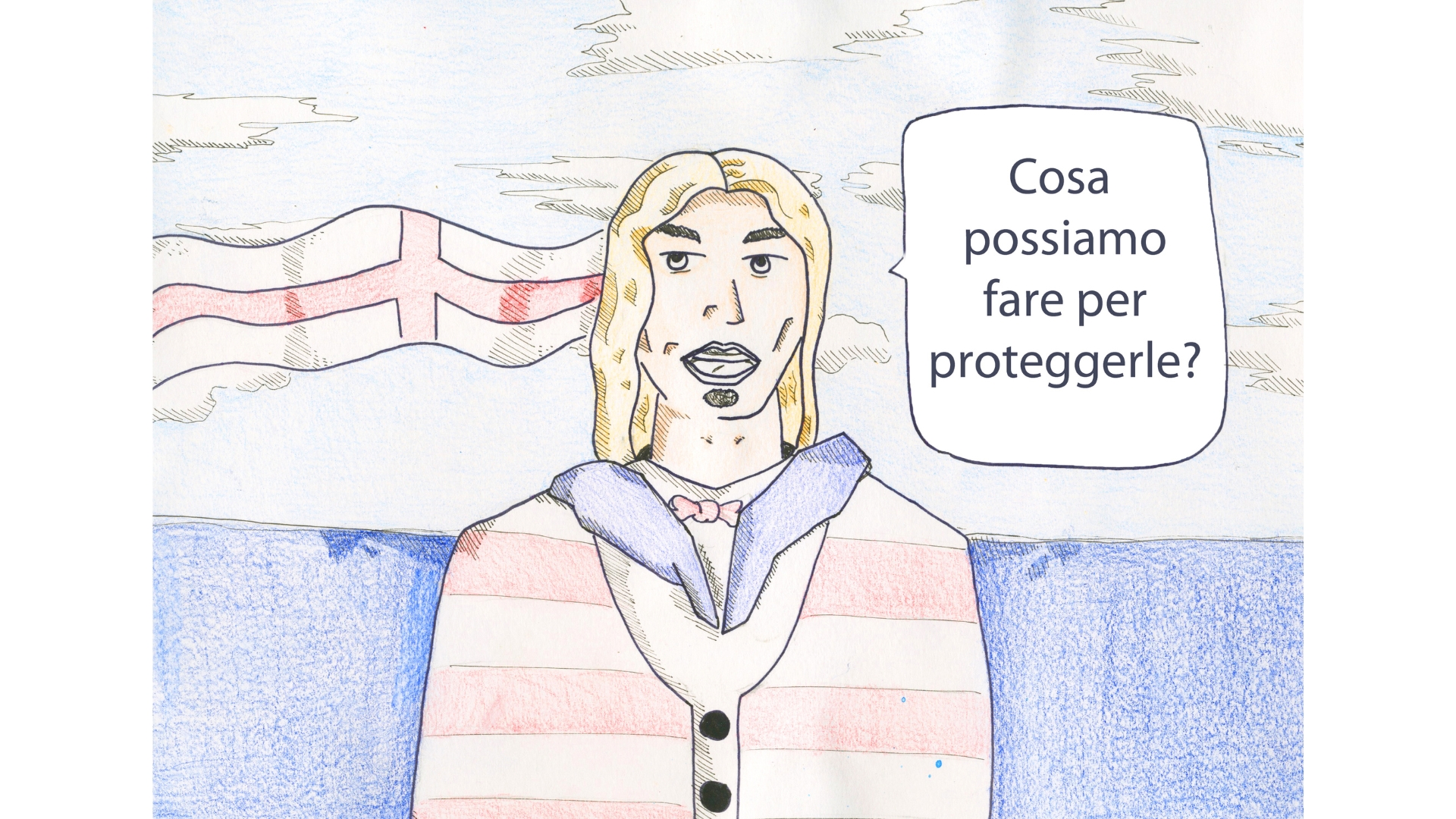
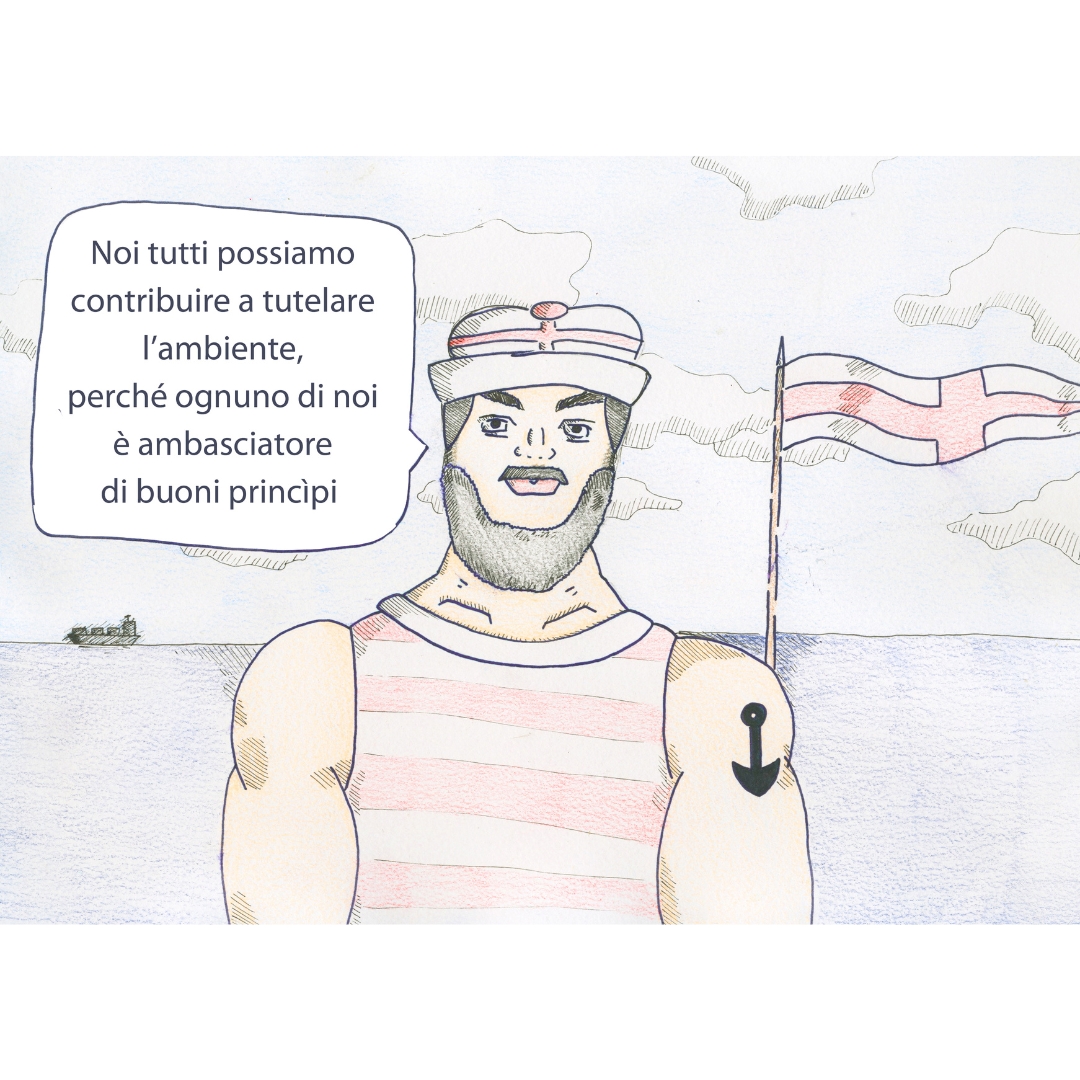
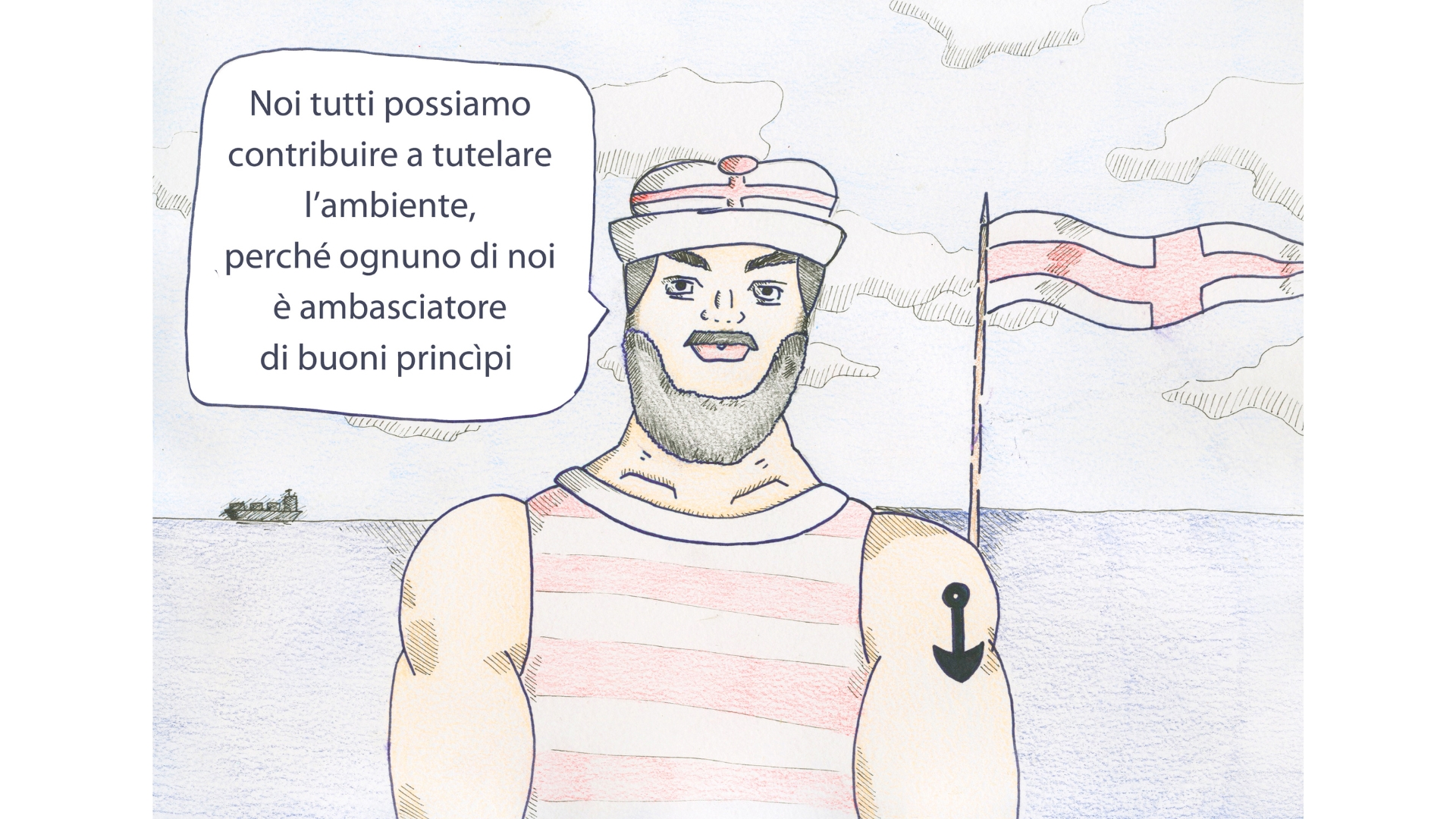
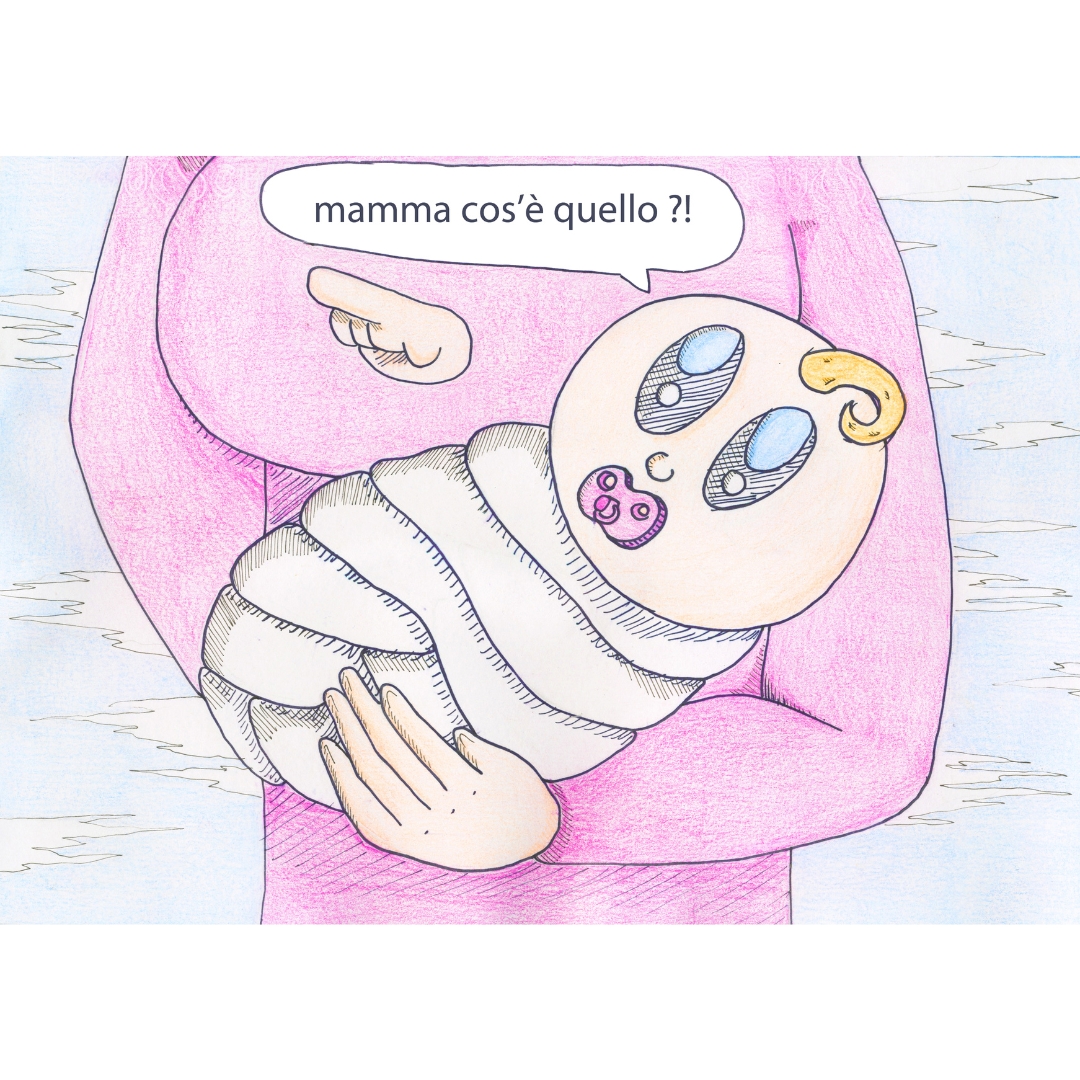
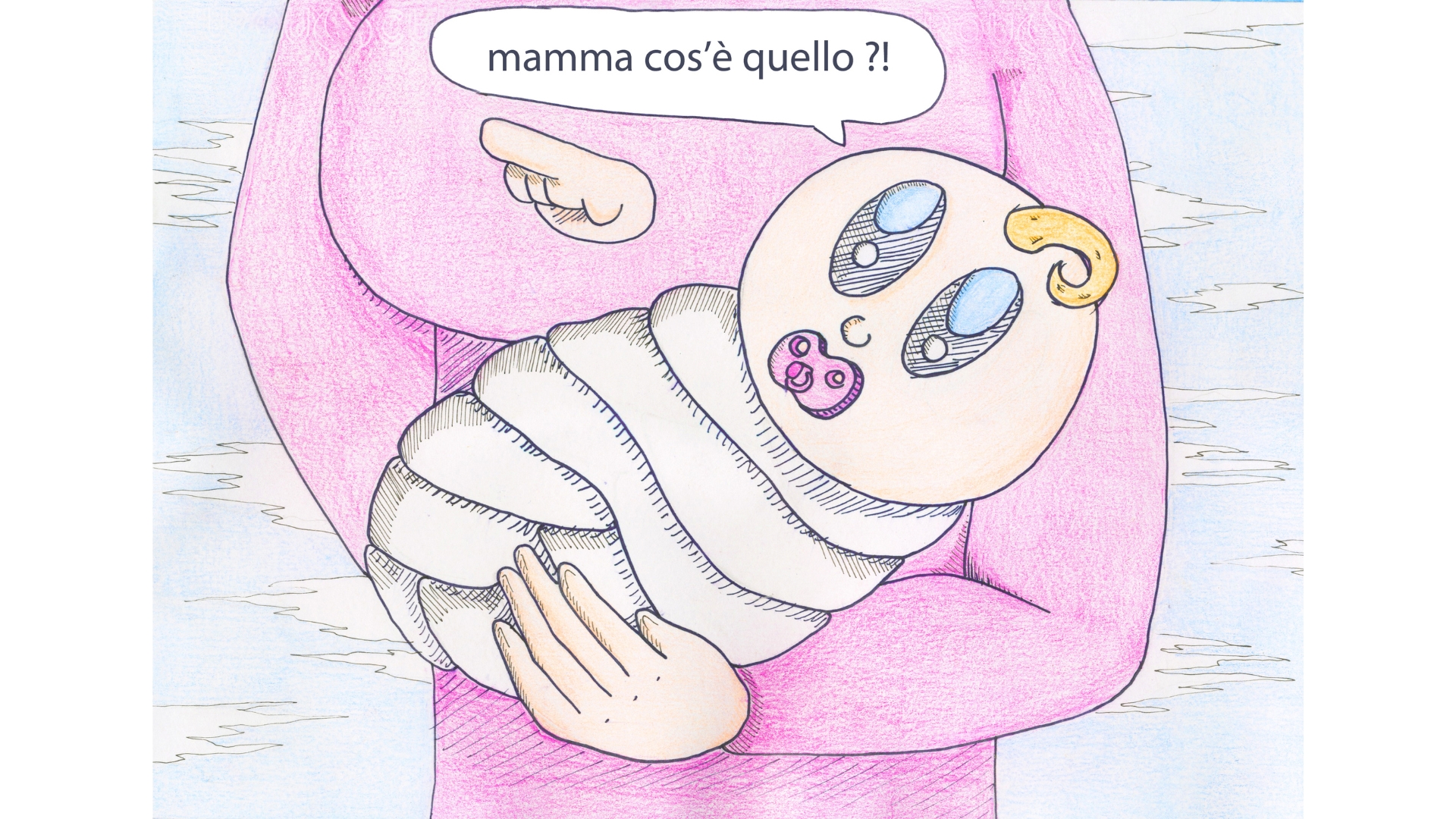
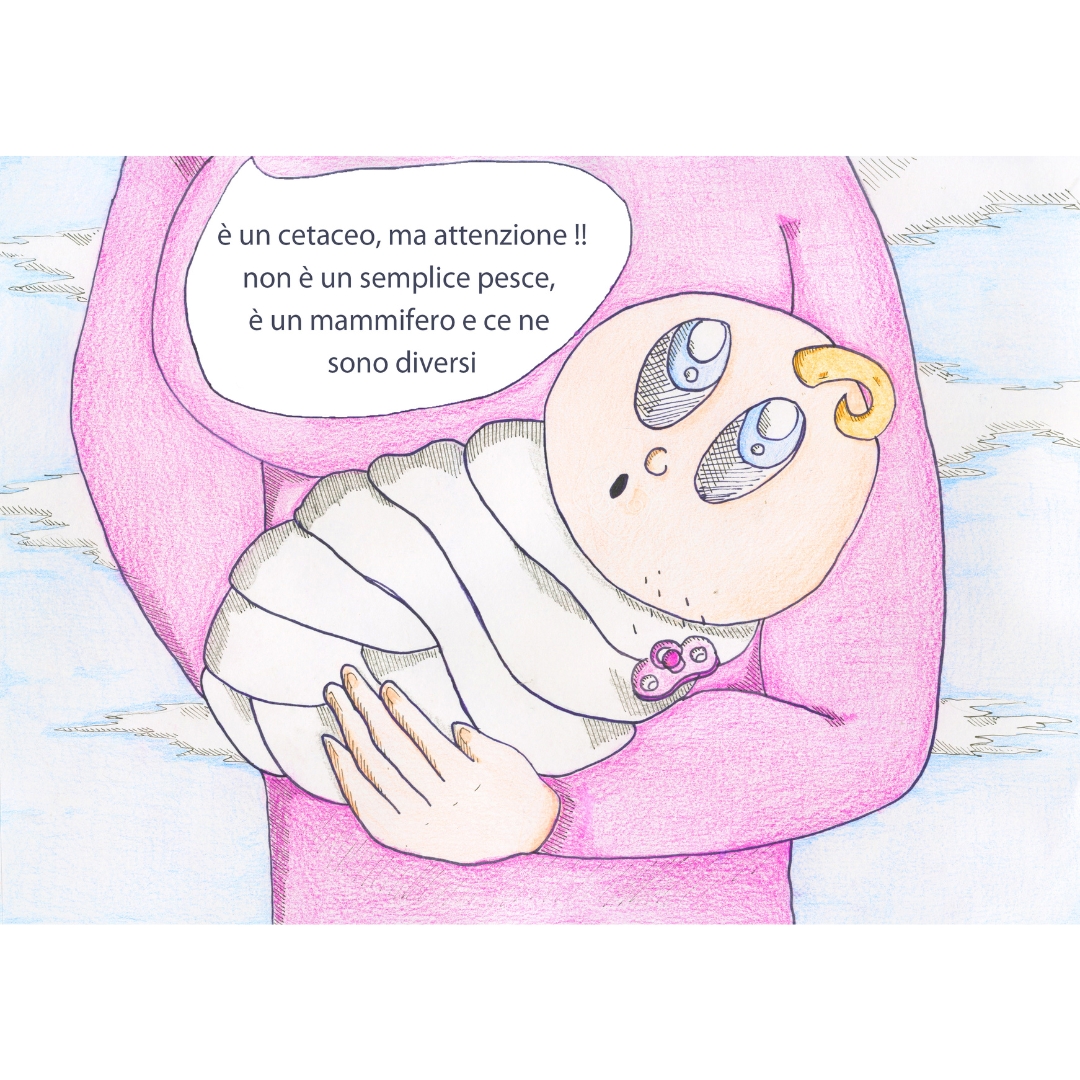
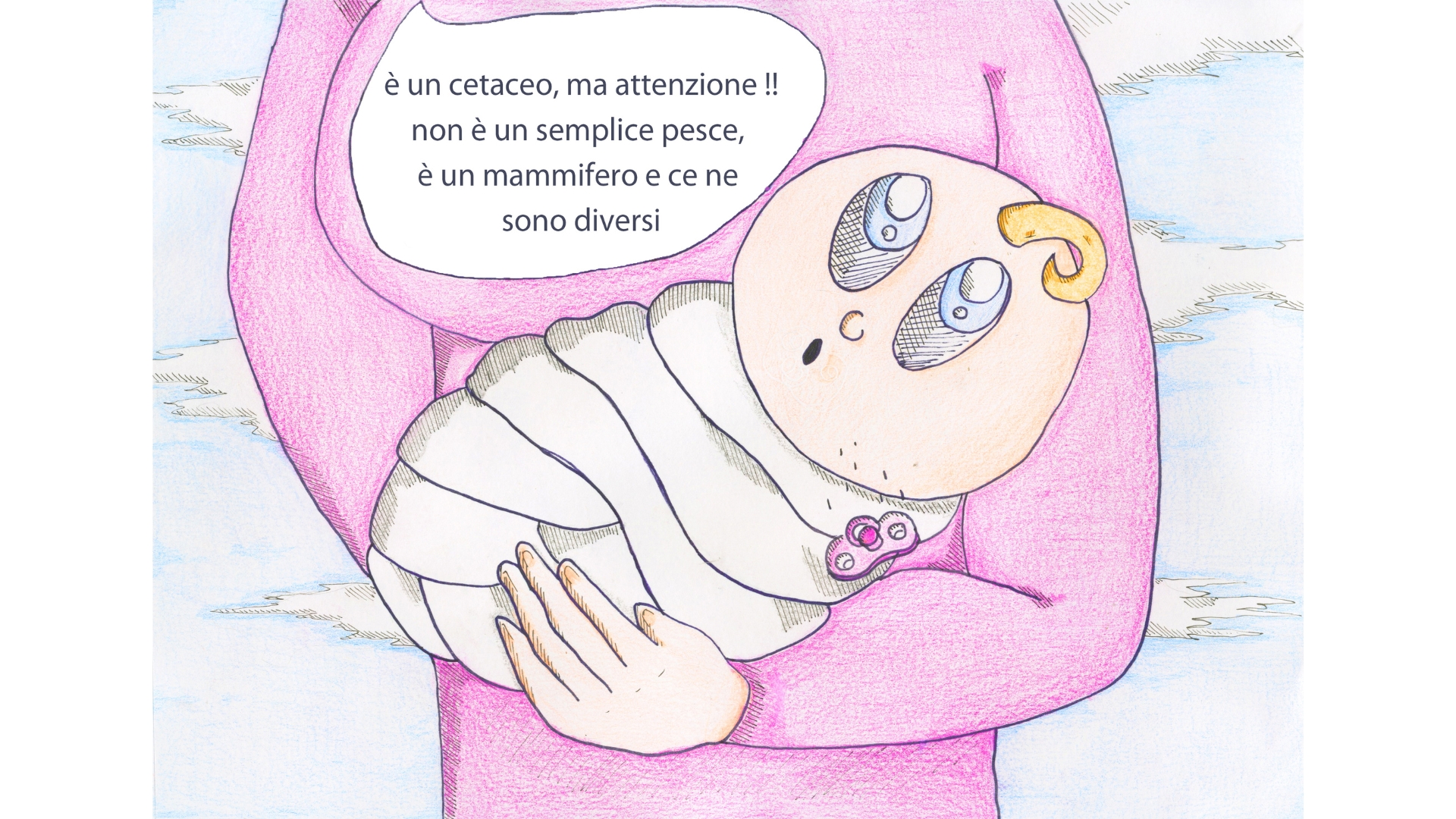
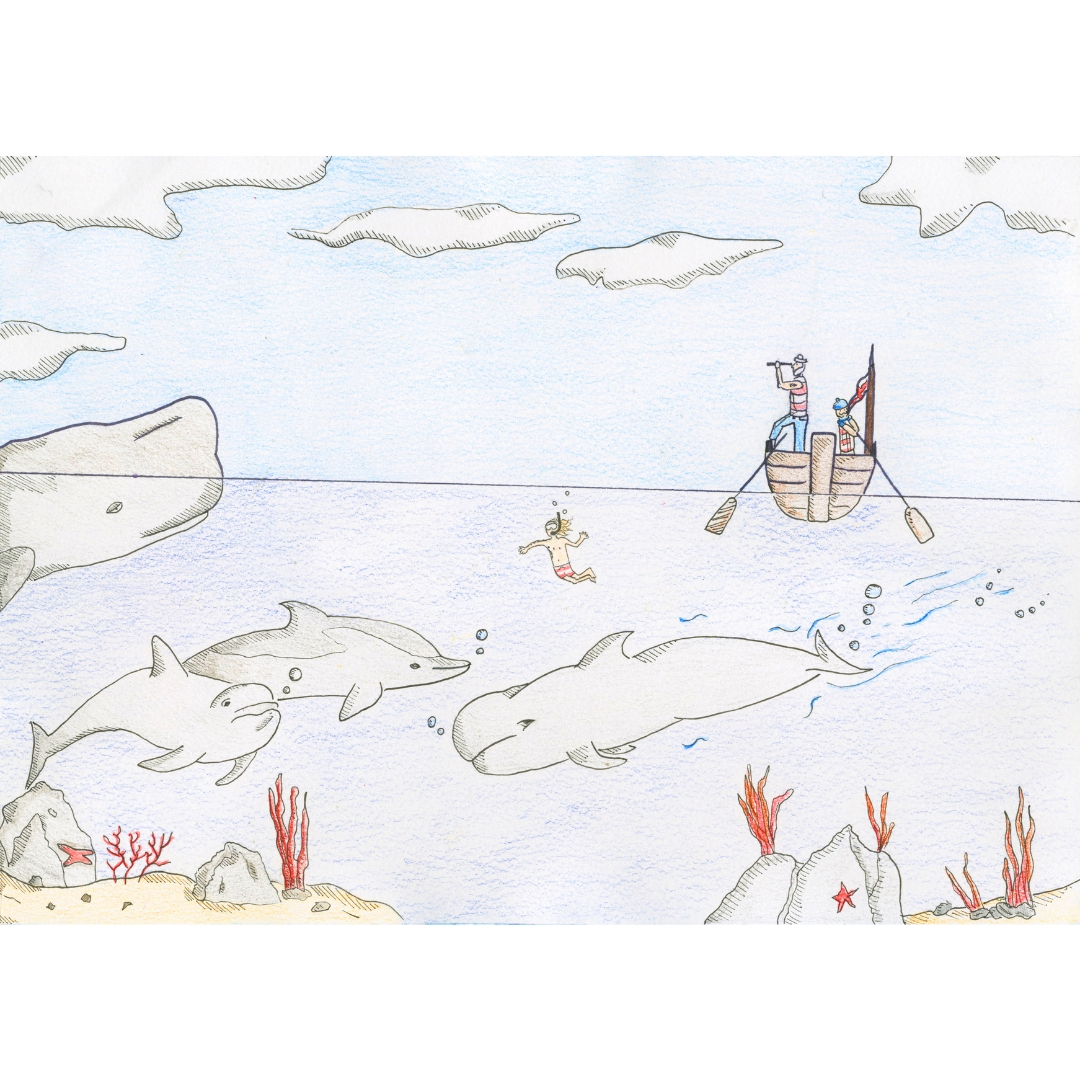
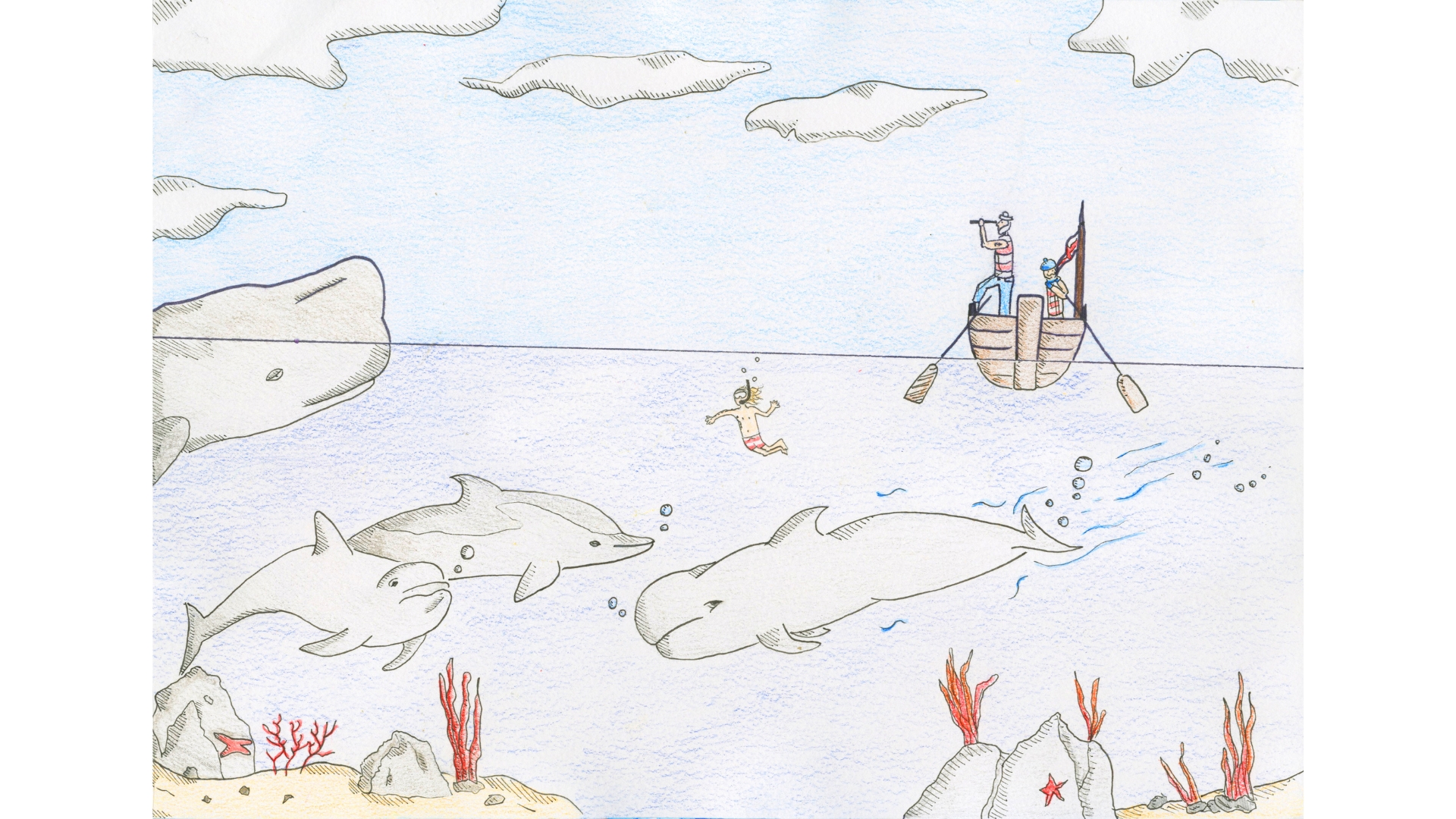
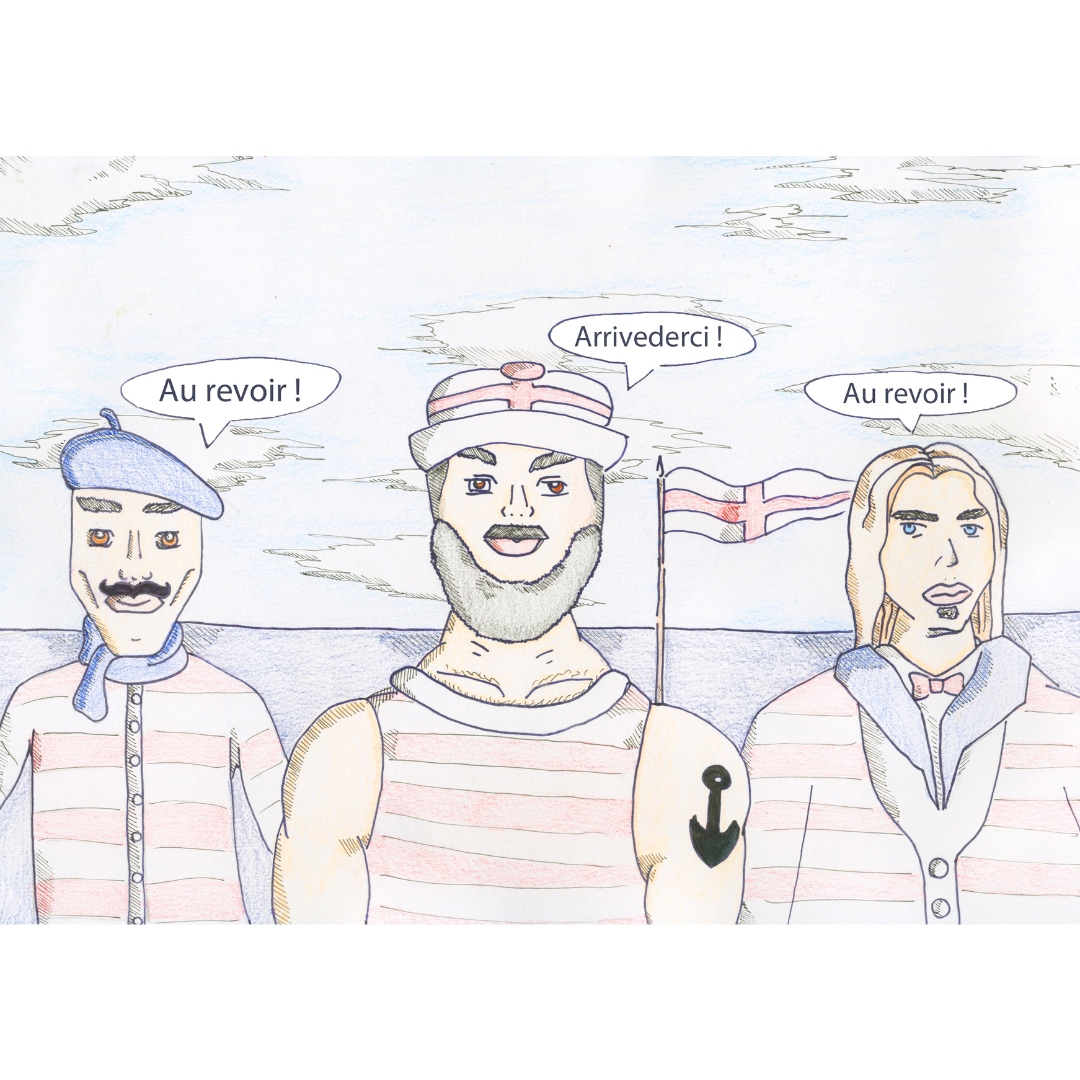
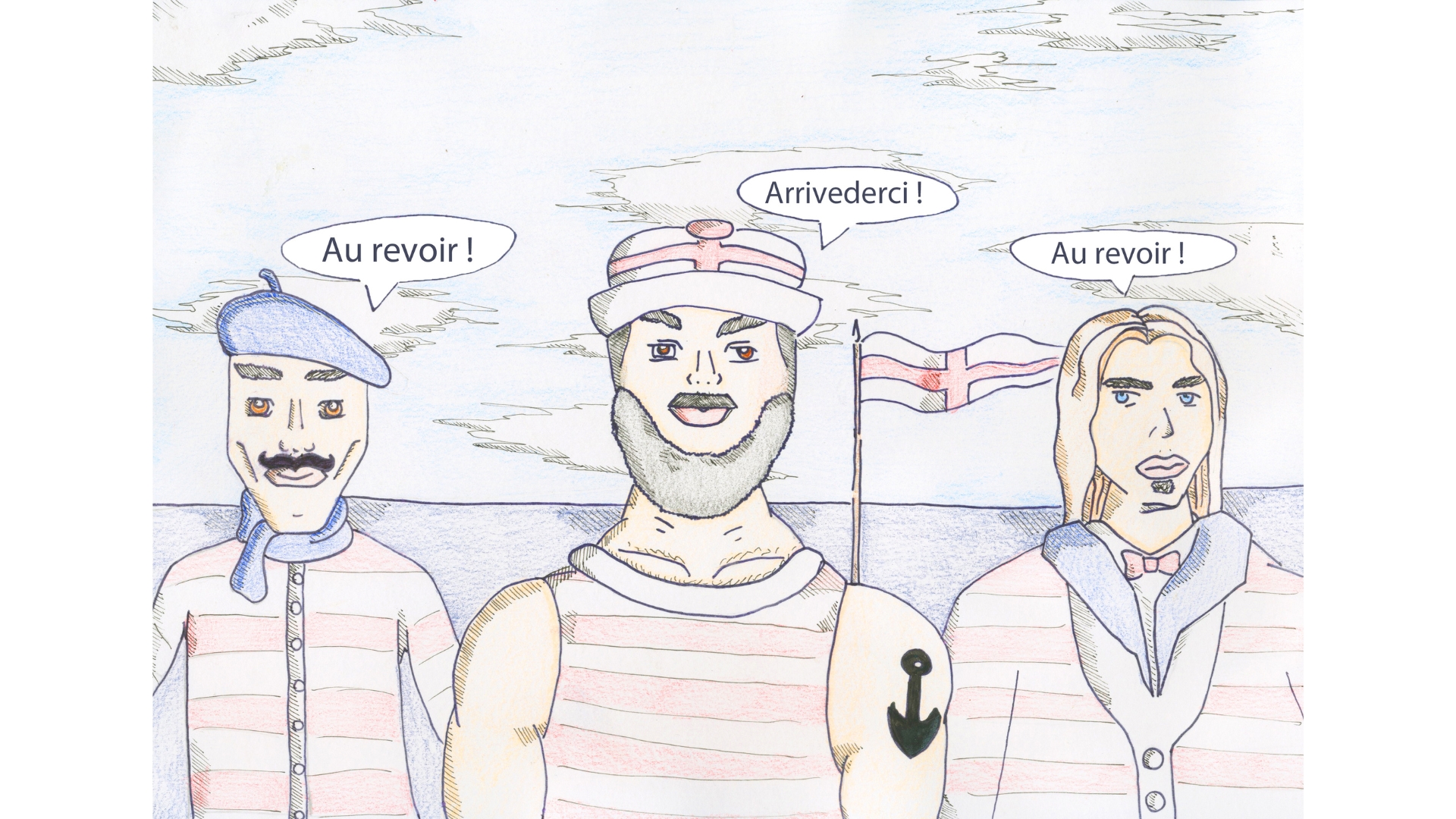
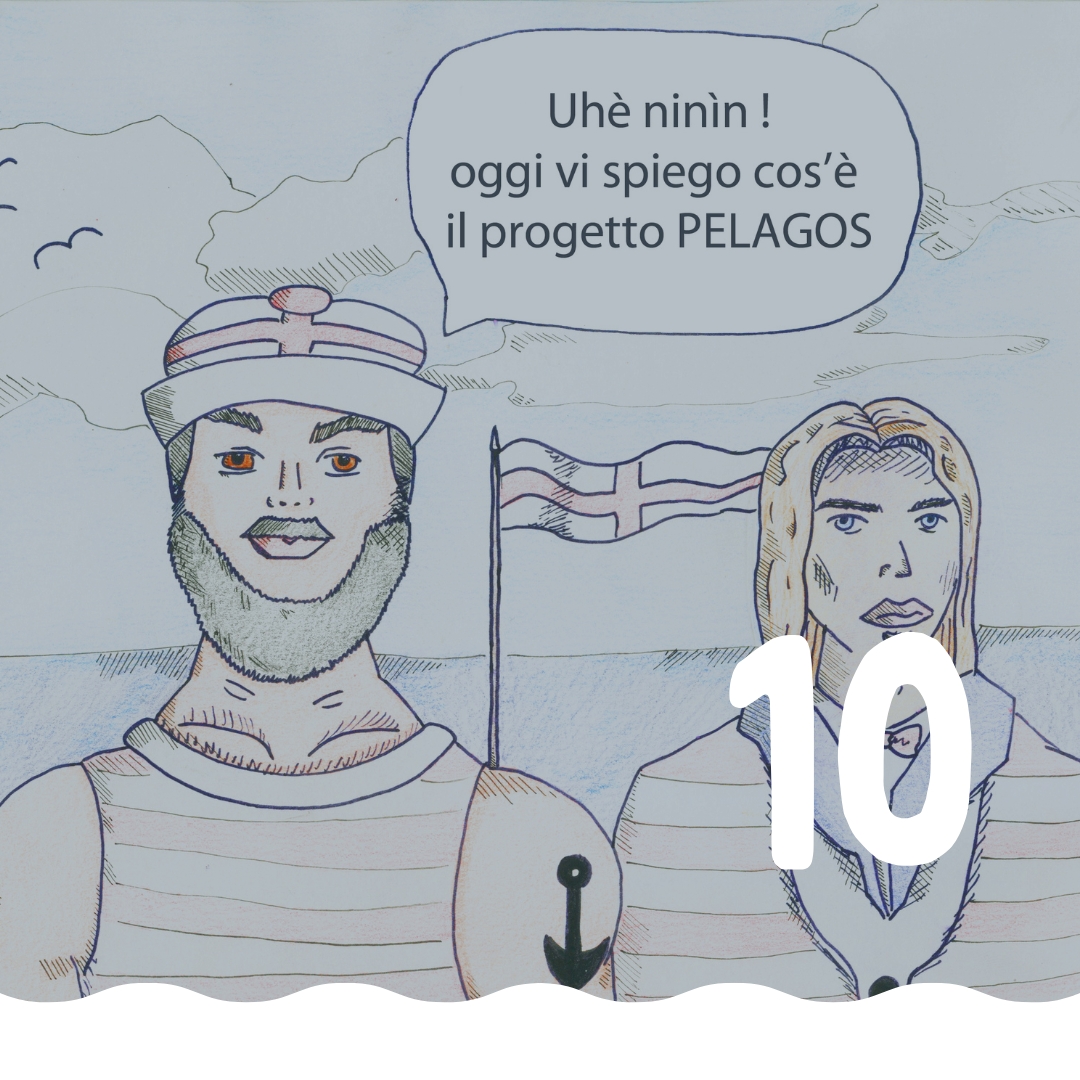
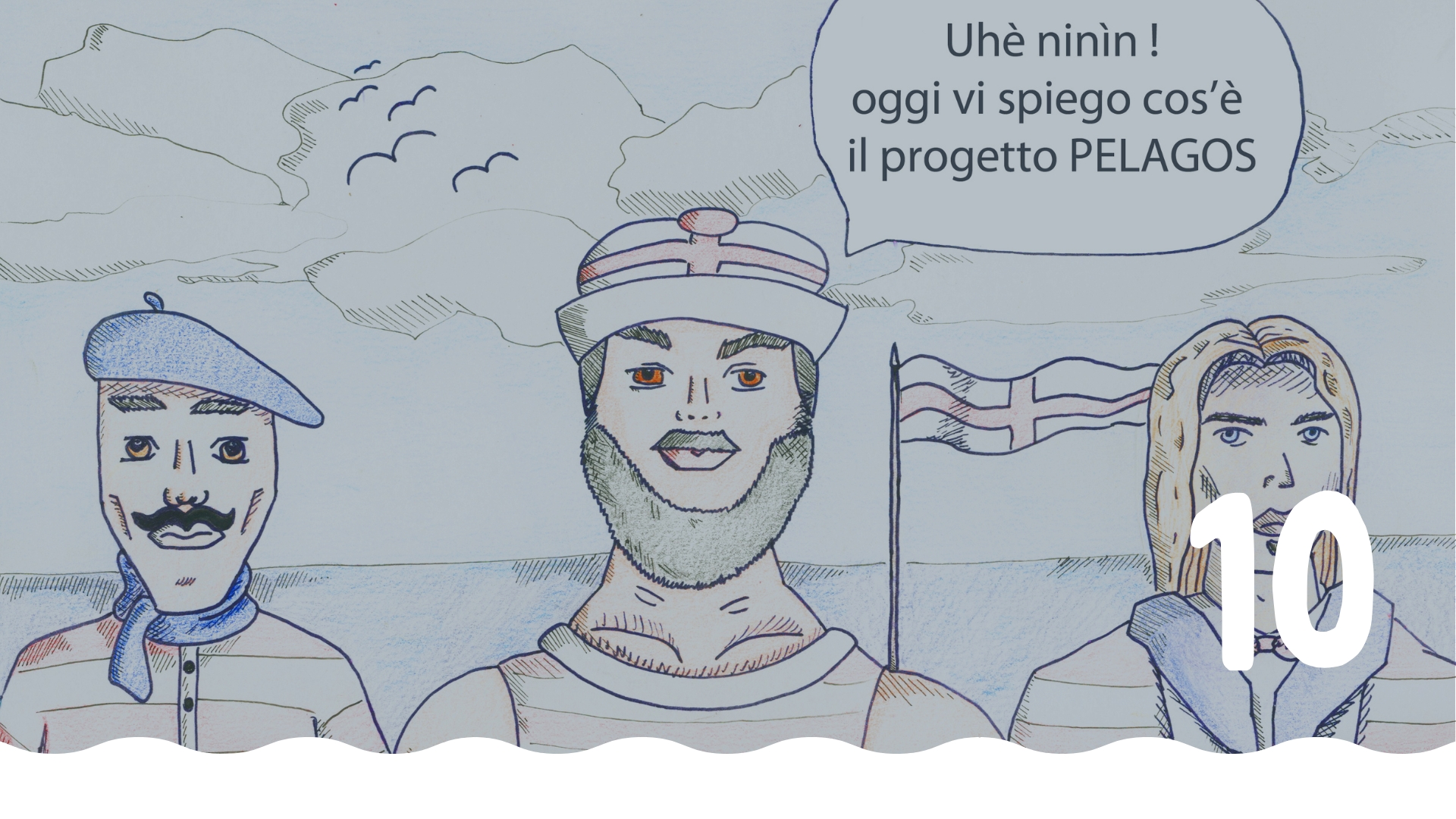
“We chose to create a comic strip because it is a communication tool accessible to everyone, from children to the elderly, to convey the message that each of us can become an ambassador. The protagonists are an Italian, a Frenchman, and a Monegasque, representing the three nationalities that share the responsibility of protecting the Pelagos Sanctuary.
To build this panel, we used a poliplat board onto which we glued nine frames made of the same material, featuring hand-drawn and hand-colored images.”
Chiunque può diventare ambasciatore del mare!
In seguito al percorso fatto insieme ai nostri compagni alla scoperta delle meraviglie del mare, ma anche delle sue fragilità, abbiamo compreso quanto sia indispensabile promuovere la tutela ambientale per proteggere il nostro prezioso patrimonio marino, ricco di biodiversità e fonte di vita sul pianeta.
Grazie a questa importante opera di sensibilizzazione, ci auguriamo che ognuno di voi possa diventare ambasciatore del mare in prima persona.
Contiamo su di voi per diffondere questo messaggio e aiutarci a raggiungere questo obiettivo!
Anyone can become an ambassador of the sea!
As a result of the journey we took together with our classmates to discover the wonders of the sea, but also its fragilities, we realized how essential it is to promote environmental protection in order to protect our precious marine heritage, which is rich in biodiversity and the source of life on the planet.
Through this important work of raising awareness, we hope that each of you can become an ambassador for the sea yourself.
We count on you to spread this message and help us achieve this goal!
Tout le monde peut devenir ambassadeur de la mer !
Suite au voyage que nous avons effectué avec nos camarades de classe pour découvrir les merveilles de la mer, mais aussi ses fragilités, nous avons réalisé combien il est indispensable de promouvoir la protection de l’environnement afin de protéger notre précieux patrimoine marin, riche en biodiversité et source de vie sur la planète.
Grâce à cet important travail de sensibilisation, nous espérons que chacun d’entre vous pourra devenir à son tour un ambassadeur de la mer.
Nous comptons sur vous pour diffuser ce message et nous aider à atteindre cet objectif !
The “Pelagos in the City” project was made possible thanks to the contribution granted by the Ministry of Environment and Energy Security within the framework of the funding call for projects addressed to municipalities adhering to the Partnership Charter of the Pelagos Agreement.
We kindly ask you to leave us a brief feedback to help evaluate the public’s knowledge and perception of the Pelagos Sanctuary
Biodiversity, Artivism and Empowerment to effectively protect Italian seas
Every drop counts and together we can make a sea of difference for the Blue Planet!
English